Showing posts with label Link-straveganza. Show all posts

Friday, January 24, 2014

Friday Food Security Link-straveganza

Oh, those GMOs. Nathaniel Johnson at Grist has been doing an in-depth series of reports on whether GMOs matter. It's a series that has raised more than a few hackles in the green world, particularly because he has come to the conclusion that spending our political capital opposing GMOs is a waste of time, energy, and money.
Johnson's series is worth reading, as is Tom Philpott's response, and Ramez Naam's generally pro-GMO article. But, kas Nathaniel Johnson writes in his most recent article:
[...]I want to add a note of caution: There’s an entire industry pushing the argument that GMOs are the solution. I agree with the International Assessment of Agricultural Knowledge, Science and Technology for Development that GMOs could be part of the solution, but we shouldn’t let the hype distract us from all the other ideas out there.
There are lots of problems associated with GMOs. I just want to focus directly on fixing those problems, rather than turning GMOs into a vague representative boogieman. I see problems with seed patents, problems with overuse of pesticides, problems with the lack of funding for research on agricultural alternatives. I care deeply about these things. But I’m worried that the discussion has become so ossified over GMOs that it’s not helping those causes. We’ve focused so tightly on GMOs that people tend to lose sight of those bigger things.

Raw Story is reporting that Golden Rice, that long-touted but otherwise invisible genetically modified crop that's supposed to save millions from blindness may actually be a go:
The first genetically-modified rice to be commercially available could be approved for production in the Philippines in two to three years, researchers said Tuesday, despite strong opposition from environmental groups.
Officers of both the International Rice Research Institute (IRRI) and the Philippine government’s agriculture department said the newly-developed “golden rice” had completed field trials, despite vandalism at one test field.
“Golden rice is coming. That is in the pipeline and a lot of the principal development and research has been completed,” said Achim Dobermann, deputy director-general of IRRI.
“At the moment, there is no GM (genetically-modified) rice officially released in any country,” he stressed.
No word on the actual vitamin A content of the rice, or whether kids would still be better off eating a half a carrot a month as a nutrient source. But Golden Rice, which has been in development for at least 25 years was supposed to be the criticism-killer of GMOs, developed with world health rather than tawdry financial gain in mind. Of course, when the Australians decided to breed salt-tolerant wheat, they did it with conventional breeding, meaning that farmers will be allowed to save their own seed.
Raw Story is also reporting on GM trials in the UK of a new genetically modified version of camelina that is high in fish oils:
A genetically-modified plant that produces seeds packed with fish oils is set to be grown in open fields in the UK within months, scientists announced on Friday. The oils could provide feed for farmed fish, the researchers hope, but they could ultimately be used as a health supplement in human foods such as margarine.
Fish oils – specifically omega-3 long-chain polyunsaturated fatty acids – have been shown to cut the risk of cardiovascular disease and are a popular food supplement. But about 80% of the fish oil harvested from the oceans every year is actually fed to other fish being raised in aquaculture. With many fish stocks already over-exploited, the government-funded researchers from Rothamsted Research in Hertfordshire have spent 15 years developing the new GM plant and hope to have permission for field trials by March, with planting to start shortly after if approval is given.
This is typical; we have a significant requirement for food, but a large amount of the food we harvest from the ocean is either by-catch and trashed, or fed to other, more commercially viable, fish. We harvest a hundred calories to eat ten. No bloody wonder the oceans are empty. The only farmed fish that are remotely sustainable are tilapia.
Tilapia via Wikipedia /Bjørn Christian Tørrissen
According to the New York Times:
Americans ate 475 million pounds of tilapia last year, four times the amount a decade ago, making this once obscure African native the most popular farmed fish in the United States. Although wild fish predominate in most species, a vast majority of the tilapia consumed in the United States is “harvested” from pens or cages in Latin America and Asia.
Known in the food business as “aquatic chicken” because it breeds easily and tastes bland, tilapia is the perfect factory fish; it happily eats pellets made largely of corn and soy and gains weight rapidly, easily converting a diet that resembles cheap chicken feed into low-cost seafood.
But, of course, the rush to monetize tilapia has led to problems as well. Fed on corn and soy, farmed tilapia contains relatively small amounts of beneficial omega-3 fatty acids, which are why it is recommended we eat fish in the first place. From the same article: "For the moment, Seafood Watch lists tilapia raised in the United States as a “best choice,” tilapia from Latin America as a “good alternative” and tilapia from China as “to be avoided.”
The report from the International Assessment of Agricultural Knowledge, Science and Technology for Development points out:
Development and sustainability goals should be placed
in the context of (1) current social and economic inequities
and political uncertainties about war and conflicts; (2) uncer-
tainties about the ability to sustainably produce and access
sufficient food; (3) uncertainties about the future of world
food prices; (4) changes in the economics of fossil-based en-
ergy use; (5) the emergence of new competitors for natural
resources; (6) increasing chronic diseases that are partially a
consequence of poor nutrition and poor food quality as well
as food safety; and (7) changing environmental conditions
and the growing awareness of human responsibility for the
maintenance of global ecosystem services (provisioning,
regulating, cultural and supporting).
Today there is a world of asymmetric development, un-
sustainable natural resource use, and continued rural and
urban poverty. Generally the adverse consequences of global
changes have the most significant effects on the poorest and
most vulnerable, who historically have had limited entitlements and opportunities for growth.
Canada, the US, and  Australia did not agree.

Also from Grist, an update on the California drought--in this case a lovely comparison of satellite pictures of California now and at the same time last year:

via Grist / NASA
Oh, and CNN and the John Hopkins School of Medicine report:
More than half of all adults in the United States take some sort of multivitamin; many do so in hopes of preventing heart disease and cancer or even to aid with memory.
But an editorial published in this week's Annals of Internal Medicine says that using supplements and multivitamins to prevent chronic conditions is a waste of money.
"The (vitamin and supplement) industry is based on anecdote, people saying 'I take this, and it makes me feel better,' said Dr. Edgar Miller, professor of medicine and epidemiology at Johns Hopkins University School of Medicine and co-author of the editorial.
"It's perpetuated. But when you put it to the test, there's no evidence of benefit in the long term. It can't prevent mortality, stroke or heart attack."
It's all about the money, honey.

Friday, January 17, 2014

Friday Means...Link-straveganza!

There's bad news coming, and it's called the TPP or Trans-Pacific Partnership. It's another of these Free Trade corporate rights deals being made behind our backs. In Canada, there's a total of three people allowed to see the full text of the deal and they are not allowed to tell Canadians what's in the damned thing until after it has been signed. The TPP would include Japan, Mexico, Canada, Australia, Malaysia, Chile, Singapore, Peru, Vietnam, New Zealand, Brunei, and possibly China. Over at Grist, Heather Smith takes on the recent leak of the draft text and points out just how bad for the planet this deal is going to be.

via University of Colorado
 In somewhat related news, there's been a drought of MSM (main stream media) coverage of global climate change. Grist is once again on the story:
The University of Colorado’s Center for Science & Technology Research monitors mentions of “global warming” and “climate change” in five major U.S. newspapers: The New York Times, The Wall Street Journal, The Washington Post, the Los Angeles Times, and USA Today. Check out the [...] sad graph [above] showing its latest findings

Cacao tree via Luisovalles at Wikipedia
Science Daily is reporting on the use of genetic testing to identify various cultivars of cacao beans;
 The ability to authenticate premium and rare varieties would encourage growers to maintain cacao biodiversity rather than depend on the most abundant and easiest to grow trees. Researchers have found ways to verify through genetic testing the authenticity of many other crops, including cereals, fruits, olives, tea and coffee, but those methods aren't suitable for cacao beans. Zhang's team wanted to address this challenge.
Applying the most recent developments in cacao genomics, they were able to identify a small set of DNA markers called SNPs (pronounced "snips") that make up unique fingerprints of different cacao species. The technique works on single cacao beans and can be scaled up to handle large samples quickly. "To our knowledge, this is the first authentication study in cacao using molecular markers," the researchers state.

Science Daily is also reporting two linked stories. First, that the effects of livestock on climate change are underestimated:
 While climate change negotiators struggle to agree on ways to reduce carbon dioxide (CO2) emissions, they have paid inadequate attention to other greenhouse gases associated with livestock, according to an analysis by an international research team.
A reduction in non-CO2 greenhouse gases will be required to abate climate change, the researchers said. Cutting releases of methane and nitrous oxide, two gases that pound-for-pound trap more heat than does CO2, should be considered alongside the challenge of reducing fossil fuel use.
The researchers’ analysis, “Ruminants, Climate Change, and Climate Policy,” is being published today as an opinion commentary in Nature Climate Change, a professional journal.
And second, that there may be a chance of lowering the emission of greenhouse gases from cattle:
A new research project looks into the possibilities of adapting every aspect of cattle husbandry and selection processes to lower their greenhouse gas emissions.
The key to the project, Garnsworthy says, is that cattle vary by a factor of two or three in the amount of methane their stomachs produce. It is therefore possible to imagine a dairy herd producing the same volume of milk for lower greenhouse gas emissions. In addition, different diets mean that cows can produce the same amount of milk with lower emissions. "It is possible to imagine cutting emissions from cattle by a fifth, using a combination approach in which you would breed from lower-emitting cattle as well as changing their diets," Garnsworthy said.

Katy Salter, writing for The Guardian, points out the rise in expensive slices of toast as the Next Big Thing:
Toast is trendy. Yes, you read that right: toast. Obviously we're not talking marge on Mighty White, but rather the artisanal slices served with hand-churned butter and homemade jams that have been popping up on "toast menus" around San Francisco and now New York. And if that all sounds too yuppy and insufferable for words, brace yourself: there's more. Some of those slices are selling for $4 a pop. That's about £2.43 a slice at the current exchange rate.

Friday, July 5, 2013

More Friday Food Linkstraveganza

Postmedia is reporting on the latest iteration of a survey done on food purchasing habits of Canadians by BMO:
The third annual BMO Food Survey of consumers’ grocery patterns, released Friday, finds Canadian provinces are true to their respective identities when it comes to the food and drink they source locally. Quebecers like their bread and cheese, Albertans are all about the region’s beef, British Columbians favour newly plucked fruits and veggies, Maritimers dine on fish so fresh you can taste the saltwater, and Ontarians wash it all down with a glass of Niagara wine.
In fact, virtually all Canadians (98 per cent) say they sometimes, frequently or always buy at least one locally sourced product when they grocery shop, with the top motivations being superior freshness and taste; a desire to support the local economy; support of local farmers; and the creation of jobs in the community.
“We’ve been doing comparable studies for years and each time, regardless of the economic circumstances of the day, the responses are pretty stable. Canadians have a consistent desire for food that’s locally produced,” said David Rinneard, director of agriculture and agribusiness for BMO.

So, good news for local producers--we have a base to build from.

CJME in Saskatchewan is reporting:
Despite damage from flooding, hail and disease last week, there is plenty of optimism on the farm. Crops are rated in fair to excellent condition with nearly two thirds at the normal stages of development.
Sixty-eight per cent of pulse crops are on schedule — followed by winter and cereals at 63 per cent, spring cereals at 61 per cent and oilseeds at 60 per cent.Livestock producers are also gearing up for the hay harvest. Producers have six per cent of the perennial hay crop cut and less than one per cent bailed. Northeast producers have three per cent cut.
If the weather this week continues, McLean said haying operations will be going full steam ahead.
“With the warmer dry weather we’ve experienced, and it looks like the next short while, it provides a good opportunity for individuals to advance their haying.”
This is not necessarily good news for producers. farmers want to have bumper crops while everyone else has theirs destroyed in order to maximise returns.  With prices down 1% worldwide according to the UNFAO, it's looking like breathing space for the planet's food supply this yeaar.

There's a heartbreaking bit of video footage from the Star, about bee losses in Ontario.
Like many apiarists in Ontario, the Schuits, who make organic honey in Elmwood, Ont., say their bees have been dying en masse every spring in recent years. They estimate they lost a staggering 37 million bees in 2012 alone, representing more than half their entire brood. The sudden decline forced them to sell their old 40-hectare property in December, and persuaded their eldest son to jump ship on the family industry.
“We just can’t continue on like this,” says Erika, mother of the seven Schuit children. “It’s very stressful as a family, and you need to put food on the table.”
Recent declines in bee populations have been documented around the world, prompting a phenomenon called colony collapse disorder and raising fears over the consequences of losing a species vital to the pollination of many plants. In Canada, the bee population has dropped by an estimated 35 per cent in the past three years, according to the Canadian Honey Council.
Several suspected causes have been studied, including the loss of flower habitat, disease, bee mites and parasites.
The Schuits, however, are convinced widely used “seed treatment” pesticides called neonicotinoids are to blame for the seizure-like deaths of their European honeybees.

Friday Food Link-straveganza

With a warning that Canada should be paying particular attention to--but won't--the Guardian is reporting on the public policy failure around floods.


Flood on agricultural land
A high proportion of the most valuable agricultural land is at risk of flooding, the MPs said. Photograph: Christopher Furlong/Getty Images  via The Guardian


Ministers are failing to protect the UK's most valuable farmland from flooding, posing a long-term risk to the security of UK food production, according to an influential group of MPs.
A run of poor weather since 2011 has led to extensive flooding of properties but has also severely dented the production of many foods, with the UK now being a net importer of wheat.
The environment select committee's report also said the government's spending by the Department for Environment, Food and Rural Affairs (Defra) to protect homes from flooding is not keeping pace with the rising risk, which is increasing as climate change intensifies downpours, and were also failing to act effectively to block the building of new homes on floodplains.
"Record rainfall in the past two years has led to extensive flooding, cost the economy millions and caused disruption and distress to householders and communities across the UK," said Anne McIntosh, a Conservative MP, and chair of the commons select committee on environment, food and rural affairs.
Extreme weather events are not just a problem for the UK. In a related article, the Guardian reports on the new UN World Meteorological Organization report that points out the unprecedented climate extremes seen around the world over the last decade.
If you think the world is warming and the weather getting nastier, you're right, according to the United Nations agency committed to understanding weather and climate.
The World Meteorological Organization says the planet "experienced unprecedented high-impact climate extremes" in the ten years from 2001 to 2010, the warmest decade since the start of modern measurements in 1850.
Those ten years also continued an extended period of accelerating global warming, with more national temperature records reported broken than in any previous decade. Sea levels rose about twice as fast as the trend in the last century.
A WMO report, The Global Climate 2001-2010, A Decade of Climate Extremes, analyses global and regional temperatures and precipitation, and extreme weather such as the heat waves in Europe and Russia, Hurricane Katrina in the US, tropical cyclone Nargis in Myanmar, droughts in the Amazon basin, Australia and East Africa, and floods in Pakistan.

Looking at something a bit lighter, let's learn how to make an excellent lamb kofte, shall we?  Felicity Cloake writes in the Word of Mouth blog about the process. As an aside, this is part of a series of posts; How to Cook the Perfect. And this is how you present a recipe in a blog post, people. We've really got to up our game. This gives you the information you need, the context to work from, and a sense that maybe the writer has actually tried to make the recipe (I'm reminded of the scene in Julie and Julia where Julia Child discovers that Ms. Rombauer hasn't checked the recipes in Joy of Cooking to see if they even work). It's like linking to source articles when writing an opinion piece--it adds a level of verifiability to your work.


So here's Felicity herself to tell you about the process of making kofte.

There's also a report that world food prices have fallen--not much, but still...
Global food prices fell 1% in June due to improving supply prospects, the United Nations' food agency has said , raising forecasts for wheat and maize output in the new season.
Food prices spiked during the summer of 2012 due to a historic drought in the US but prospects for a rebound in global grain supply and good weather forecasts are now weighing on markets.
The Food and Agriculture Organisation's (FAO) price index that measures price changes for a basket of cereals, oil seeds, dairy, meat and sugar, fell for a second month running to 211.3 points in June – its lowest level since February.
 That puts food prices below the threshold for civil unrest, according to NECSI--the New England Complex Systems Institute, about whom I've blogged before.

If you haven't discovered it yet, there's a lovely interactive map  sponsored by The economist that lets you see where you--and pretty much everyone else, ranks in terms of food security. Click on your country (or the country you're interested in) and pull up the world ranking of food security and what went into generating that rank. Canada, by the way, ranks 8th worldwide. Among the key findings?
Falling national incomes hurt food security in some developed countries over the past year.
Greece recorded the steepest fall among developed nations, dropping six places. Greece’s GDP has plummeted by more than 20% since the 2008-09 global recession. Income per person dropped in most advanced economies in the past year, the result of weak economies. Although this reduced food security in these countries, they remain, for the most part, in the top 20% of the index and thus are not in serious danger of food insecurity.

And, finally, if you're not following the Journal of Peasant Studies, you're missing out. Open source, peer reviewed.

Friday, June 14, 2013

Friday Food Link-straveganza

via Wikipedia

Science Daily is reporting on a new, better quality climate model that should help with crop predictions in a changing climate:
In a paper appearing in Nature Climate Change, members of the Agricultural Model Intercomparison and Improvement Project unveiled an all-encompassing modeling system that integrates multiple crop simulations with improved climate change models. AgMIP's effort has produced new knowledge that better predicts global wheat yields while reducing political and socio-economic influences that can skew data and planning efforts, said Bruno Basso, Michigan State University ecosystem scientist and AgMIP member.
"Quantifying uncertainties is an important step to build confidence in future yield forecasts produced by crop models," said Basso, with MSU's geological sciences department and Kellogg Biological Station. "By using an ensemble of crop and climate models, we can understand how increased greenhouse gases in the atmosphere, along with temperature increases and precipitation changes, will affect wheat yield globally."
The improved crop models can help guide the world's developed and developing countries as they adapt to changing climate and create policies to improve food security and feed more people, he added.
via Wikipedia
 The Mail has published an (adapted) excerpt of Michael Pollen's new book Cooked:
For more than a century we have been engaged in a war on bacteria. We deploy an arsenal of antibiotics, hand sanitisers, pasteurisation and food regulations to tackle the moulds and bacteria and so, we hope, hold off disease and death.I grew up on that field of battle. My mother instilled in our family a deep fear of botulism, and countless other unnamed germs possibly lurking in our food.
A touch of white on a wedge of cheese was enough to condemn it.
The slightest dent in a can of food consigned it to the rubbish, no matter that the dent came from being dropped on the floor. You never know, could be botulism; better safe than sorry.
In the decades since Louis Pasteur discovered bacteria, medical research has focused mainly on their role in causing disease.
The bacteria that reside in and on our bodies were generally regarded as either harmless freeloaders, or pathogens to be defended against.
But then in the early 2000s, researchers discovered hundreds of new species of bacteria in the human gut doing all sorts of unexpected things.
To their surprise, microbiologists discovered that we are made up of 90 per cent bacteria. Nine out of every ten cells in our bodies are not human but belong to these microbial species (most of them residents of our gut).
As one scientist put it to me, we 'stand on the verge of a paradigm shift in our understanding of health as well as our relationship to other species'.
via Wikipedia

The Portland Press Herald is reporting on Maine's passage of a GMO labelling bill. With enough state's passing bills like this, it won't be necessary to pass federal legislation:
Maine is on track to join several other states attempting to require food producers to label food containing genetically modified ingredients, following a landslide vote in the House of Representatives on Tuesday.
The 141-4 vote on L.D. 718, a bill sponsored by Rep. Lance Harvell, R-Farmington, sets the stage for a legal entanglement between the state and agribusiness and biotech industry giant Monsanto, which has already threatened to sue states that pass similar labeling laws. The political battle between industry interests and the well-organized supporters of L.D. 718 has raged behind the scenes for several months at the State House, as the biotech industry fights to blunt a popular movement that has taken the GMO fight to at least 18 other state legislatures following failed attempts to pass labeling legislation in Congress.

via Wikipedia
 With the rise of the urban chicken, this article from Chickens on Camera is particularly apt:
ERROR #2: Not Giving Your Chickens Proper Ventilation.
Building a chicken coop is to protect your flock. The purpose of your coop is to protect your chickens from the element and outside predators, but you also need to give them proper ventilation. Free movement of air inside the coop is very important, but you do not want to freeze your chickens with a draft. Chickens, are like humans, they can only perform at their optimum levels if all of their basic needs are met first, in this case protection and oxygen. A Chicken coop without free air movement and therefore more oxygen will have high carbon monoxide levels and humidity levels. This is not good because uncomfortable chickens do not produce as many eggs. It is also very dangerous because it makes mold growth within the walls very easy.

And the BC Food Security Gateway has a link to the University of British Columbia Sustainable Campus Food Guide.  It's so great to see all the work being done in my home province on changing the food system.  And BCSFG is a significant part of that.

And now I'm off to cook lunch  for a hundred or so of my fellow citizens at the Victoria Rainbow Kitchen. Hope you all have a good weekend.

Friday, June 7, 2013

Friday Food Link-straveganza

Image sourced from Wikipedia

Well, we know bees are having a difficult time of it. And now its looking like neonicotinoid pesticides have a lot to do with it. Canada and Britain are both resisting the call to ban the neonicotinoids. The UK  Parliament’s  report on neonicotinoid pesticides and their effect on bees can be accessed here. The BBC commentary is here.

Source: Wikipedia

Over at Localfoodplus.ca, there's some comment on the new Ontario Medical Association report that looks at the link between antibiotic-resistant microbes and intensive livestock production. From localfoodplus:
According to the OMA’s report, “antibiotics are not as effective as they once were because bacteria are adapting to them … these resistant bacteria are germs that cause infections like pneumonia, urinary tract infections, and skin infections.”
“Patients are at risk of becoming sicker, taking longer to recover, and in some cases dying from previously treatable diseases,” said OMA president Doug Weir in the report’s press release.
This alarming medical regression poses a rising threat over both patients’ health and the healthcare system. Pointing to already visible Health Care expenses, the OMA cites the increasing costs of MRSA (which Mother Jones defines as “an often-deadly, antibiotic-resistant staph infection”)  at the Sunnybrook Health Sciences Centre in Toronto.
In 2001, the presence of MRSA across Canada was estimated to cost $50 million; in 2010, the National Collaborating Centre for Infectious Diseases (NCCID) estimated that the costs would reach between $104-$187 million annually due to escalating  antibiotic resistance – more than double in approximately 10 years.
While the report lays some culpability upon individuals to use antibiotics more “responsibly” and doctors to “keep better track of [their] patients’ antibiotic histories,” the OMA points a looming finger in the direction on Ontario’s agri-business complex.
Currently, it’s standard practice in Ontario’s agricultural industry to administer antibiotics to healthy animals for the purpose of ‘disease prevention’ and ‘growth acceleration’ – a practice that the Ontario Ministry of Agriculture and Food (OMAF) defines as “intensive, non-therapeutic” antibiotic use.

Algeria famine 1869. Source: Wikipedia

The BBC has been reporting that the only thing we learn from the history of famnine is that we learn nothing from the history of famine--as detailed by the new report from UK think-tank Chatham House:
Famine early warning systems have a good track record of predicting food shortages but are poor at triggering early action, a report has concluded.
The study said the opportunity for early action was being missed by governments and humanitarian agencies.
It said the "disconnect" was starkly apparent in Somalia where no action was taken despite 11 months of warnings.
Up to two million people are estimated to have died in drought-related emergencies since 1970.
The report by UK think-tank Chatham House, Managing Famine Risk: Linking Early Warning to Early Action, looked at the issue of drought-related emergencies on a global scale but focused on the Horn of Africa and the Sahel regions.
"The regions are quite unique in a way because you have these droughts, where there are normally successive failed rains; then you have a process whereby you have subsequent harvest failures then people adopt coping strategies," explained report author Rob Bailey.
Hand of Fatima, Mali. source: Wikipedia

 At Foodfirst, Camille Vignerot and Tiffany Tsang  wrote a piece about the current food crisis in Mali.
Food crises have plagued Mali in recent years due to drought and recurring political conflicts.
The January 2012 massacre of Malian soldiers by armed Tuareg fighters in the far north precipitated the Malian coup in March of 2012 by the National Committee for Recovering Democracy and Restoring the State (NCRDRS). That and the subsequent struggle in the north of Mali involving two groups of Tuareg (Ansar Dine and the National Movement for the Liberation of Azawad), both followed a severe drought in the 2011-2012 season.
In 2011, Mali received only one month of rain, compared to the usual three. As a result, only 11% of Mali’s farmers were able to save seed for the following year’s planting season. This cut the country’s 2012 seed supply by half, severely affecting the rice-growing area in the Mopti region. The drought forced pastoralists to move their animals north six months earlier than usual that year because of a lack of floodplain pasture along the Niger River. This led to overgrazing in northern pastures as usual staggered migrations were disrupted. Those pastoralists who did stay in the southern region were trapped between the sparse floodplains and the violent north. The increased grazing pressure on the land led to conflicts with farmers, especially in the Mopti region.
Leaving famine behind for the land of MOAR!, Michael Pollen is interviewed for the Center for Consumer Freedom.

Saltspring Island via Wikipedia
 Mussels are sustainably raised near here on Saltspring Island by Saltspring Island Mussels. (warning! site contains recipes!)
Also local are the ICC:
The Island Chefs Collaborative (icc) are a liked-minded community of chefs and food and beverage professionals with a common interest in regional food security, the preservation of farmland and the development of local food systems.
And of course if you haven't seen it yet, Bill Gates cracks me up with his Food is Ripe for Innovation essay over at Mashable.com:
I’ve gotten to learn about several new food companies that are creating plant-based alternatives to meat through some monetary investments I’ve made with Khosla Ventures and Kleiner Perkins. Their products are at least as healthy as meat and are produced more sustainably.
But what makes them really interesting is their taste. Food scientists are now creating meat alternatives that truly taste like — and have the same “mouth feel” — as their nature-made counterparts (see two recipes below, for example).
Flavor and texture have been the biggest hurdles for most people in adopting meat alternatives. But companies like Beyond Meat, Hampton Creek Foods and Lyrical are doing some amazing things. Their actual recipes are secret, but the science is straightforward. By using pressure and precisely heating and cooling oils and plant proteins (like powdered soybeans and vegetable fiber), you can achieve the perfect flavor and texture of meat or eggs.
I tasted Beyond Meat’s chicken alternative, for example, and honestly couldn’t tell it from real chicken. Beyond Eggs, an egg alternative from Hampton Creek Foods, does away with the high cholesterol content of real eggs. Lyrical has drastically reduced fat in its non-dairy cheeses. Even things like salt are getting a makeover: Nu-Tek has found a way to make potassium chloride taste like salt (and nothing but salt) with only a fraction of the sodium.
All this innovation could be great news for people concerned about health problems related to overconsumption of fat, salt and cholesterol. It’s important too in light of the environmental impacts of large-scale meat and dairy production, with livestock estimated to produce nearly 51% of the world’s greenhouse gases.
The man should be doing stand-up....

Monday, March 11, 2013

Overwhelmed Monday Link-straveganza

via Saanich Fair website

Seriously, there is so much going on this past week. I attended the Farmer2Farmer conference at the Saanich fairgrounds, which was a great day, which I really want to talk at length about, and which left me with some hope. But that will have to wait for another post.
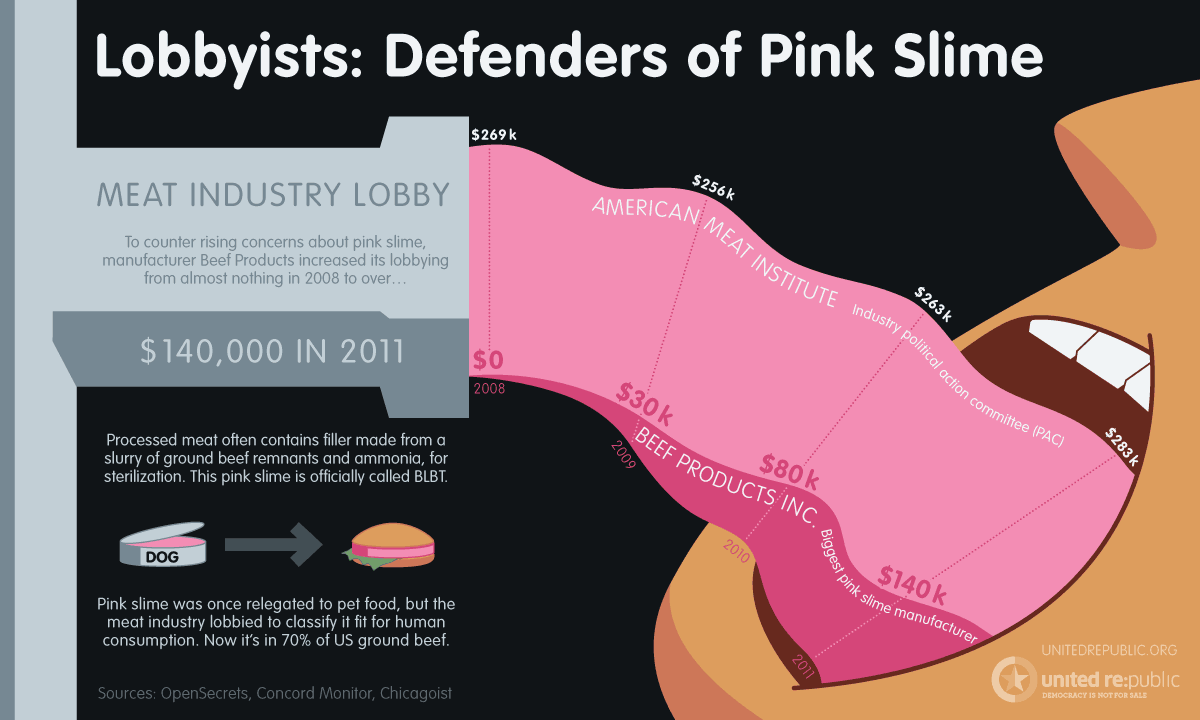
Pink slime--mechanically seperated lean beef that 's been treated with ammonia--is still around.
graphic via republicreport.org
Reuters is carrying a special report (.pdf) on Beef Product Inc.'s lawsuit against ABC, Diane Sawyer and others on their reporting of the use of "lean finely textured beef" in ground beef products like hamburgers. The suit has all the earmarks of a SLAPP (Strategic Lawsuit Against Public Participation) suit, particularly with the potential damages heading north of a billion dollars.
The lawsuit, originally filed in South Dakota state court, is hinged partly on a state product-disparagement statute designed to protect farming interests. Twelve other states have similar laws - dubbed "veggie libel" measures by critics - but they have rarely been invoked.

Under the South Dakota version of the law, plaintiffs must show that defendants publicly spread information they knew to be false and stated or implied "that an agricultural food product is not safe for consumption by the public."

If BPI were to win on that claim, under the law it could be awarded triple the damages that were caused. That means that the company's claim of more than $400 million in projected lost profits could balloon to damages of more than $1.2 billion.
But you can see why they feel they have to silence criticism--BPI has gone from 4 plants and about $650 milliion (US) in revenue to 1 plant and about $130 million (US) in revenue. And, as usual, buy direct from a farmer--make sure they get whatever profit's to be made and have the security of knowing where your food comes from.


image via inhabitat.com

NewsRx Science is reporting on the potential for urban agriculture in one of the US' most depressed cities: Detroit.

Transforming vacant urban lots into farms and community gardens could provide Detroit residents with a majority of their fruits and vegetables.
As city officials ponder proposals for urban farms, a Michigan State University study indicates that a combination of urban farms, community gardens, storage facilities and hoop houses - greenhouses used to extend the growing season - could supply local residents with more than 75 percent of their vegetables and more than 40 percent of their fruits.
The study, which appears in the current issue of The Journal of Agriculture, Food Systems, and Community Development, evaluates many aspects of the production potential of the Motor City's vacant properties, from identifying available parcels of land to addressing residents' attitudes toward blending agrarian traits with their urban lifestyles.
"What's clear from our production analysis is that even with a limited growing season, significant quantities of fresh fruits and vegetables eaten by Detroiters could be grown locally," said Kathryn Colasanti, the graduate student who led the study for the C.S. Mott Group for Sustainable Food Systems at MSU. "And investments in produce storage facilities and hoop houses would increase this capacity substantially."

Now we just need some political will. CBC is reporting that Sudbury's city planning staff is getting onboard, but the councilors are dragging their heels.
It is just an idea at this point — and something many other cities are considering — but city Coun. André Rivest said right now his vote would be a no.
"You got houses that are worth a lot of dollars and you want to keep that,” he said.
“You start having chickens in backyards ... I sense that wouldn't be well received."
But city planner Kris Longston said Sudbury's long-range plans should focus more on urban agriculture.
You can listen to the report here.
And that's the problem, innit? Political will.In a city you have to be willing to stare down local developers--who carry a lot of political and financial weight. And the ability to scare the public with the thought that the value of our homes may decrease. Canadians have become utterly reliant on their homes as their savings accounts--and on increasing home prices fueling consumer purchases--so any threat to house prices threatens the entire myth that we currently function under. The question of just who is expected to pay inflated prices for houses when all the boomers decide to retire isn't one that gets asked--because there is no real good answer. Wealth inequity is becoming more and more pronounced in Canada, and the middle class is starting to lose people off the bottom. The Fear, as Hunter Thompson used to describe it, is starting to set in.

Friday, March 8, 2013

Friday Food Security Link-straveganza

Guerrilla gardening--so much fun!


I really like this kind of approach. Forgiveness is easier than permission, after all.


In India, there seems to be a pretty clear case against Coke. From the Right to Water website:
In a number of districts of India, Coca Cola and its subsidiaries are accused of creating severe water shortages for the community by extracting large quantities of water for their factories, affecting both the quantity and quality of water. Coca Cola has the largest soft drink bottling facilities in India. Water is the primary component of the products manufactured by the company.

From the street food side of things comes a report of food carts using a parabolic solar cooker.
photo: EcoAndina
Good news from the power consumption side of things. I recall reading a Mother Earth News article about using the heat of a compost pile to cook a slow-cooker-like meal. There's also an excellent biogas article at the Ecotipping Points Project. Biogas is one of those neat ideas where you collect waste and use it while creating another, equally important product--in this case, composted materials. Power is where you find it--we've simply become addicted to using one seemingly-unlimited form or another.

Mother Earth News also has a nice little article on building a hooped bed.
via MEN
Essentially what I did over my raised beds at the community garden last year. Works well; I'm still picking fresh carrots and beets, and the couple of shallots left in the ground are already sprouting new growth.

Food Safety News is reporting on more about Honeygate:
Five people and two U.S. honey processors were charged with federal crimes last week as a result of an investigation into illegal importation of honey from China, known as “Honeygate,” led by the U.S. Immigration and Customs Enforcement and Homeland Security Investigations.
The government is alleging that Chinese honey — which can be laced with illegal and unsafe antibiotics — was misdeclared when it was imported to the United States and routed through other countries to evade more than $180 million in anti-dumping duties. HSI and Customs and Border Protection said late last week they have stepped up efforts to combat commercial fraud that directly impacts the economy and public health.
The charges come more than a year after an investigation by Food Safety News found that laboratory tests could not detect the origin of more than three quarters of honey purchased at retail locations because ultra-filtration methods remove naturally occurring pollen and make honey impossible to trace. Many in the industry say this practice contributes to honey laundering.

IPS news service is reporting:
No-till farming is a response to climate change that fits well with the needs of the Caribbean: it increases the ability to capture water, while withstanding both drought and excessive rains, says expert Theodor Friedrich, representative of the United Nation’s Food and Agriculture Organisation (FAO) in Cuba.
The Caribbean islands are in dire need of new techniques that can ensure food security amid the threats of climate change.
“I do not see why these islands cannot produce enough for their own consumption,” Friedrich said in an interview with IPS. ”We have to produce more with less, and conservation agriculture is the basis of the strategy recommended by the FAO,” he added.
Of course, no-till farming  echoes the work done by Masanobu Fukuoka (1913-2008), who:  
was a farmer and philosopher who was born and raised on the Japanese island of Shikoku. He studied plant pathology and spent several years working as a customs inspector in Yokohama.  While working there, at the age of 25, he had an inspiration that changed his life.  He decided to quit his job, return to his home village and put his ideas into practice by applying them to agriculture.

Over the next 65 years he worked to develop a system of natural farming that demonstrated the insight he was given as a young man, believing that it could be of great benefit to the world.  He did not plow his fields, used no agricultural chemicals or prepared fertilizers, did not flood his rice fields as farmers have done in Asia for centuries, and yet his yields equaled or surpassed the most productive farms in Japan.
 Really, I don't know what to make of this. So much of what we think we know is , well, less than accurate. The problem is figuring out which bit is more accurate than the others.... IPS is also reporting:
Canada’s police and security agencies think citizens concerned about the environment are threats to national security, and some are under surveillance, documents reveal.
The RCMP, the national police force, and Canada’s spy agency CSIS are increasingly conflating terrorism and extremism with peaceful citizens exercising their democratic rights to organise petitions, protest and question government policies, said Jeffrey Monaghan, a researcher with the Surveillance Studies Centre at Queen’s University in Kingston, Ontario.
Well,  I'm concerned about the environment, but I don't really think that makes me a national security threat. Maybe a threat to the paranoid one percent, but not to the nation. It strikes me that the one percent, with their insistence that every drop of fossil fuel must be burned, that every alternative must be quashed, that the rest of us can burn and  starve and die as long as they get to stay rich beyond all hope of spending, they might be a bit more of a threat than some guy who just likes growing good food and eating it with friends. But that's the state of paranoia among the one percent.


Friday, March 1, 2013

Friday Food Security Link-straveganza

The United States Department of Agriculture is likely to approve a horse slaughtering plant in New Mexico in the next two months, which would allow equine meat suitable for human consumption to be produced in the United States for the first time since 2007.
So says the article in the New York Times.
The plant, in Roswell, N.M., is owned by Valley Meat Company, which sued the U.S.D.A. and its Food Safety and Inspection Service last fall over the lack of inspection services for horses going to slaughter. Horse meat cannot be processed for human consumption in the United States without inspection by the U.S.D.A., so horses destined for that purpose have been shipped to places like Mexico and Canada for slaughter.
This makes sense. If you're going to eat something, you'd really like to know that it is what it claims to be, that it has been inspected and passed as safe from contaminants and disease, and that it has been handled in a safe manner. All of the things that the European horse/beef problems are based around.

A massive international study involving the University of Calgary warns the continued loss of wild bees is hurting agriculture and food production across the globe, including fruit and seed crop harvests here in Alberta.
Researchers have collected and examined data from 600 fields in 20 different countries, including Canada, and found that managed honey bees are not as successful at pollinating crops as wild insects, primarily wild bees.
And as agricultural development, pesticides and viruses continue to diminish wild insect populations, crop harvest size and quality will continue to dwindle.
- See more at: http://www.calgaryherald.com/news/calgary/Declining+populations+pose+threat+food+crops+Alberta+around/8031808/story.html#sthash.MnwvkIdZ.dpuf
 A massive international study involving the University of Calgary warn the continued loss of wild bees is hurting agriculture and food production across the globe, including fruit and seed crop harvests here in Alberta.
Researchers have collected and examined data from 600 fields in 20 different countries, including Canada, and found that managed honey bees are not as successful at pollinating crops as wild insects, primarily wild bees. - See more at: http://www.calgaryherald.com/news/calgary/Declining+populations+pose+threat+food+crops+Alberta+around/8031808/story.html#sthash.MnwvkIdZ.dpuf

massive international study involving the University of Calgary warns the continued loss of wild bees is hurting agriculture and food production across the globe, including fruit and seed crop harvests here in Alberta.
Researchers have collected and examined data from 600 fields in 20 different countries, including Canada, and found that managed honey bees are not as successful at pollinating crops as wild insects, primarily wild bees.
And as agricultural development, pesticides and viruses continue to diminish wild insect populations, crop harvest size and quality will continue to dwindle.
- See more at: http://www.calgaryherald.com/news/calgary/Declining+populations+pose+threat+food+crops+Alberta+around/8031808/story.html#sthash.MnwvkIdZ.dpuf
A massive international study involving the University of Calgary warns the continued loss of wild bees is hurting agriculture and food production across the globe, including fruit and seed crop harvests here in Alberta.
Researchers have collected and examined data from 600 fields in 20 different countries, including Canada, and found that managed honey bees are not as successful at pollinating crops as wild insects, primarily wild bees.
And as agricultural development, pesticides and viruses continue to diminish wild insect populations, crop harvest size and quality will continue to dwindle.
- See more at: http://www.calgaryherald.com/news/calgary/Declining+populations+pose+threat+food+crops+Alberta+around/8031808/story.html#sthash.MnwvkIdZ.dpuf
A massive international study involving the University of Calgary warns the continued loss of wild bees is hurting agriculture and food production across the globe, including fruit and seed crop harvests here in Alberta.
Researchers have collected and examined data from 600 fields in 20 different countries, including Canada, and found that managed honey bees are not as successful at pollinating crops as wild insects, primarily wild bees.
And as agricultural development, pesticides and viruses continue to diminish wild insect populations, crop harvest size and quality will continue to dwindle.
- See more at: http://www.calgaryherald.com/news/calgary/Declining+populations+pose+threat+food+crops+Alberta+around/8031808/story.html#sthash.MnwvkIdZ.dpuf
A massive international study involving the University of Calgary warns the continued loss of wild bees is hurting agriculture and food production across the globe, including fruit and seed crop harvests here in Alberta.
Researchers have collected and examined data from 600 fields in 20 different countries, including Canada, and found that managed honey bees are not as successful at pollinating crops as wild insects, primarily wild bees.
And as agricultural development, pesticides and viruses continue to diminish wild insect populations, crop harvest size and quality will continue to dwindle.
- See more at: http://www.calgaryherald.com/news/calgary/Declining+populations+pose+threat+food+crops+Alberta+around/8031808/story.html#sthash.MnwvkIdZ.dpuf
So says the Calgary Herald. But then, the news about bees has been terrible for so long, it's a wonder we haven't made the shift to soylent green yet....  I mean, just because we're destroying the bee populations is no reason to re-think our approach to industrial agriculture, is it?
The same topic in the Guardian yields the info that:
Scientists studied the pollination of more than 40 crops in 600 fields across every populated continent and found wild pollinators were twice as effective as honeybees in producing seeds and fruit on crops including oilseed rape, coffee, onions, almonds, tomatoes and strawberries. Furthermore, trucking in managed honeybee hives did not replace wild pollination when that was lost, but only added to the pollination that took place.
"It was astonishing; the result was so consistent and clear," said Lucas Garibaldi, at the National University in Río Negro, Argentina, who led the 46-strong scientific team. "We know wild insects are declining so we need to start focusing on them. Without such changes, the ongoing loss is destined to compromise agricultural yields worldwide."
The study was published in the journal Science. (paywall)

Cotton For My Shroud is a new documentary about the massive number of farmer suicides in India over the last few years. Baltimore is hosting a screening of the film tomorrow, so you may want to keep an eye out for it. The event description:
The documentary reveals the effect of Genetical Modified (GM) crops in India and how it has changed the landscape of Agriculture in India. The documentary highlights 5 years of footage in crisis hit Vidarbha region of India. User discretion is advised because of graphic contents.

Cotton For My Shroud received 2012 National Film Awards of India for best documentary script. National Film Awards honors exceptional movies and documentaries in India, most of them not affiliated with Bollywood film industry.The 2011 census of India confirmed the figure of more than 200,000 farmer suicides in India related to faulty policies of the administration and other social issues.

Association for India's Development (AID) along with it's partner have been working over a decade on sustainable agriculture. AID is also part of the alliance ASHA, Alliance for Sustainable and Holistic Agriculture. AID participated in anti Bt Brinjal campaign, a move by GM companies to push GM Brinjal into India.

Since 70% of India's population is directly related to agriculture, distress in this area has given rise to many other problems across India including slums, poverty, sex trafficking, etc.

This documentary is presented by Association for India's Development and Real Food Hopkins.

There's a character out in Iowa trying to breed a new perfect pig, according to the New York Times. Not an Enviro-pig, which was bred at Guelph, but a cross of two heritage breeds:
Carl Edgar Blake II has tried to breed the perfect pig. Fatty and smooth. Meaty and flavorful.
He crossed a Chinese swine, the Meishan, with the Russian wild boar — emulating a 19th-century German formula created when King Wilhelm I imported the fatty Meishan to breed with leaner native wild pigs in what is now the state of Baden-Württemberg. They called that one the Swabian Hall. With dark and juicy meat, it assumed a place among Europe’s finest swine.
Mr. Blake, 49, has bet that his 21st-century American version — the Iowa Swabian Hall — can be equally delectable.
The early reviews have been promising. Two years after his operation began, his pig won a heritage pork culinary contest in 2010, Cochon 555 in San Francisco.

From Science Daily:
Want to know what you are eating? DNA barcodes can be used to identify even very closely related species, finds an article published in BioMed Central's open access journal Investigative Genetics. Results from the study show that the labelling of game meat in South Africa is very poor with different species being substituted almost 80% of the time.
The idea of having to take my portable DNA scanner to the grocery store to make sure I'm getting what I pay for doesn't really thrill me.... Especially since we have systems in place that are supposed to do that already.
via The Guardian
 And finally:
A recently discovered livestock disease that can cause foetal abnormalities and stillbirth in sheep and cattle has spread to almost all of Britain, with more than 1,500 cases detected, according to government figures.
Data from the Animal Health and Veterinary Laboratories Agency, part of the Department for Environment, Food and Rural Affairs (Defra), showed Schmallenberg virus had been confirmed in livestock in all counties of England and Wales, as well as to a more limited extent in Scotland.
The virus was detected in the Netherlands and Germany in late 2011 and named after the town in North Rhine-Westphalia where it first emerged. Spread by midge bites, it tends to cause abnormalities to skulls and limbs, and can affect goats. In adult animals it causes fever, loss of appetite and reduced milk production. It was first detected in lambs in eastern England at the start of 2012.
A possible vaccine has been developed and tried out elsewhere in Europe with apparent success. Defra's Veterinary Medicines Directorate has confirmed it is considering an application for use of the Bovilis SBV vaccine, with the process near completion.
Story once again from The Guardian.

Friday, February 22, 2013

Friday Link-straveganza

via The Guardian
The Guardian is reporting on an over-fishing scheme in the UK:
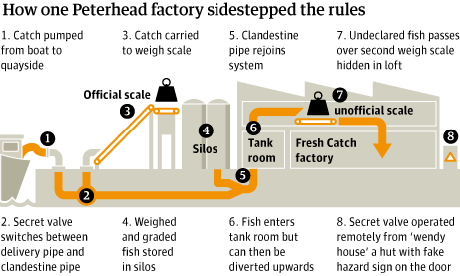
An inquiry into the UK's largest fishing scandal has uncovered "serious and organised" criminality by Scottish trawlermen and fish processors in an elaborate scam to illegally sell nearly £63m of undeclared fish.
Three large fish factories and 27 skippers have pleaded guilty to sophisticated and lucrative schemes to breach EU fishing quotas, in what one senior police officer described as "industrial level" deception.
They went to extraordinary lengths to conceal their illegally caught fish, installing underground pipelines, secret weighing machines and extra conveyor belts and computers to allow them to land 170,000 tonnes above their EU quota of mackerel and herring between 2002 and 2005.
The extent of the "black landings" scandal emerged as 17 skippers and one of the three factories were given fines totalling nearly £1m at the high court in Glasgow on Friday, after admitting repeated breaches of the Sea Fishing (Enforcement of Community Control Measures) (Scotland) Order 2000. Another six skippers pleaded guilty at the same hearing to landing undeclared fish worth nearly £7m at Lerwick, in the Shetlands, and Peterhead, Aberdeenshire.
{...}Judge Lord Turnbull, told the 17 skippers sentenced on Friday they were guilty of a "cynical and sophisticated" operation, which brought embarrassment and shame on them and their families. "The motivation was purely financial," he said. "Those who were already making a good living saw this as a way more income could be generated and were prepared to participate in deliberate lies and falsehoods."
It's no wonder the bloody cod are gone. Even when we know we're over-fishing, even when we're already making a good buck, we still connive and scheme to empty the bloody ocean when we know better!  And notice, this lot got fined a million pounds on £63 million in fish. And they will be allowed to go back to doing what they were doing in the first place.

Community Food Centres Canada get animated!


CFCC gets animated! from Community Food Centres Canada on Vimeo.

more after the jump....

Friday, February 8, 2013

Friday Link-straveganza


Caroline Raffensperger has written a lovely essay at Common Dreams about the scale of personal actions as compared to the scale of the environmental breakdown we're facing:
Most people suffer from a sense of moral failure over environmental matters. The mismatch between being told to change our light bulbs when the planet seems in free fall—melting ice caps, polluted water supplies, drought—creates a needling angst and anxiety.  We know that we are in deep trouble, but feel that there is little we—or anyone—can do individually. Anne Karpf writing about climate change in the Guardian last year said “I now recycle everything possible, drive a hybrid car, and turn down the heating. Yet somewhere in my marrow I know that this is just a vain attempt to exculpate myself – it wasn’t me, guv.”
To fully acknowledge our complicity in the problem, but to be unable to act at the scale of the problem creates cognitive dissonance. And this “environmental melancholia,” results in hopelessness. It is not apathy we are feeling, but sadness that can be eased only with taking actions, mostly collective, scaled to the problems we face.

The Chronicle of Higher Education is forced to ask the question "In Standing Up for Big Ag, Are Universities Undercutting Their Own Researchers?"

In a case before the U.S. Supreme Court this month, advocates for academic researchers are urging the justices to reverse a patent-infringement decision that has given the Monsanto Company broad authority to restrict scientists’ study of genetically modified seeds. The decision, the advocates say, not only hurts farmers and fuels higher food prices; it also contributes to “the suffocation of independent scientific inquiry into transgenic crops.”
Not surprisingly, the case has also drawn the attention of higher education’s research establishment—but it’s pulling for the other side.
[...] George A. Kimbrell, senior lawyer for the Center for Food Safety and Save Our Seeds, calls the universities’ stance disappointing. “It’s a very strange position for institutions that should be promoting the freedom of scientific inquiry,” he says. “Unfortunately, they’ve become beholden to the money and put that before their basic mission.”

The BBC is reporting on a minor case of mis-labelling:
The meat of some beef lasagne products recalled by Findus earlier this week was 100% horsemeat, the Food Standards Agency (FSA) has said.
On Monday Findus withdrew from retailers its beef lasagne in 320g, 360g and 500g sizes as a precaution.
Environment Secretary Owen Paterson said the findings were "completely unacceptable", but Findus said it did not believe it was a food safety issue.
The FSA said companies would now be required to test their beef products.
"In order to get to the bottom of this, we're going to be requiring every company to test every product line," Catherine Brown, the FSA's chief executive, told the BBC.
"If we find any other cases, we will pursue our investigations vigorously until we find out what's happened and put a stop to it."
Ms Brown said it was "highly likely" that criminal activity was to blame for horsemeat being found in some meals.
 But really, this is more of an "ick" problem....

Funny or Die has a lovely parody of the "God Made A Farmer" ads.

The Guardian is talking about how to build resilient food systems:
All farmers, no matter their size, depend on the weather to the grow crops that feed the world, while providing a livelihood for their families and communities. This makes them among the most vulnerable to the changing climate. By 2050, if farmers are not assisted to meet these changes, agriculture yields will decrease with impacts projected to be the most severe in Africa and South Asia, with productivity decreasing by 15% and 18% respectively. Therefore, strategies to adapt to the significant shifts in weather patterns are greatly needed.


USAID, DuPont work with Government of Ethiopia to improve food security:
The U.S. Agency for International Development (USAID) signed a Memorandum of Understanding (MOU) today with Ethiopia and DuPont to boost maize harvests through increased use of hybrid maize seed, improved seed distribution, and post-harvest storage.
Maize is a significant contributor to Ethiopia’s economic and social development, providing jobs, income and food. This collaboration will help more than 30,000 smallholder maize farmers increase their productivity by up to 50 percent and help reduce post-harvest loss of maize by as much as 20 percent.
This collaboration advances agricultural development and food security goals set by the Government of Ethiopia and supported by USAID through the U.S. Government’s global hunger and food security initiative, Feed the Future, which is part of the U.S. contribution to the New Alliance for Food Security and Nutrition.
Michelle Simon, author of Appetite for Profit, writes about the fallout from the recent vote on GMO food labelling in California:
Recent reports of secret meetings among industry reps and the Food and Drug Adminstration over GMO labeling piqued my interest, mostly because this critical aspect was missing: any effort to label GE foods at the federal level could bring the current grassroots movement to a grinding halt by preventing any stronger local laws from ever being enacted. But I am getting ahead of myself.
Last month, Ronnie Cummins, director of the Organic Consumers Association and one of the leaders of the GMO labeling effort, recently published an article about how “representatives of Wal-Mart, General Mills, Pepsi-Frito Lay, Mars, Coca-Cola and others” met with the FDA on January 11 “to lobby for a mandatory federal GMO labeling law.”
The story was then picked up by Tom Laskawy at Grist, who reported that at the meeting, a Walmart representative said the retail giant would no longer oppose GMO labeling and that “[o]ther food company executives agreed, saying that the fight had become too expensive, especially given the prospect of more state-level initiatives.”

Tuesday, July 31, 2012

Link-straveganza II

From the US Food Integrity Campaign:
If food recalls continue to predispose people to experience recall overload, the government's recall data should at least be reliable and effective. A new Government Accountability Office (GAO) report criticizes the Food and Drug Administration's (FDA) lack of public information on how the agency will implement its new recall authority as well as the uncertainty of FDA's recall data.
The Food Safety Modernization Act (FSMA) signed into law in January 2011 finally gave FDA the ability to order companies to recall food products it deems unsafe, an important power given the previous danger of companies choosing not to remove adulterated products from the market. It remains unclear, however, how successful FDA will be in carrying out this new authority.
From the report:
But without publicly available procedures, regulations, or industry guidance on how the agency will implement its authority—including how the agency will weigh evidence on whether a recall is necessary—the agency cannot ensure that it applies practices uniformly or consistently or that it provides clear information for the food industry to follow or consumers and the public to understand. Such ambiguity could be particularly troublesome with regard to outbreaks of foodborne illnesses, which can occur any time—indeed, have already occurred since FDA assumed its new authority—and demand clear and timely agency reactions.

Next, an 8-minute documentary about a Fair Trade / CSA-inspired fishing program from the East coast.


And, lord knows, we need more of this kind of thinking in the food chain.

Especially now that Canada is seeing severe drought conditions in the East. The Globe and Mail reported (30 July):
Weeks of drought have turned much of Ontario’s prime agricultural land into a dust bowl. And it is corn farmers, especially in the southwest and eastern parts of the province, who have been the hardest hit.
“It is a bad year in eastern Canada and it is getting worse,” said Evan Fraser, a geography professor who studies global food security at the University of Guelph, west of Toronto. The far southwest part of Ontario is “looking grim,” Dr. Fraser said, and in other parts of the province “it’s a bit of a wait-and-see game.”

This Magazine brings up one of the little-discussed aspects of turning small-scale organic agriculture into large-scale industrial organic food production: migrant labour.
Organic regulations give value to everything from animal welfare, soil systems, and biodiversity to watersheds and air quality—concepts of sustainability focused almost exclusively on the physical environment. Farms go to extreme lengths to close the gap between farmer and eater: consumers are invited to open farm days for tours, food is meticulously labeled and sourced, and farm owners are no longer faceless, appearing on websites, packaging and TV commercials. In all this effort to exist outside conventional food practices and eat guilt-free, however, there is one link in the food chain consumers know shockingly little about: the migrant worker producing all this wonderful food.
The myth of the family run, locally staffed farm has somehow remained despite fundamental changes to both the scale and style of organic agricultural production in Canada. While many farms are still family owned and operated, the labour usage line is blurring between large-scale organics and conventional agriculture.