Showing posts with label urban agriculture. Show all posts

Monday, August 18, 2014

Jennifer and the City


Food and the City: Urban Agriculture and the New Food Revolution
Jennifer Cockrall-King
Amherst, New York
ISBN: 978-1-61614-458-6
available as an e-book


I have to say that Canadians have produced a lot of really great books on food and food systems in the last decade or so. And Jennifer Cockrall-King has taken her place in the ranks of Canadian food writers.
The book opens with a (mercifully) brief overview of the modern food system that focuses on the varied challenges the industrial food system faces; from climate change to peak oil and peak water. JCK then gets into the meat of the book, a tour of urban agriculture in France, the UK, the US, Canada, and ending up with two tours of Cuba. Each section (broken down by city) opens with some history of the city, farm, or person being visited. From the perpetuation of urban agriculture through the history of Paris, to a brief and inspiring bio of Will Allen, JCK offers us something special about her visit.
In Paris, for example, she opens with an anecdote about seeing a police station, “an excellent example of 1970s Brutalist architecture, designed to intimidate and terrorize,” where someone had planted grapevines in the street-level window wells. She “burst out laughing at the juxtaposition of these vines struggling to soften the intentional harshness of this impersonal, aggression-inspired building. Neither the vines' efforts nor the efforts of the gardener who planted them were in vain. The vines were winning.”
Because the book is meant to be inspiring rather than depressing, these are the stories she tells; stories where “the vines [are] winning.” And it's nice, as a Canadian, to read of cities here as well. So many books concentrate on what's happening in the US—understandable, as the potential market there is ten times larger than here in Canada. But Canada is at the forefront of thinking about food and feeding people. From Graham Riches work on the birth of food banks and his prescience on how they would become part of the fabric of feeding people as the social safety net here is slowly hacked apart, to Fraser and Rimas' Empires of Food showing how agricultural production forms the basis of civilization and empire (and the inevitable collapse of both), to Lorraine Johnson's City Farmer: Adventures in Food Growing which offers up the polite Canadian way of urban agriculture (as opposed to Novella Carpenter's more guerilla approach in Oakland). So JCK's overview of the urban ag movement in Vancouver and Toronto is welcome.
Of course, she does refer to Vancouver as being on Canada's “Left Coast,” a stereotype we could probably do without. She does live in my old home town (Edmonton, Alberta), in a province where politics have been silenced by big oil money, and the only movement is on the right to make the province even more of an American colony. To anyone coming from a petro-state, British Columbia's politics would look crazy. But all it means is that politics still matters out here, people still care.
And they care about food. Vancouver's large Asian and Indian communities have invigorated both the flavour palette and the urban agriculture movement. The same has happened in Toronto, which is fitting as the cities are both the largest in Canada, and the most unaffordable. So there is more pressure to think about, and get involved in, urban agriculture.
After her developed-world tour, Jennifer Cockrall-King ends up in Cuba, the epicentre of post-peak thinking and a world leader in agro-ecological research. JCK's visits to Cuba supports much of what I said in an earlier post (Cuba, Si!). Cuba is not perfect, but they are the essential test-bed for a post-consumerist, post-oil world. In Cuba, rationing mixed with local free-market farmer's markets provide a limited but universally accessible food system.Interestingly, a system that worked well in the UK during and after the Second World War. Cuba also upends our traditional thinking about social status and pay; top-level farmers earn considerably more than “white collar” professionals. Here in Canada, of course, the easiest way for a farmer to become a millionaire is to start farming with two million dollars. You'll have a million soon enough.
Jennifer Cockrall-King's book is an excellent overview of the variety of approaches to urban agriculture in the developed world. From the unbroken (though badly damaged) historic production systems of Paris, to the allotment garden and the memory of the Victory Gardens of the Second World War in the UK, and the North American experiments, we see everything from guerilla gardeners to the entrepreneurs and SPIN (Small Plot Intensive) urban farming movement. Most are farming for love, more than expected farm for money, and all of them bring an element of hope to the people around them. And, slowly, all are helping restore the agricultural knowledge-base we're going to need in the not-so-distant future.

Monday, October 21, 2013

Monday Multistory

Issues with urban agriculture are going to come increasingly to the fore as conditions worsen and people struggle to maintain their food supply through some very dark times. Over at AgWeek, they're running a story about some of the problems UA is facing in one neighbourhood:
NEW BRIGHTON, Minn. — From the front, nothing about the house in suburban New Brighton appears that different.
 A car sits in the driveway near a flower bed of towering magenta amaranth
 plants. A small pirate flag waves from atop a picnic table, a nod to
the “Peter Pan”-inspired name the women who live here gave the half-acre
 property when they moved in seven years ago.
Behind the one-story house, however, is a different scene.
There, you see sprawling vegetable gardens, berry plants, bee hives and lots
of fowl. A large coop extends from the back deck and houses about 15
laying hens, a dozen quail, a few heritage turkeys, a couple ducks and
one Serama rooster. A basket brimming with vegetables sits on a table
near a garden bed. Next to it is a bowl full of multicolored eggs.
The collection represents a day’s harvest at “Lost Boys Acre,” an
experimental urban farm operated by four women in the quiet residential
neighborhood near Silver Lake Road and Interstate 694.
Let's be frank; a half-acre property isn't all that big, and that is a lot of fowl. New Brighton doesn't have any bylaws regarding urban agriculture practices, so everything the four women are doing at Lost Boys Acre is legit.  But that's a lot of noise for a suburban neighbourhood....
The rest of the article makes it pretty clear that much of what's going on is a simple neighbours dispute (the primary complainants really don't like the four women in the house for reasons that have nothing to do with urban ag), but conflicts like this are going to become more and more frequent. Now, I don't actually expect municipal governments to get in front of this issue (cough Havana cough), but they really should be noticing this on their radar and setting some rules.
this is also aan opportunity to set some rules on acceptable treatment of livestock: cattle not allowed on areas less than two acres, say, or chickens needing so many square metres of space for roaming about. The setting of such limits will be subject to abuse (of course), but once in place can be changed by subsequent administrations. these kinds of bylaws can also provide some guidelines for the ethical treatment of livestock in more rural areas.

Which leads to a story from back where I used to farm; Alberta. The CTV news programme W5 ran some undercover footage of an egg operation about 20 km away from our family farm. The story is typical--120,000 birds in battery housing, dead birds not removed from cages, horrific environment, etc.
Down a quiet road, deep in Alberta farm country, not far from Edmonton, is a massive egg production facility known as Kuku Farms. Housing about 120,000 battery hens, they live out their lives in cramped cages, producing almost an egg a day for a year until they are considered spent and killed.
The video shows row upon row of hens crammed into battery-cages. Nearby are dead birds that appeared to have been there for some of time, birds with missing neck feathers and some with severe urine scalding on their backsides.
A few kilometers away is another barn, Creekside Grove Farms. In this barn about 100,000 chicks spend the first 20 weeks of their lives crammed 50 to a cage, standing on barren wire. These are chicks that will eventually become egg-layers.
The undercover video shows some chicks injured while others clamber over them for access to food and water.
Other chicks can be seen escaping from the crowded cages to end up on the hopper, where they are covered in feces and sometimes mangled by the machinery. Perhaps most disturbingly, sick or injured chicks are seen being killed by a practice called "thumping" -- where a bird is smashed against a hard surface to kill it. On several occasions the video shows birds that survived but are left in a garbage bag along with a pile of already dead chicks
Nobody can defend this-- but heaven knows, someone will.  Egg producers are policed by their own group--who are primarily concerned with whether producers are following the quota rules, rather than the proper treatment of animals. However:
On Monday, Egg Farmers of Canada released the following statement from its chairman, Peter Clarke:
"As a fifth-generation egg farmer and chair of our industry, I have visited hundreds of Canada's more than 1,000 egg farms. I have never seen hens treated in the manner shown. I share in the public's response to the video. The images were unacceptable. However, I object to any perception that this is in any way common, tolerated or representative. It simply is not.
Actually, I don't buy that. After a trip to the University of Alberta experimental farm a few years back, it was clear that standards were developed with producers, not the chicken's, requirements in mind. And the problems with factory farming of chicken  are myriad; from arsenic in the meat to issues of manure disposal. But as reported:
W5 found that the industry group tends to focus more on whether eggs are safe for consumption and whether the farmer has the right number of chickens allotted under the industry's market quota system rather than on the well-being of the animals laying the eggs.
The Mercy for Animals investigator told the program that when she was undercover at Creekside Grove, workers were given 24 hours' advance notice of an inspection and that the facility passed inspection.
Until this is top-of-mind for consumers, Egg Farmers of Canada won't give a damn about how the animals are treated. Only when it impacts the bottom line will it matter.

Over at the Guardian, they have a lovely graphic about how much food is wasted from farm-to-fork. The figures were put out by Tesco, a major food retailer, and funnily enough, they show that 16% of food is wasted or destroyed on the farm and by consumers, but less than 1% is wasted by food retailers. Sorry, but I have to call bullshit on this. The EU reports:
Food waste in industrialized countries is as high as in developing countries:
  • In developing countries, over 40% of food losses happen after harvest and during processing;
  • In industrialised countries, over 40% occurs at retail and consumer level.
 (emphasis mine).

Friday, August 16, 2013

Wednesday, July 3, 2013

A Trip To Indian Country

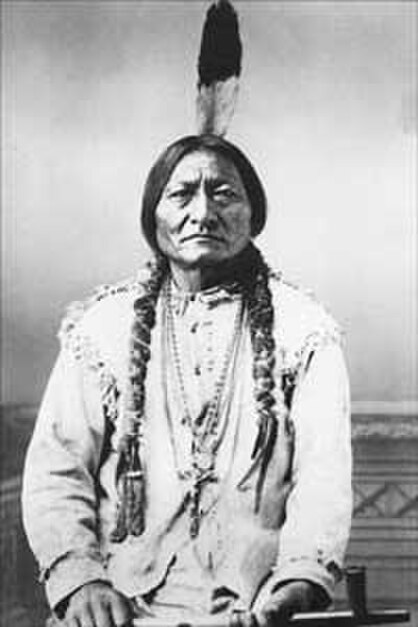
via Wikipedia

I've spent a chunk of the morning in Indian Country--well, I've spent my whole life in Indian Country, particularly now that I live on unceeded First Nations territory. But this morning was spent at the website Indian Country, the First Nations news and culture site. And I've been having a great time.
I've been interested in First Nations issues and culture since reading a biography of Tatanka Yotanka back in elementary school, and his story, and the story of the Lakota, gave rise to my concern for social justice issues. there's an excellent primer on the Canadian situation at 8th Fire.
First Nations also face the problems with our food systems on a reglar basis. There are high rates of diabetes in First Nations communities, for example. A couple of years ago, the CBC ran a documentary about an experiment in low-carb dieting that took place in Alert Bay, here on the West Coast. (There is a short report on the experiment here).
Indian Country, the website,  has a number of interesting food-related articles. A couple of days ago, they reported on recent research into the addictive qualities of carbohydrates:
New research, published June 26 in the American Journal of Clinical Nutrition, proves there's truth behind the belief that food can be addictive.
Brain imaging reveals that after eating highly processed carbohydrates like white bread, pasta, rice, baked goods and other starches, the same pleasure centers of the brain light up as when a person takes drugs such as cocaine and heroin, The New York Times reports. In both cases, dopamine levels, which trigger happiness and feelings of reward, spike and then deplete, thus fueling addiction.
This isn't news to anyone who has read Salt, Sugar, Fat by Michael Moss.
Moss reports on research going back decades that shows substantial similarities between the brain's experience with salt, sugar, and fat and the brain's experiences with narcotics.
Indian Country also has an excellent recipe section, concentrating on brief histories about First Nations use and preperation of different foods ( like duck and sweetbreads) and a recipe that reflects that history.
IC also reports on a local urban agriculture project affecting one First Nation:
An $8,100 grant from the Maine Community Foundation will help grow more fresh organic food for the Penobscot community on Indian Island.
The Peoples’ Garden began as a collaborative among multiple Penobscot Indian Nation governmental departments that were interested in finding ways to ensure food security for future generations. It is a volunteer, intergenerational community garden group located on Indian Island. The funds will be used to increase production and availability of fresh organic food for the Penobscot community while revitalizing community green space.
During summer 2011, a 30’x70’ high tunnel hoop house was erected at a site where a crumbling basketball court once existed.  The court was removed, the site cleaned up, and the hoop house given to the community for a community garden.
I really need to thank the edotors and writers at Inndian Country for an enjoyable couple of hours of browsing.

Monday, March 11, 2013

Overwhelmed Monday Link-straveganza

via Saanich Fair website

Seriously, there is so much going on this past week. I attended the Farmer2Farmer conference at the Saanich fairgrounds, which was a great day, which I really want to talk at length about, and which left me with some hope. But that will have to wait for another post.
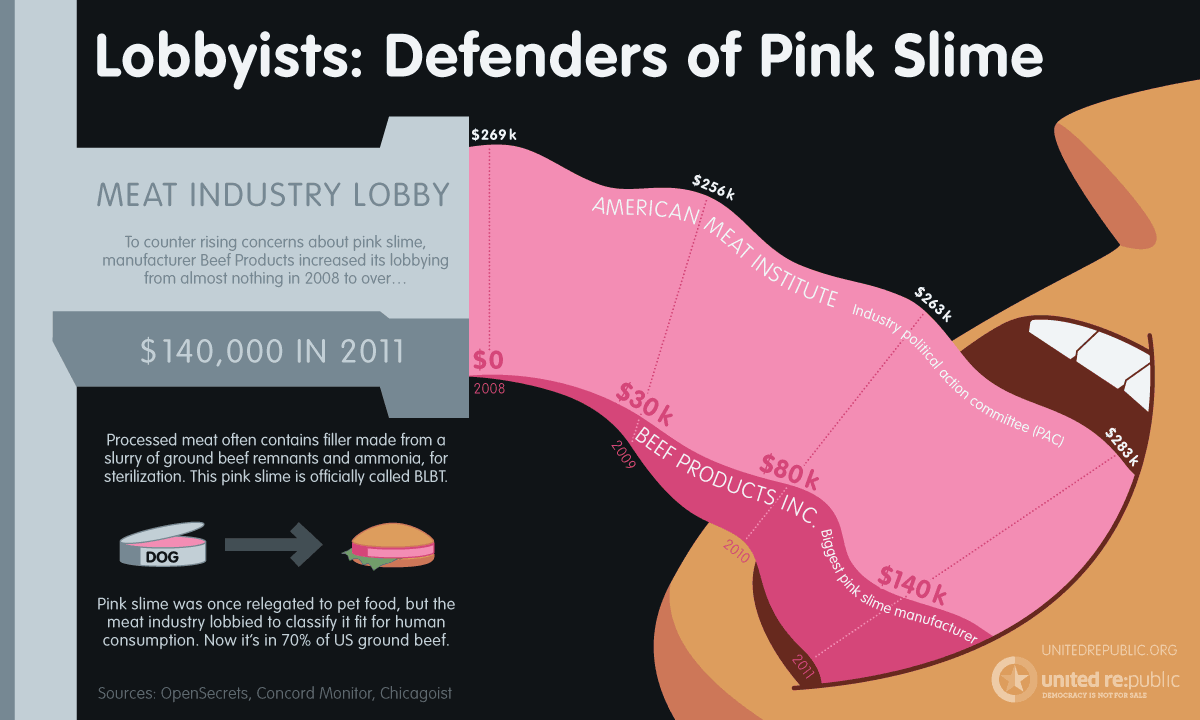
Pink slime--mechanically seperated lean beef that 's been treated with ammonia--is still around.
graphic via republicreport.org
Reuters is carrying a special report (.pdf) on Beef Product Inc.'s lawsuit against ABC, Diane Sawyer and others on their reporting of the use of "lean finely textured beef" in ground beef products like hamburgers. The suit has all the earmarks of a SLAPP (Strategic Lawsuit Against Public Participation) suit, particularly with the potential damages heading north of a billion dollars.
The lawsuit, originally filed in South Dakota state court, is hinged partly on a state product-disparagement statute designed to protect farming interests. Twelve other states have similar laws - dubbed "veggie libel" measures by critics - but they have rarely been invoked.

Under the South Dakota version of the law, plaintiffs must show that defendants publicly spread information they knew to be false and stated or implied "that an agricultural food product is not safe for consumption by the public."

If BPI were to win on that claim, under the law it could be awarded triple the damages that were caused. That means that the company's claim of more than $400 million in projected lost profits could balloon to damages of more than $1.2 billion.
But you can see why they feel they have to silence criticism--BPI has gone from 4 plants and about $650 milliion (US) in revenue to 1 plant and about $130 million (US) in revenue. And, as usual, buy direct from a farmer--make sure they get whatever profit's to be made and have the security of knowing where your food comes from.


image via inhabitat.com

NewsRx Science is reporting on the potential for urban agriculture in one of the US' most depressed cities: Detroit.

Transforming vacant urban lots into farms and community gardens could provide Detroit residents with a majority of their fruits and vegetables.
As city officials ponder proposals for urban farms, a Michigan State University study indicates that a combination of urban farms, community gardens, storage facilities and hoop houses - greenhouses used to extend the growing season - could supply local residents with more than 75 percent of their vegetables and more than 40 percent of their fruits.
The study, which appears in the current issue of The Journal of Agriculture, Food Systems, and Community Development, evaluates many aspects of the production potential of the Motor City's vacant properties, from identifying available parcels of land to addressing residents' attitudes toward blending agrarian traits with their urban lifestyles.
"What's clear from our production analysis is that even with a limited growing season, significant quantities of fresh fruits and vegetables eaten by Detroiters could be grown locally," said Kathryn Colasanti, the graduate student who led the study for the C.S. Mott Group for Sustainable Food Systems at MSU. "And investments in produce storage facilities and hoop houses would increase this capacity substantially."

Now we just need some political will. CBC is reporting that Sudbury's city planning staff is getting onboard, but the councilors are dragging their heels.
It is just an idea at this point — and something many other cities are considering — but city Coun. André Rivest said right now his vote would be a no.
"You got houses that are worth a lot of dollars and you want to keep that,” he said.
“You start having chickens in backyards ... I sense that wouldn't be well received."
But city planner Kris Longston said Sudbury's long-range plans should focus more on urban agriculture.
You can listen to the report here.
And that's the problem, innit? Political will.In a city you have to be willing to stare down local developers--who carry a lot of political and financial weight. And the ability to scare the public with the thought that the value of our homes may decrease. Canadians have become utterly reliant on their homes as their savings accounts--and on increasing home prices fueling consumer purchases--so any threat to house prices threatens the entire myth that we currently function under. The question of just who is expected to pay inflated prices for houses when all the boomers decide to retire isn't one that gets asked--because there is no real good answer. Wealth inequity is becoming more and more pronounced in Canada, and the middle class is starting to lose people off the bottom. The Fear, as Hunter Thompson used to describe it, is starting to set in.

Wednesday, November 14, 2012

More Vertical Urban Farming

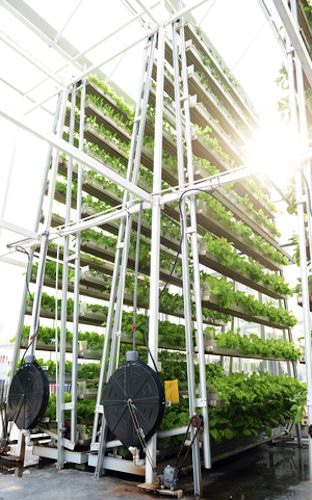
Courtesy of MNDSingapore.
This intriguing item is a giant Ferris wheel  for plants. As reported at the9billion,and at NPR, this is a vertical farming unit currently commercially producing bok choy and Chinese cabbage in Singapore.
Horizontal space is at a premium, so the produce is grown inside 120 slender 30-foot towers, and is already finding their way into Singapore's grocery stores.

Wednesday, August 15, 2012

Cuba, Sí


It's amazing how good I feel today. Seriously. Because one of the big clouds has been lifted.
What happens if it all goes wrong? What if estimates of Middle East oil reserves turn out to have been fabricated out of whole cloth for the last thirty years? (A real possibility, much like the way the same Soviet ICBMs became more and more accurate with each budget appropriation cycle in the US during the late 70s and early 80s.) What happens if global climate change doesn't follow the nice timetable laid out by the IPCC, but instead beats us like Buddy Rich doing a solo? If food miles turns out to actually be a real problem? If industrial food collapses like a house of cards? What if the nightmare scenarios actually come to pass?
Well, after reading an article in The Journal of Peasant Studies, I feel a bit more relaxed when I think about the nightmare scenarios. Because Cuba has already been there, done that, and can see light on the other side.
Cuba, post-revolution, invested in extensive agrarian reform, but a combination of circumstances (the US blockade, and joining the international socialist division of labour for two), led Cuba to strengthen their sugar-producing sector; a sector that dominated 30% of the available farmland and generated 75% of export revenues by 1989. At the same time, Cuba was importing some 57% of its food.
Cuba embraced the Green Revolution wholeheartedly, with the most tractors per person and per unit of area, importing 48% of its fertilizers (which doesn't tell the whole story: of the fertilizer produced domestically, there was a 94% import coefficient), and importing 82% of its pesticides. Cuba was a poster child for Green revolution industrial agriculture. With the second-highest average grain yields of Latin America, Cuba achieved a high level of food security for its population. But what they discovered they did not have was food sovereignty. The 1980s brought increasing pest problems and the yields of some key crops began to decline due to soil degradation and pests (this is actually typical of Green Revolution lead areas around the world; long-term yield levelling or decline seem to be part of the model). 

Tuesday, August 7, 2012

East Coast vs West Coast


I've recently finished a couple of urban farming memoirs: Novella Carpenter's Farm City: the education of an urban farmer and My Empire of Dirt : how one man turned his big city backyard into a farm : a cautionary tale by Manny Howard. Both were interesting to read, but both were really American in their assumptions. Novella Carpenter wrote her book from Oakland, CA, while Manny Howard was writing his from Brooklyn, and the bi-coastal divide is really apparent in their approaches, their style, and their outcomes. Manny, like Julie Powell of Julie and Julia fame, takes on a project that becomes obsessive and relationship-destroying. We meet him suffering a moment in his life that I remember well, the moment when you look around at the reality of being married and having young children. You suddenly realize that it's not all about you, and you are a grown-up now, even if you don't feel like it, want it, or believe it. Its disorienting at best, and in our modern consumer-oriented, atomized culture, distressing. We've created a culture that is best served when we remain self-obsessed adolescents for our entire lives, where “growing up” is seen as the end of the best times rather than a transition into a richer time. In Manny Howard's case, there is a serendipitous phone call from an editor: “How about you turn your yard into an urban farm and live off it for a month?” I can only assume that there was large amounts of alcohol available at that story meeting..... Manny is trapped in that space between adolescent invulnerability and adult sense, and so agrees. His expenses will be covered and there's a nice chunk of change at the end of it all. It is, for anyone who's ever thought about turning their yard into a farm, a perfect situation. You do the work, and someone else pays the bills. Manny bulls ahead, clearing out his backyard, installing a French drain system, and trucking in a load of good topsoil. His aspirations quickly spiral out of control, as he plans a garden, ducks, chickens, and rabbits. His approach is best described when he notes that “this cage, like the rest, was built on the driveway with no plans.” He's never gardened, let alone farmed, and there's no time to do the research up front, so go, go, go! His wife, a long-suffering, highly paid executive at a New York publishing firm (yes, a chauffeured town car picks her up and drops her off daily), watches her husband descend into a madness of obsession and manure, where his definition of the perfect world is radically different from her own. And he appears committed to taking the two children with him into this nightmare. Ultimately, Manny doesn't do a good job of living for a month from the work of his hands. Its not all his fault—there is, after all, a tornado that touches down on his street. And his forays into home meat production are ill-considered at best. All of which stand in stark contrast to the joyous madness happening in Oakland. Novella and her partner Bill move into GhostTown, a neighbourhood in Oakland that is barely functional, where there are shootings blocks away, where the best you can say is that it has become a Temporary Autonomous Zone. Bill, Novella's partner, refits vehicles to burn bio-diesel made from recycled vegetable oil. She works miscellaneous temp or part-time jobs, and comes from a pair of 70s back-to-the-landers. Suffice it to say, Novella is not without clue. Not that she makes it easy on herself. GhostTown is a tough place to live—almost unimaginable for a Canadian working class kid like myself. But when she spies the seemingly abandoned lot next door, Novella hatches a plan. Like the Diggers of England, and the Diggers of San Francisco, she sees that ownership and use must go together. So she begins to clear an abandoned city lot in order to build a garden. And right from the get-go, people start showing up to help. This would be Reader's Digest stuff, except for the strong whiff of counter-culture and the lack of respect for property rights. So, more Utne Reader then.... Novella's book is filled with people who are not her. The people she talks with about how to kill a pig, the drunks and druggies, her neighbours. In each case she tries to give the reader an impression of who this person is, to help make the same connection to them that she felt. The farm is central, but the real story in Farm City is the web of relationships that develop in the temporary Autonomous Zone. Novella gains self-definition when she meets Willow, the woman who drives the area's food security program by farming vacant space and refers to herself as an “urban farmer.” It is a label that Novella quickly adopts (and with good reason). Novella builds gardens,and then decides to indulge in the gateway drug of the urban agriculture movement: chickens. Or, in this case, chickens, turkeys, and ducks. Chickens really are a gateway drug. They add something alive to the landscape—whether urban or rural—and by the time they are ready to lay eggs, you're already addicted to watching alien-yet-understandable activities. And the first time you steal eggs from a nest, you know you're never going back again. I've a farming background, even though I was brought up in the city, so I have always known about the linkage between raising an animal and having to kill one. But killing an animal, any animal, is one of the rituals of humanity from which we have become abstracted. Death is something we shelter ourselves from, hide away, and by doing so, make more powerful. Death is the act that separates the gardener from the farmer. Death is the hurdle that has to be cleared. Both Manny Howard and Novella Carpenter manage it, but Novella manages it with grace and understanding. The two books reflect their authors, but also the places they are written about. Manny Howard's is intense and neurotic—much like the Greater New York area seems to be. Novella Carpenter's book is sprawling and inviting, a masterful combination of memoir and research. Perhaps my being more of a West Coaster than an East Coaster affects my response to the two books. Or maybe being a hippie at heart and a back-to-the-lander myself defines my response. But I'd rather read about Novella's successes rather than Manny's meltdown.

Monday, August 6, 2012

Pushback 1


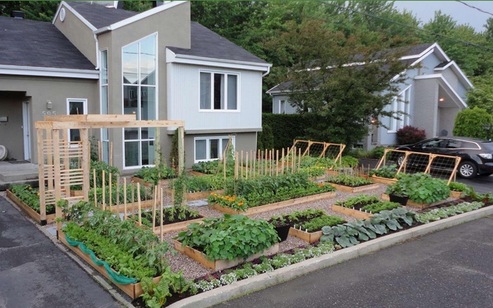
That's a lovely house, don't you think? And a nice yard in front of it.But Drummondville, Qe. (about 100 km NE of Montreal) doesn't seem to think so. After apparently getting a verbal approval from the town's Environmental Inspector, CBC reports that the couple who planted this lovely garden were served with a notice that they had to tear it out within 7 days or face fines of between $100 and $300 a day.
A follow-up report notes that the tear-out date has been extended to 01 September. It also notes that "Drummondville plans to make it illegal to grow vegetables on front lawns anywhere in the city." Apparently the city "held public consultations on the new rule and it said no one objected."
This is the beginning of push back; expect to see more and more of this. I expect it will be framed as a "property values" argument, and be claimed as being non-discriminatory because the new bylaws will affect everyone the same way (ask the residents of Africville how that worked out for them...).  Drummondville is saying that a 30% grass rule already exists--from the look of the above photo, sodding the paths would come close to taking care of that requirement).
In the US, things are the same. According to an article in Grist, push back is occuring there too:
[In] Tulsa [they] bulldozed the entire thing.
If you start looking for stories like these, you’ll turn them up in droves. In 2010, Clarkston, Ga., fined a gardener named Steve Miller for planting too many vegetables. In 2011, Oak Park, Mich., told Julie Bass she couldn’t grow any vegetables in her front yard because vegetables weren’t “suitable” yard plants. (“You can look all throughout the city and you’ll never find another vegetable garden that consumes the entire front yard,” a city official told the local TV station.) And in Chatham, N.J., Mike Bucuk, a young would-be organic farmer, had to fight with the entire town just to grow some vegetables his family’s property.
Gardens are productive. They serve a purpose, and part of that purpose leads to reduced sales for some businesses (fresh produce markets, or farmer's markets, often face stiff opposition from major supermarket players. Here in BC, Save-On Foods is supposed to be one of the big anti-farmer's-market forces). 
But home gardens breed neither fear nor consumption, the two major drivers of modern society. They encourage independence and self-reliance, neither of which sells industrial food. In fact, farmer's markets and home gardens produce exactly what the industrial food system cannot supply: good quality, good tasting produce.
And don't kid yourself. Industrial food will fight back against the home producers, the small and alternative producers. They have to--their business model is based on compliance, on being unable to see any alternatives. Local food has scared them (there are various talking heads that have produced "studies" showing that best-case New Zealand lamb has a smaller carbon footprint than worst-case local lamb, for instance). Industrial food already sends a private police force into the Canadian prairies to see what you're growing and if they can put a stop to it (check out the Percy Schmeiser story, as one example). Industrial food will continue to follow the Big Tobacco playbook to slow the challenge to its business. Like Big Tobacco, there are billions of dollars a year at stake as long as they can keep us solitary, afraid, and dependent. The solution is straightforward: be fearless (read Farm city : the education of an urban farmer by Novella Carpenter, or her blog). Form community. Grow, raise, or produce anything of your own. Its not your job to keep Industrial Agriculture on the top of the food chain. Its your job to do what's best for you, your family and community, and the planet.

Sunday, July 22, 2012

Urban Agriculture--Venezuela

Venezuela  has been moving towards more urban agriculture over the last couple of years. But, as the report from Al Jazeera below shows, results have been mixed. In comparison, the urban agriculture movement in Cuba has done very well. I think the difference is in buy in; in Cuba, the population was faced with a crisis when their agricultural inputs collapsed. The Cuban government responded by removing roadblocks and creating support structures for both urban and rural small agricultural projects. The Venezuelan experience seems to have been more top down.


In North America, the rise of the city chicken is an indication that there is a strong desire for urban agricultural projects, but municipal bylaws keep getting in the way. If our governments were to get out of the way and quit forbidding (which is, I think, more accurate than "allow") more agricultural use of urban land, I don't think we would need much in the way of assistance to get a proper urban agriculture movement off the ground. The agro-ecological principles of farmer-to-farmer peer counselling would take off by itself.

Monday, May 28, 2012

Urban Farmers

 A lovely project from Fire and Light Media Group: a series of short (and long) videos introducing you to urban farmers.


The trailer (above) is longer than many of the short films, but is a real delight; so many people passionate about growing food! The urban farming movement is really taking off--particularly with the experience of Cuba to draw on.
Photo from the City Farmer website

This is a shot of an urban farm in Havana--a farm a lot bigger than pretty much every urban farm in North America. But what has been done in Cuba can be translated into cities here in Canada. In Victoria we have a under-used program that puts growers together with people who would like to see their gardens be used. There are a number of community gardens--like the one up at the University of Victoria that Paula and I are involved with. There's also the Greater Victoria Compost Education Centre, a great resource for converting waste into soil. We had them come out to the Rainbow Kitchen (old site) and do a compost education day last fall. And Lifecycles, who worked on a fruit harvesting program (among so many other projects) last fall that filled a 20cf freezer with sliced, cored apples at the Rainbow Kitchen. Apples picked from the huge number of urban apple trees in this city.
We forget that urban farming can also grow livestock. And not just chickens, but rabbits (my aunt supplemented her income and the family's food  with a rabbit hutch on the family garden plot back in Manitoba decades ago), or pigeons (we forget that pigeons are edible, domesticated, and have been considered suitable for kings as well as commoners). There is a tremendous potential for integrating food production into our lives in the city. It is really a shame we don't do it more often.

Sunday, May 20, 2012

Hungry For Change

I have to say, I love this sort of thing--this is a student-produced, neighbourhood-generated video on a social issue (of course its food security--do I ever talk about anything else these days?)
Here, students look at the concept of a "food desert", a place where there are no grocery stores. All the while that they were interviewing people, I kept thinking "Hey! There's a vacant lot. Use that." Sure enough, they are also involved with an urban farm with a farmer's market component.
This is also a particularly American video. It takes place in an African-American neighbourhood, and there is a deep undercurrent of issues of race. But at the same time, the solutions are practical and applicable to pretty much any urban area.


Umoja Students from North Lawndale College Prep, Manley, and Ace Technical 
High Schools teamed with Free Spirit Media to discover the facts about the food 
desert in North Lawndale, Chicago.

In the end, you have to question how this situation could have become so dire. Food deserts? How the hell do you not feed people? Why should we have to educate people in what constitutes good food? And a big reason for many of the problems we face, I think, is because we are nations of immigrants that destroyed the indigenous cultures, leaving us with no food culture of our own (and not much other place particular culture either, but that's for a different venue). We don't recognize terrior, we have no real place-specific foods (no equivalent to Parmesan cheese which is made in Parma, from Parman cows, the whey of which is fed to hogs which then become prosciutto). We have no generational attachment to the land in North America, and while many immigrants had an attachment to owning land, a house in the suburbs has fulfilled that desire. There is no equivalent to, say, the attachment to land reform and land ownership you find among the peasants of  South America, or the Northern European peasants from whom I am descended. Land hunger has been diverted into house hunger.
But this video points out another truism; that, given tools, people are ready, willing, and able to make changes in their local environments that contribute to self-determination. In many ways, it boils down to an old punk slogan: DIY or Die. Because culture is made, not consumed.

Tuesday, May 15, 2012

The Urban Experience (II)

The CBC covered the story of the urban garden going in in Vancouver this week. What is most interesting is to see how they are building the garden: pallets, cloth/tarp, boxes, soil. In doing this, I'm sure Concord Pacific is getting a great return somewhere along the way (although no one is saying where). But that's fine. What is important is how much food is expected to be grown on an unused parking lot--something like 100,000 kilos. SoleFood has their work cut out for them. Growing that much will be a lot of work--even if not grown in the most sustainable manner. But this is all to the good.
It is, of course, nothing really new. Cuba has been doing this since 1988 and the collapse of the Soviet Union. In Havana, the local government authorized people to use, free of charge, state-owned vacant lots in and around Havana. During the years 1990-1994 (the "special period" when food imports evaporated and the average Cuban lost 9 kilos of weight) it was estimated that more than 27,000 people were linked to some 1,800 hectares of community gardens. Cuba has made great strides in achieving food sovereignty since then.


Sunday, May 13, 2012

The Urban Experience

From The Vancouver Sun website:


A parking lot is not exactly the place you might expect to see organic beans, bok choy and baby beets growing in abundance.

But part of the empty lot on the former Expo lands on the north side of False Creek will become a two-acre urban farm, bursting with 40 varieties of fruits and vegetables, if all goes according to plan.

“It’s an enormous leap,” said Michael Ableman, an urban farmer and director of Solefood, an organization that creates agriculture jobs and training for inner-city residents.

It’s the largest city farm attempted in Vancouver, and will be tended mostly by residents of the Downtown Eastside. The group plans to employ 25 people along with four farming apprentices and sell its produce to restaurants and farmers’ markets. The farm is portable, growing in containers above ground, because the site is on a three-year lease.

“We’re demonstrating this can in fact be considered a serious enterprise for urban areas. We’re not talking about community gardens any more. We’re taking it up a level,” said Ableman, who founded the Centre for Urban Agriculture in Santa Barbara, Calif., in 1981 and now farms on Saltspring Island.