Showing posts with label agricultural issues. Show all posts

Friday, July 25, 2014

Problems/Solutions/Problems

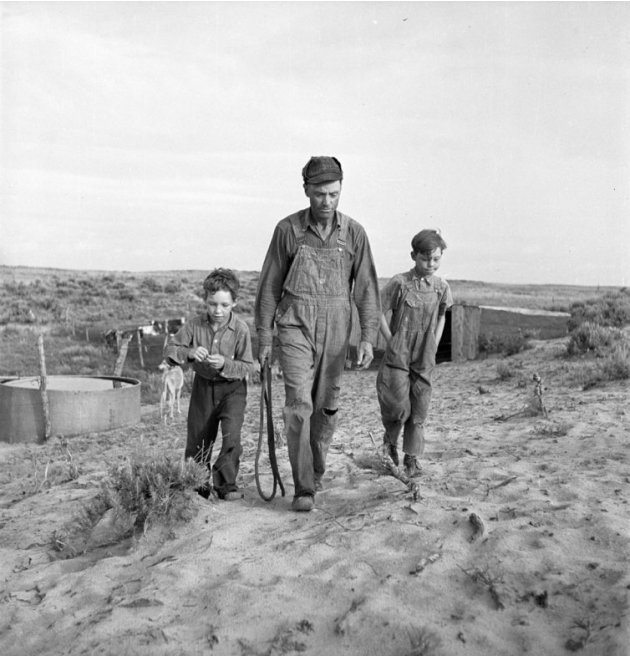
"Farming near Klingerstown, Pennsylvania".
Licensed under Public domain via Wikimedia Commons
I'm currently reading The soil will save us!: how scientists, farmers, and foodies are healing the soil to save the planet by Kristin Ohlson, and while it's an interesting read, aimed at a general audience, I'm not entirely convinced by the title.
But this is not my review of Soil, but the title is serving as a jumping-off point for some other things I've been reading and thinking about. Such as how we're facing this massive increase in population over the rest of this century.
It seems we're expected to increase world population from six to eight or nine billion before we top out. And somehow we need to feed all these people, an accomplishment made all the more difficult by peak oil, global warming, and the question of equitable distribution. The argument is made by industrial agriculture advocates that without high-tech, capital intensive farming, we'll never be able to feed everyone.
But here's the thing; modern agriculture is not a solution. Hell, pre-1900 agriculture is not a solution. Agriculture is the problem. Not the only one, true, but approximately a fifth of the problem. It's not that global warming will impact our ability to grow food in different areas, it's that growing food is contributing to global warming.
The FAO reports that:
[...]estimates of greenhouse gas data show that emissions from agriculture, forestry and fisheries have nearly doubled over the past fifty years and could increase an additional 30 percent by 2050, without greater efforts to reduce them.
[...]Agricultural emissions from crop and livestock production grew from 4.7 billion tonnes of carbon dioxide equivalents* (CO2 eq) in 2001 to over 5.3 billion tonnes in 2011, a 14 percent increase.  The increase occurred mainly in developing countries, due to an expansion of total agricultural outputs.

Meanwhile, net GHG emissions due to land use change and deforestation registered a nearly 10 percent decrease over the 2001-2010 period, averaging some 3 billion tonnes CO2 eq/yr over the decade. This was the result of reduced levels of deforestation and increases in the amount of atmospheric carbon being sequestered in many countries.
* Carbon dioxide equivalents, or CO2 eq, is a metric used to compare emissions from different greenhouse gases based on their global warming potential.

Monday, July 14, 2014

The Rabbit Hole Revisited (Updated)


As I posted in The Rabbit Hole the other day, there are a number of studies about organic food coming out these days, some of which are focused on whether or not organically-raised foods are nutritionally better for you. Industrial agriculture is clearly getting worried about public perception, because they are forming astroturf groups (groups that look like they're grassroots, but are actually funded and directed by industry) as part of their push-back against alternatives to the industrial food system. It is an expected strategy now that Big Tobacco owns such a big piece of the manufactured food-like substance industry.
Well, sure as the "super moon" has arrived, so has another study made it into the media. The Guardian has reported on one in an article titled "Clear differences between organic and non-organic food, study finds."  The article begins:
Organic food has more of the antioxidant compounds linked to better health than regular food, and lower levels of toxic metals and pesticides, according to the most comprehensive scientific analysis to date.
The international team behind the work suggests that switching to organic fruit and vegetables could give the same benefits as adding one or two portions of the recommended "five a day".
The study cited is Higher antioxidant and lower cadmium concentrations and lower incidence of pesticide residues in organically grown crops: a systematic literature review and meta-analyses. There's a lot of what Stepghen Stills called "hooray for our side" going on. The British Soil Association cheers the report for showing that "this research [...] shatters the myth that how we farm does not affect the quality of the food we eat."
Of course, there is an opposing viewpoint: Tom Sanders, a professor of nutrition at King's College London said "he was not persuaded by the new work. "You are not going to be better nourished if you eat organic food," he said. "What is most important is what you eat, not whether it's organic or conventional. It's whether you eat fruit and vegetables at all. People are buying into a lifestyle system. They get an assurance it is not being grown with chemicals and is not grown by big business."
So the question of whether organically grown food is nutritionally better for you is still not a solved puzzle. Mostly because nutrition is not a solved puzzle. Despite all the research being produced and released, and commented on by and in the media, we still have no really good idea about what any of the research means. Because double-blind human trials would be unethical, we will probably never definitively know what any of this research does and doesn't mean.
The Guardian, to its credit, does try to address this in a piece by titled Will eating organic food make you healthier? After some back-and-forthing with various studies, claims and counter-claims, there is actually a follow-up interview with one of the study's lead authors, Carlo Leifert where he gets to respond to some of the claims and criticisms around the study. Some of the criticisms and his responses?
Cadmium variation usually results from soil variation:
"We are pretty certain that soil type is averaged out over the many studies [we analysed]."
Higher cadmium levels in conventional crops are still within safe legal limits:
"But cadmium accumulates in the body - you really want to avoid eating it if possible."
Pesticides levels is conventional foods are also beneath maximum recommended levels:
"But there are some conventional crops that do exceed levels (eg 6% of spinach - see paper for more examples). If you want to avoid that it would be helpful to eat food with a lower chance of pesticides. until they start testing combinations of pesticide I am not confident in the regulatory testing regime."
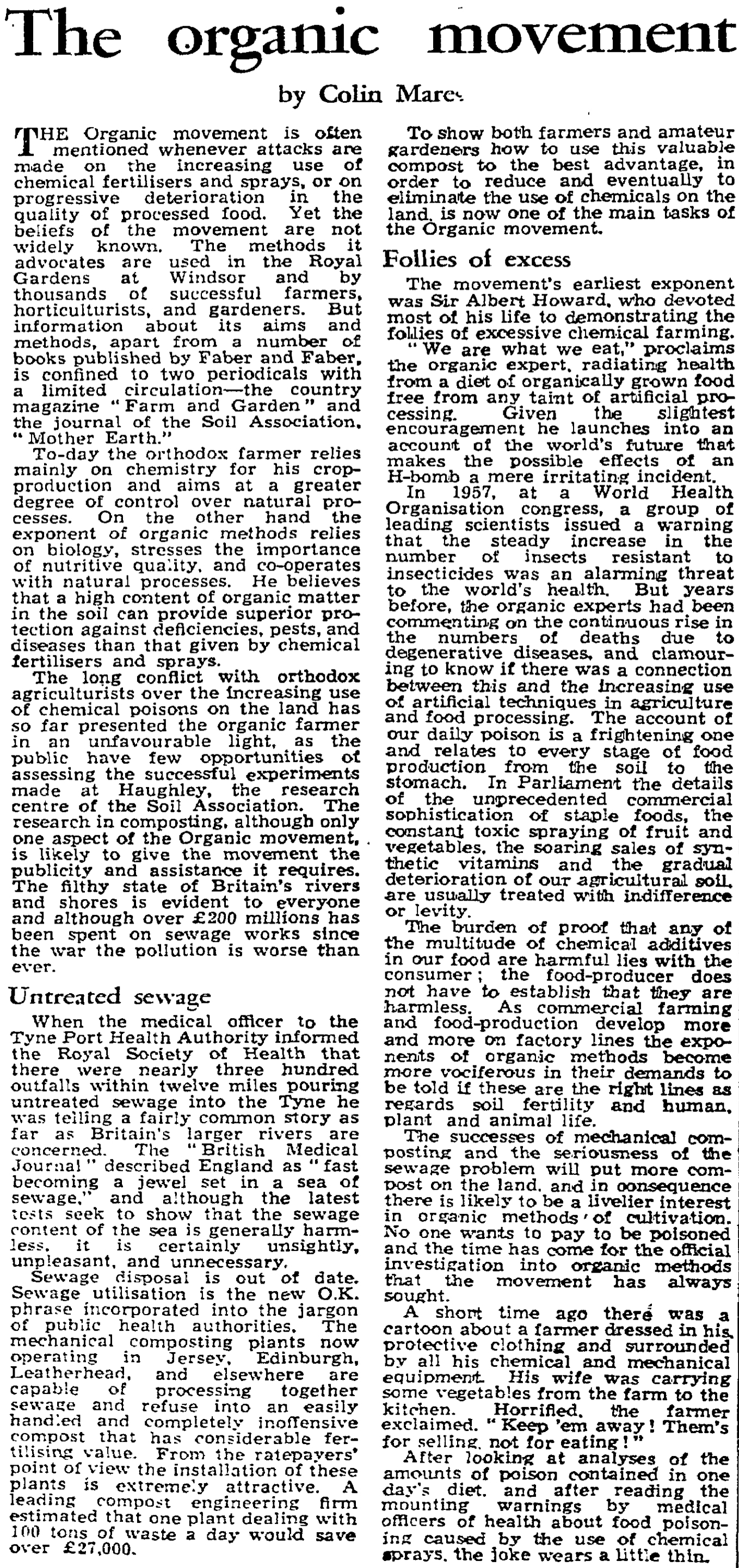
Mathiesen's article is noteworthy for taking a lot of the politics out, and adding a fair bit of the science back in to the whole "is organic better" argument. There's also a link to a great reproduction of an old article called The Organic Movement by Colin Mares (?), which shows that some of these arguments go back decades.

UPDATE:
Another excellent piece by Nathanael  Johnson at Grist on the controversy ( can it really be a controversy when both sides are arguing from positions of scientific uncertainty?).
But what we do know is clear: organic food exposes us to fewer pesticides and herbicides and is better for the soil. And that Industrial Organic is not the same as Sustainable Organic. So buy local organic when you can, and plant a garden (or a plot, or a balcony, or a pot in the window).

Monday, January 6, 2014

The Coming Crisis

About 30 percent of the major global cereal crops – rice, wheat and corn – may have reached their maximum possible yields in farmers' fields, according to University of Nebraska-Lincoln research published this week in Nature Communications. These findings raise concerns about efforts to increase food production to meet growing global populations.
Yields of these crops have recently decreased or plateaued. Future projections that would ensure global food security are typically based on a constant increase in yield, a trend that this research now suggests may not be possible.
Estimates of future global food production and its ability to meet the dietary needs of a population expected to grow from 7 billion to 9 billion by 2050 have been based largely on projections of historical trends. Past trends have, however, been dominated by the rapid adoption of new technologies – some of which were one-time innovations – which allowed for an increase in crop production.
As a result, projections of future yields have been optimistic – perhaps too much so, indicates the findings of UNL scientists Kenneth Cassman and Patricio Grassini, of the agronomy and horticulture department, and Kent Eskridge of the statistics department.
Source: UNL news release
Isn't that good news to start the New Year off with?  Thirty percent of current cropland has topped out its productivity and may actually begin to decline in yields. The authors of the paper suggest that regardless of how much money we dump into research into crops and productivity, "return on these investments is steadily declining in terms impact on raising crop yields." That's the "high-production" industrial agriculture we're talking about. And that's not including increased salinity, loss of cropland to desertification (particularly in Northern China), climate change effects, or any of the other threats to food production we might be facing.
All the indications are that we're facing an extended "Special Period" similar to the one experienced by Cuba after 1991. Which is one of the reasons why I've been reading a lot on the Great Hunger; the Irish famine of 1845-1847.
I expect to be writing a great deal more on the famine in the near future, but for now, let me just hit a few of the high points:
  • The famine happened with a short-term change in historic climate patterns in Ireland. Temperatures went up a little, allowing a previously quiescent mould to get a grip on the potato crop.
  • The Irish were utterly dependent on the potato. Worse, primarily on the "Lumper" cultivar.
  • The Irish economy was crap, undiversified, and beat down over the last century by the English in response to some poor choices on the part of the Catholic Irish on who they supported politically.
  • The English were in the grip of a religious revival that was very Old Testament, and were busy blaming victims for religious reasons rather than looking at political solutions.
  • The English were in the grip of a neo-liberal economic philosophy that demonised interference in the market, and exalted free-trade.
I'd go on, but you might be ahead of me here. Amartya Sen says that there's never been a famine in a democracy, but doesn't say anything about failed states that were once democracies.

Wednesday, September 25, 2013

Land Grab or Investment Opportunity?

screencap from African perspectives

The always-interesting Aljazeera takes on the question of massive foreign purchases of land on the African continent:
Escalating energy and food prices have triggered a global scramble for Africa's land and water resources. Eager to feed their growing populations, countries are buying up prime farmland in Africa at rock bottom prices. Land eight times the size of the UK has already been bought up by hungry investors.


via Aljazeera


Eight times the size of the UK. That's a lot of land. On South2North, Redi Tlhabi talks to former Mozambican President Joaquim Chissano, Nigerian politician and Oxfam trustee Nkoyo Toyo and Philippe Heilberg, a land investor from the US.
The problem is, this land is being industrially farmed for food for non-African countries--the food being grown is primarily for export. That doesn't do a lot for the affected countries. Investment in peasant agriculture following agro-ecological principles would do a lot more towards both feeding the population and growing the local economies. It's like Walmart coming into a country. It doesn't do the local economy any good--they bring some minimum wage jobs, but the destruction of small businesses and the asset stripping of the local area causes far more damage than any benefit from the local employment.
One of the interesting things about the discussion is how Philippe Heilberg acknowledges that he's a disaster capitalist, and he invest because he can get exponential growth and returns on his investment--without regard for local conditions.
Heilberg argues that the statistics from the UN are highly distorted because they are not closed or official deals. He says that his own figures have been doubled in some accounts.
"Land is cheap in Africa, but there are many reasons why it's cheap. In many parts of the continent there is little to no infrastructure whatsoever .... The frontier markets offer incredible risk-reward opportunities. Because when the growth happens it's exponential."
Toyo disagrees that these deals have always been above-board and that they benefit local communities.
"That's not what we are seeing on the ground. We are seeing incidences of violence. We are seeing incidences of forced evictions. We are seeing incidences of homelessness, farm lands being taken away ... The fact is that most of the grabs that are going on, the owners don't even know about them, so there isn't even a basis for that conversation to happen. The negotiations are happening sometimes with powerful people in secret negotiations. These non-transparent processes are depriving people down the line."

Monday, February 4, 2013

Qatar and the Problem of Food Security

via Wikipedia
Qatar is not a big country. At about 11,600 sq kilometres (or just under 4,500 sq. miles), Qatar has a population of about 1.6 million, with only a quarter million of those being citizens. Qatar survives on its fossil fuel reserves, giving it a high per capita income--but also a moderate gini coefficient of 41.1 (the measure of inequality in a society). But what Qatar doesn't have is water. And they don't really have any food either.
Qatar inports about 90% of the food they consume--a number roughly comperable to Vancouver Island.  But the Qatar government is hoping to change that--by embarking on an intensive food production regime backed up with desalination of ocean water for irrigation. Al Jazeera has reported on this:
About 200 staff, mostly from other Middle Eastern nations and the Indian sub-continent, tend to crops on the irrigated, semi-arable land and in greenhouses.
More than a dozen greenhouses are set in rows and cooled to deal with summer temperatures that frequestly exceed 50° Celsius (122°F). Hydroponics - a soilless, mineral-infused water growing system - helps to produce tomatoes, eggplants and green peppers.
Qatar wants to increase these farms twofold to about 3,000 as part of a plan to become food secure by 2024.
"We believe Qatar can produce the vegetables for the local market, without any need to import," Shamardal says.
They've got about 1500 farms growing vegetables, and hope to double that number by 2024. Mostly, it seems, because they don't really trust the stability of the world food system. Qatar has seen food price rises of 5% a year from 2006 through 2011--raising the prices high enough that the government is worried.
Fahad bin Mohammed al-Attiya, chairman of the Qatar National Food Security Programme, said "We intend to reduce the level of volatility and make sure there is certainty within the system and build confidence that this country is not going to be prone to food price shocks and food supply shocks in the future."  After all, Egypt's government, the one that seemed so stable and permanent,  fell quickly when the food price index jumped to over 210.
Here's a short piece from Al Jazeera:


Al Jazeera news on Qatar's food security program.

Qatar is also moving ahead with being able to grow more food on saline soils. By intensively growing a naturally-occurring soil fungus called mycorrhiza and then using it to innoculate soils, plants are more able to deal with salt,  better able to take up nutrients, and better able to deal with the punishing heat.


Al Jazeera news on Qatar's mycorrhizal program.

Friday, January 18, 2013

Eat Local Advertisment

At just over two minutes, this short video hits most of the points about the current state of our food system. I'm intrigued by this being put out by a commercial food company--Hellman's.


Good short film. Pass it along....
 Update: I have no idea what happened, but the embed code disappeared somewhere between me hitting save and the post publishing. Aarrgghh!! I say...
Just in case, here's the link:
https://www.youtube.com/watch?v=_oKkIeCjllQ

Wednesday, December 26, 2012

Some Good News

Safeway has exceeded its cage-free egg goal, reports Triple Pundit. It's not perfect--the goal was to increase from 6 to 12 percent of its eggs coming from cage-free, Humane Farm Animal Care-certified farms, and they've managed to achieve 15 percent. But it's still a big and positive step forward to having humanly-sourced eggs available at one of North America's biggest food retailers.
Free-ranging rooster.   credit:wikipedia
This is a big company--2011 sales of $43.6B--that's making a change driven by consumer demand. And that's a powerful thing. But if it hurt their sales, they would spin on a dime and go back to the old ways in a New York second. So consumer support will be required over the long term.
The standards the farm meets are pretty good, too:
The Certified Humane label is described by HFAC as a “certification and labeling program that is the only animal welfare label requiring the humane treatment of farm animals from birth through slaughter.” In order to qualify for the Certified Humane label, an egg farm has to meet certain standards:
  • Cages are not allowed, and housing facilities must include areas for hens to nest, dust bath, scratch and perch
  • The animals must have enough space, shelter and gentle handling to limit stress
  • The animals must have access to ample fresh water and a healthy diet of quality feed with no animal by-products
Also important is Safeway's commitment to  a gestation crate free pork supply chain, as well. So kudos to a major retailer and it's response to consumer demand to do the right thing.

Thinking About Production

Chickpea plant   credit: Wikipedia

Just as Britain has moved from the land of "meat and two veg" to a country full of curries and celebrity chefs (Gordon Ramsay, Jamie Oliver, Heston Blumenthal, etc.), so to has DEFRA, the Department for Environment, Food, and Rural Affairs, changed its way of thinking about what the country should look at producing.
DEFRA is actually one of the more forward-thinking government departments around, and looking at the current vasriety of food consumption in the UK, they've figured out that it might be time for a change. As the Guardian reports:
Growing ingredients for Indian curries such as chickpeas for pakoras as well as a range of exotic herbs and spices would open up new markets for British farmers and reduce dependence on imports, according to government report into how the agricultural sector can operate more sustainably in future. Growing more curry ingredients domestically could also potentially reduce carbon dioxide emissions from food imports.
By examining the problems facing the UK's food production and countryside through key sectors and foods including curries, breads and dairy products, the Department for Environment, Food and Rural Affairs (Defra) is hoping to improve food systems at a time when they are coming under increasing threat. The Green Food Project report says that major changes must be made to agriculture, food processing and retailing, if price rises are to be kept in check and the natural environment preserved.
Lord knows, DEFRA may not be perfect (but really, who or what actually is?) but at least they, and by extension the British people, are grappling with questions that the majority of Canadians still haven't heard of.

Saturday, November 17, 2012

The Truth Will Out

A journal article popped up rather unexpectedly on PLOSOne the other day. Titled
Increasing Cropping System Diversity Balances Productivity, Profitability and Environmental Healththe article details how researchers have  compared the standard industrial model agroculture, with lots of herbicides/pesticides and a two-crop rotation, with a three crop and four crop rotation.using much lower levels of nitrogen and herbicide inputs. To quote the authors; "We hypothesized that cropping system diversification would promote ecosystem services that would supplement, and eventually displace, synthetic external inputs used to maintain crop productivity."
The news is good. "Grain yields, mass of harvested products, and profit in the more diverse systems were similar to, or greater than [emphasis mine], those in the conventional system, despite reductions of agrichemical inputs." The abstract pretty much covers it all:
Balancing productivity, profitability, and environmental health is a key challenge for agricultural sustainability. Most crop production systems in the United States are characterized by low species and management diversity, high use of fossil energy and agrichemicals, and large negative impacts on the environment. We hypothesized that cropping system diversification would promote ecosystem services that would supplement, and eventually displace, synthetic external inputs used to maintain crop productivity. To test this, we conducted a field study from 2003–2011 in Iowa that included three contrasting systems varying in length of crop sequence and inputs. We compared a conventionally managed 2-yr rotation (maize-soybean) that received fertilizers and herbicides at rates comparable to those used on nearby farms with two more diverse cropping systems: a 3-yr rotation (maize-soybean-small grain + red clover) and a 4-yr rotation (maize-soybean-small grain + alfalfa-alfalfa) managed with lower synthetic N fertilizer and herbicide inputs and periodic applications of cattle manure. Grain yields, mass of harvested products, and profit in the more diverse systems were similar to, or greater than, those in the conventional system, despite reductions of agrichemical inputs. Weeds were suppressed effectively in all systems, but freshwater toxicity of the more diverse systems was two orders of magnitude lower than in the conventional system. Results of our study indicate that more diverse cropping systems can use small amounts of synthetic agrichemical inputs as powerful tools with which to tune, rather than drive, agroecosystem performance, while meeting or exceeding the performance of less diverse systems.

Friday, July 20, 2012

A Year Getting Worse II

The US drought is starting to raise eyebrows in the business world. So we can expect our politicians to start noticing soon. That usually means that its going to cost the taxpayer for some ad hoc design program that's intended to be a temporary measure, but has a good chance of becoming a permanent feature distorting markets across the globe. The beginnings of this are in place as the US has declared 1,297 counties in 29 states “disaster areas.” The USDA has cut its corn production forecast by 1.8 billion bushels and lowered yield expectations to 146 b/a from 166 b/a back in June of this year. Corn futures have hit an all time high of $8US a bushel, and as the primary crop in the US is industrial corn, that makes a heck of a difference (all figures current to 19 July/12). So what does this mean for you and I, sitting here in Canada, wondering what to do next? Well, it means some of our industrial farmers will be doing better this year. But with Canada's integration with global markets, it does not mean that Canadians will see any benefit. We will not be seeing any drop or even stability in the prices we pay in the supermarket. About 40% of North American corn production is used for animal feed (regardless of whether or not its good for the animals involved) so we can expect to see a hike in meat prices come through the industrial food system. When? That's a trickier story. If markets are efficient and honest, meat prices should begin to rise over the next six to twelve months. This would mean producers looking at older, cheaper supplies they have in stock and calculating when they will run out and newer, more pricey supplies begin to be used. What is far more likely—as the oil industry has shown us time and time again—is that the old stock will become re-valued at the new international price, and prices will rise immediately, in order to maximize profits. There is actually wiggle room available: about 40% of corn grown in NA is designated for biofuel production. With dramatically increased feed-stock prices, corn-derived fuel will quickly become uneconomic to produce and sell (unless, of course, oil heads well north of $120/bbl in the very near future). Reduced demand from biofuel manufacturers would free up stocks to go for animal feed, and help keep a check on the price rise. The problem, of course, is the ubiquity of corn in the food system. If you're shopping the produce aisles, you might be in reasonable shape. But if you shop the inner aisles you'll find corn or corn-derived products in pretty much everything. For example, the citric acid used as a preservative in tomato sauce: corn-derived. HFCS (high-fructose corn syrup), of course. But also margarine, candies, ketchup (and catsup), peanut butter, and mayonnaise. (And a lot of non-food products like paint, printing inks, and photographic films). But this is going to be the new normal. If not drought, floods. If not floods, tornadoes. Or other extreme weather events. North Americans have had artificially low food prices for decades, and that period is about to come to a close as a result of global climate change. Recent projections have put temperature rise at 8-10 degrees over the rest of the century. This means that all of us are going to be to suffering for a short time, those of us under 40 are really going to notice the changes, and those under twenty might not make it.

Saturday, July 14, 2012

A Year Getting Worse

Al Jazeera English is reporting
The US department of agriculture has declared a natural disaster in 26 states where the Midwest drought has done considerable damage to this year's corn crop.
High temperatures and drought in the farm belt have devastated farms and are pushing up the price of corn and other crops.
This is both as bad as it sounds and not quite as bad as it sounds. As  Hannah Poturalski, a staff writer with the Middletown Journal in Ohio puts it: "Ohio is among 29 states with counties now designated as natural disaster areas due to the drought." That is to say, it's not the entire state that has declared drought condition, but counties within it have. Still, when you look at the map, the situation is pretty severe.


According to the US Drought Monitor on July 05, 2012, "Analysis of the latest drought monitor data revealed that 46.84 percent of the nation’s land area is in various stages of drought, up from 42.8 percent a week ago...Looking only at the 48 contiguous states, 55.96 percent of the country’s land area is in moderate drought or worse." in the July 10, 2012 news release, the Drought Monitor notes:
[W]ith the hot weather that covered much of the central and eastern United States, only a few scattered areas of dryness and drought experienced significant improvement. In addition, the areas with the greatest temperature anomalies (average daily maxima 10 to 13 degrees above normal) generally coincided with an area of scant rainfall across the Midwest, northwestern Ohio Valley, and southern Great Plains, resulting in another week of widespread deterioration and expansion of dryness and drought in these regions.
In the hottest areas last week, which were generally dry, crop conditions deteriorated quickly. In the 18 primary corn-growing states, 30 percent of the crop is now in poor or very poor condition, up from 22 percent the previous week. In addition, fully half of the nation’s pastures and ranges are in poor or very poor condition, up from 28 percent in mid-June. The hot, dry conditions have also allowed for a dramatic increase in wildfire activity since mid-June. During the past 3 weeks, the year-to-date acreage burned by wildfires increased from 1.1 million to 3.1 million as of this writing.
That's about 4800 square miles or 12545 square kilometres burned over so far this year.  The Drought Monitor has also produced the following animation of drought conditions in the US over the last 12 weeks:
 There is some hope for rain in some area this week, but overall, this means trouble. With corn crops not producing ears (check out the Al Jazeera footage, above), and with pasture, soy, and other crops affected, the industrial food system is going to be seriously strained this year. Combined with big money building speculative bubbles in the food system, we could be facing a doubling or better of food costs this year.

According to the National Oceanic and Atmospheric Administration (NOAA), the period from January through June was "the warmest first half of any year on record for the contiguous United States."
The average temperature was 52.9 degrees Fahrenheit, or 4.5 degrees above average, NOAA said on Monday. Twenty-eight states east of the Rockies set temperature records for the six-month period.
A heat wave blistered most of the United States in June, with more than 170 all-time temperature records broken or tied during the month. On June 28 in Norton, Kan., for instance, the temperature reached 118 degrees, an all-time high. On June 26, Red Willow, Neb., set a temperature record of 115 degrees, eclipsing the 114-degree mark set in 1932.

I'm not saying that it will get as bad as this 1942 Alfred Eisenstaedt photo of the dustbowl, at least not this year.
unpublished, from Life


But don't think it can't happen again. Dr. David Schindler, over at the University of Alberta, has pointed out that the Twentieth Century was the wettest century in the Pallister Triangle in the last 10,000 years. It has also been the only century we've farmed in the Triangle, so our perceptions are kind of skewed. And the past century also had four major drought events, including the one above. So Global Climate Change is going to matter here in North America.

Thursday, May 17, 2012

Special Rapporteur Spanks Canada

Yesterday, the United Nations Special Rapporteur on the right to food delivered his preliminary reflections [pdf] on his eleven day trip to Canada. Olivier De Schutter's press conference and report on the state of food security in Canada and our progress on the human right to food spanked Canada pretty good. You could tell how accurate it was by the three members of cabinet that attacked him, claiming he knew nothing of Canada and shouldn't have been here anyway--even though he was here at the invitation of the federal government.


The CBC report on De Shutter's Visit

The reason for the Harper government's upset is mentioned in the report from the CBC: De Shutter's report to the UN Human Rights Commission becomes part of Canada's human rights record at the UN. And the report is quite critical about Canada's food security status.
The Special Rapporteur visited four provinces (Quebec, Ontario, Manitoba, and Alberta) and convened eight civil society meetings in which he met with farmer's organizations,food security groups, human rights organizations, academics, researchers, and communities. He also read a number of written submissions from individuals and communities.
Health Minister Leona Aglukkaq was one of the Harper government's attack dogs, saying that as De Shutter had not visited her home community, there was no way he could comment on the food security status of Canada's First nations people. On the CBC program Power and Politics, De Shutter pointed out that a trip to Aglukkaq's home would have involved two days travel each way. In his preliminary remarks, he does mention that he met with First Nation's groups and communities in all four provinces, including the Inuit Tapiriit Kanatami and the Congress of Aboriginal Peoples. He then thanks a number of First Nation's organizations and chiefs, council, and community members with whom he visited. Having failed to travel two days to a remote village doesn't really seem to have affected his meeting with a wide variety and cross-section of Canada's First People.
De Shutter's report doesn't say anything really new--anyone paying attention to poverty and/or food security issues in Canada over the last 35 years will not be at all surprised.
A growing number of people across Canada remain unable to meet their basic food needs. In 2007/2008, approximately 7.7 per cent of households in Canada reported experiencing moderate or severe food insecurity.4 Approximately 1.92 million people in Canada, aged 12 or older, lived in food insecure households in 2007/2008 and a staggering 1 in 10 families, 10.8 per cent, with at least one child under the age of six were food insecure during the same period
Fifty-five per cent of households in which the main source of income was social assistance are food insecure, the result of a huge discrepancy between social assistance levels and the rising costs of
living.6 The failures of social assistance levels to meet the basic needs of households, have resulted in the proliferation of private and charity-based food supplements. In 2011, Food Banks Canada
calculated that close to 900,000 Canadians were accessing food banks for assistance each month, slightly over half of whom were receiving social assistance.
The Special Rapporteur was disconcerted by the deep and severe food insecurity faced by aboriginal peoples across Canada living both on- and off-reserve in remote and urban areas. Statistics on First Nations specific food insecurity are few, however the First Nations Regional Longitudinal Health Survey (RHS 2008/10) indicates that 17.8 per cent of First Nations adults (age 25–39) and 16.1 per cent of First Nations adults (age 40–54) reported being hungry but did not eat due to lack of money for food in 2007/2008.
[from the preliminary  remarks page 2]

But the Special Rapporteur's remarks have made it very clear why the Harper government went on the attack so quickly; after pointing out how many strong actions have been taken on the human right to food and food security at the municipal and provincial level, he points clearly to the lack of a national food strategy in Canada. During his interview with Evan Solomon on Power and Politics, De Shutter comments on the strong grassroots commitment and concern over food and food security issues in Canada--a constituency he feels is unrecognized at the federal level.


Evan Solomon interviewing Olivier De Shutter on CBC's Power and Politics

Olivier De Shutter has been the UN Special Rapporteur on the right to food since March of 2008, and this was his first visit to a developed country like Canada. I, for one, was pleased that he held Canada to the same standards that he would a country in the developing world. he has also been paying attention to the agroecological movement taking place in the developing world--which he talks about in the following video clip:


UPDATE:
Food Secure Canada  has a transcript of the questions asked in the House about the Special Rapporteur's preliminary report. Depressingly low-quality questions and answers.

Tuesday, May 15, 2012

The Urban Experience (II)

The CBC covered the story of the urban garden going in in Vancouver this week. What is most interesting is to see how they are building the garden: pallets, cloth/tarp, boxes, soil. In doing this, I'm sure Concord Pacific is getting a great return somewhere along the way (although no one is saying where). But that's fine. What is important is how much food is expected to be grown on an unused parking lot--something like 100,000 kilos. SoleFood has their work cut out for them. Growing that much will be a lot of work--even if not grown in the most sustainable manner. But this is all to the good.
It is, of course, nothing really new. Cuba has been doing this since 1988 and the collapse of the Soviet Union. In Havana, the local government authorized people to use, free of charge, state-owned vacant lots in and around Havana. During the years 1990-1994 (the "special period" when food imports evaporated and the average Cuban lost 9 kilos of weight) it was estimated that more than 27,000 people were linked to some 1,800 hectares of community gardens. Cuba has made great strides in achieving food sovereignty since then.


Sunday, May 13, 2012

The Urban Experience

From The Vancouver Sun website:


A parking lot is not exactly the place you might expect to see organic beans, bok choy and baby beets growing in abundance.

But part of the empty lot on the former Expo lands on the north side of False Creek will become a two-acre urban farm, bursting with 40 varieties of fruits and vegetables, if all goes according to plan.

“It’s an enormous leap,” said Michael Ableman, an urban farmer and director of Solefood, an organization that creates agriculture jobs and training for inner-city residents.

It’s the largest city farm attempted in Vancouver, and will be tended mostly by residents of the Downtown Eastside. The group plans to employ 25 people along with four farming apprentices and sell its produce to restaurants and farmers’ markets. The farm is portable, growing in containers above ground, because the site is on a three-year lease.

“We’re demonstrating this can in fact be considered a serious enterprise for urban areas. We’re not talking about community gardens any more. We’re taking it up a level,” said Ableman, who founded the Centre for Urban Agriculture in Santa Barbara, Calif., in 1981 and now farms on Saltspring Island.

Saturday, May 12, 2012

A Number of Issues

A Huffington Post article echoed on Alternet. Martha Rosenberg introduces her list of BigAg's Nine Issues:
Food scandals are so costly to Big Food, it has repeatedly tried to kill the messenger rather than clean up its act. In the 1990s it pushed through "food disparagement" laws under which Oprah Winfrey herself was sued by cattlemen in 1997 (Winfrey said she would never eat a hamburger again upon learning that cows were being fed to cows). Winfrey was acquitted and cow cannibalism was made illegal but the US still lost $3 billion in beef exports when a first mad cow was discovered in 2003. April's new mad cow will not help foreign trade.
Last year, Big Food introduced Animal Facility Interference laws in several states which make it a crime to "produce, distribute or possess photos and video taken without permission at an agricultural facility." The bills also criminalize lying on an application to work at an agriculture facility "with an intent to commit an act not authorized by the Owner"--in an effort to stop the flow of grisly undercover videos. The first facility interference offense would be an aggravated misdemeanor but subsequent offenses could be felonies.

Of course, the Ag-Gag bills, as they were quickly dubbed, are anti-free-speech and would chill both whistle-blowers and news media (who couldn't legally even receive non-approved farm images). The bills were scorified by CNN, the New York Times, Time magazine and First Amendment and food safety activists and, luckily, were defeated in 2011. But they are creeping back.
It would be difficult to argue with her sentiments, but for the moment, at least, Canada isn't seeing quite the same activity on the part of BigAg. Well, not until the Stephen Harper government attacked environmentalists....  With a government inspired by a fundamentalist right-wing theology that doesn't acknowledge the validity of science and believes that mankind cannot harm the environment (no, really.), BigAg, just like BigOil, doesn't actually have to get it's hands dirty. They can simply watch our government go further faster than even they would have hoped. [Martha Rosenberg's Nine Issues and my Canadian-perspective gloss follow the jump]