Showing posts with label population. Show all posts

Monday, February 4, 2013

Qatar and the Problem of Food Security

via Wikipedia
Qatar is not a big country. At about 11,600 sq kilometres (or just under 4,500 sq. miles), Qatar has a population of about 1.6 million, with only a quarter million of those being citizens. Qatar survives on its fossil fuel reserves, giving it a high per capita income--but also a moderate gini coefficient of 41.1 (the measure of inequality in a society). But what Qatar doesn't have is water. And they don't really have any food either.
Qatar inports about 90% of the food they consume--a number roughly comperable to Vancouver Island.  But the Qatar government is hoping to change that--by embarking on an intensive food production regime backed up with desalination of ocean water for irrigation. Al Jazeera has reported on this:
About 200 staff, mostly from other Middle Eastern nations and the Indian sub-continent, tend to crops on the irrigated, semi-arable land and in greenhouses.
More than a dozen greenhouses are set in rows and cooled to deal with summer temperatures that frequestly exceed 50° Celsius (122°F). Hydroponics - a soilless, mineral-infused water growing system - helps to produce tomatoes, eggplants and green peppers.
Qatar wants to increase these farms twofold to about 3,000 as part of a plan to become food secure by 2024.
"We believe Qatar can produce the vegetables for the local market, without any need to import," Shamardal says.
They've got about 1500 farms growing vegetables, and hope to double that number by 2024. Mostly, it seems, because they don't really trust the stability of the world food system. Qatar has seen food price rises of 5% a year from 2006 through 2011--raising the prices high enough that the government is worried.
Fahad bin Mohammed al-Attiya, chairman of the Qatar National Food Security Programme, said "We intend to reduce the level of volatility and make sure there is certainty within the system and build confidence that this country is not going to be prone to food price shocks and food supply shocks in the future."  After all, Egypt's government, the one that seemed so stable and permanent,  fell quickly when the food price index jumped to over 210.
Here's a short piece from Al Jazeera:


Al Jazeera news on Qatar's food security program.

Qatar is also moving ahead with being able to grow more food on saline soils. By intensively growing a naturally-occurring soil fungus called mycorrhiza and then using it to innoculate soils, plants are more able to deal with salt,  better able to take up nutrients, and better able to deal with the punishing heat.


Al Jazeera news on Qatar's mycorrhizal program.

Monday, April 9, 2012

Not Looking Good

There is a lot of serious, high-level worry going on over the state of  our current and future world food supply these days. Such as the Planet Under Pressure conference that just wound up at the end of March. As the New York Times reported about a year ago:

A rising unease about the future of the world’s food supply came through during interviews this year with more than 50 agricultural experts working in nine countries.
These experts say that in coming decades, farmers need to withstand whatever climate shocks come their way while roughly doubling the amount of food they produce to meet rising demand. And they need to do it while reducing the considerable environmental damage caused by the business of agriculture.
Agronomists emphasize that the situation is far from hopeless. Examples are already available, from the deserts of Mexico to the rice paddies of India, to show that it may be possible to make agriculture more productive and more resilient in the face of climate change. Farmers have achieved huge gains in output in the past, and rising prices are a powerful incentive to do so again.
Source: NYT.com
Of course, if we really wanted to increase productivity, we'd do something about the size of our farms. Most of the world has small farms that are highly productive--weather permitting. But particularly here in North America and in Europe, farm sizes are large, which means high productivity per worker, but a lower calorie yield per acre. This is known as the Inverse Size Yield Relationship, and coupled with traditional farming techniques, means a higher sustainable yield from small farms over large ones. Here in Victoria, the founding farmers of Saanich Organics, a farmer-run local food distributor, have published All The Dirt: Reflections on organic farming. None of them runs more than a couple of acres, choosing to farm intesively and sustainably, rather than even try to take on a small Canadian farm of a couple of hundred acres. And they're making it pay.
But the combination of biofuel production in the US and commodities speculation following the 2008 crash, mean that food prices are headed back up again this year. Same reasons, just another speculation-driven price bubble.But, in order to ensure that speculators make their nut, a few hundred million more people will drop into food insecurity, and those already hungry will die.


We're facing a perfect storm: population pressures, unregulated capitalism, an international monopsony/monopoly market in foodstuffs, climate change seriously messing up weather patterns, the list goes on. As a society, we won't stop--Canadian rime Minister Stephen Harper has announced that the environment will not inhibit Canadian resource (read: petrochemical and mining) extraction and export. On the climate front, this winter Canada has seen records going back 150 fall regularly; one "warmest day" record was smashed by 20°C.

But this boat's too big to turn.Too many people are making far too much money with things the way they are now. As Yvo de Boer, former head of the UN Intergovernmental Panel on Climate Change and now Special Global Advisor to KPMG, notes [pdf], “if companies had to pay for the full environmental costs of their activities, they would have lost 41 cents out of every (US) $1 earned in 2010. The external environmental costs of 11 key industry sectors rose by almost 50 percent between 2002 and 2010, from $566 billion to $854 billion.”And if you own the governments, are you going to allow a sudden tax increase of 41%? Even if it means saving the planet for your children? No, and not just because you are legally constrained from doing so, but because destruction of the world just means you better get yours now. But you don't want to believe it might well be the end of civilization (Hell, I don't want to believe it). Just like Pol Pot didn't see himself as a genocidal monster, we don't want to see ourselves as environmental criminals. But it doesn't change the fact that we are.
Over at Climate Change Agriculture and Food Security, they're worried about feeding the world in 2050. Using the following video as a teaching tool, they're showing us what a small target we're currently trying to hit. They also point out how we might make the target a bit bigger. So they, at least, are trying to remain optomistic.


Over at the Council on Foreign Relations, Laurie Garrett is interviewed about how the stumbling value of the US dollar and rising international food prices mean that donor pledges are worth less (although not yet worthless). $300 million just doesn't buy what it used to. So what does that mean for the starving? To say nothing of how food aid is used by governments to destroy local food markets and buy access for "their" multinational industrial food corporations. (If you dump free food onto a market you change the price local farmers can get for their crops to zero, and everyone knows, you can't compete with free. This destroys local farming communities and infrastructure, leaving the field clear for the Monsanto's and ConAgra's to come in preaching the "Green Revolution" doctrine of big farms and monocropping with high input costs). This would be an example of the law of unintended consequences, except that it was intentional.
And, in Thailand, there's a new delicacy on the menu:

Wednesday, November 16, 2011

Intense (ive) Agriculture

Two innovative projects popped up on my radar (thanks, Jeff!) involving urban farming this week. One is a storefront farm in Hackney, London, called FARM:shop, and the other is Riverpark Farm in New York City.
Both are responses to the fallout from 2008 and the ongoing international economic crisis sparked by American corporate criminality. In Hackney, the number of disused storefronts has sparked a municipal initiative to fill them at least temporarily with art projects and the like. Something and Son took a look at the cubic footage they had available, and created a café/workspace/venue/ and an intensive food production space.

Honestly, Something and Son has the air of an art installation, talking about how their “displays” change with the seasons. They claim to be the world's first “urban farming hub” (whatever that is supposed to mean), but the ideas they've used involving food production are not all that innovative. FARM:shop's food production is directly descended from the work of the New Alchemy Institute (NAI), which, from 1971 through 1991 conducted a major research and education initiative on a farm in Massachusetts. They explored green-housing/aquaculture synergies, formulated the 90-day-compost plans used by most gardeners today, and rigorously documented their work. They even built one of their “Ark “ projects in Prince Edward Island, testing their theories in a less hospitable clime.
The New Alchemists weren't the first either, building on both academic and farm-based work that had gone before them. But, thankfully, they were a part of the 60s diaspora that documented their work,leaving behind not only a record of their work, but a group of people still pushing forward environmental design.

Friday, April 22, 2011

It's Not Really Necessary


It's not really necessary, you know. We don't actually have to have 2.5 million Canadians be food insecure each day. We don't actually have to have a billion or more food insecure persons in the world. We don't actually have to have Mike Davis' Planet of Slums. These are choices we've made or allowed to be made.
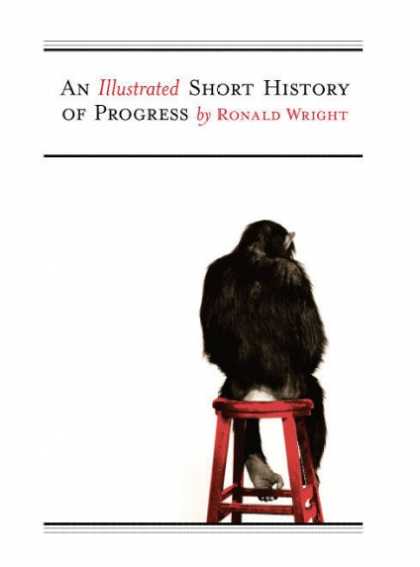
In the book of his Massey Lectures, A Short History of Progress, historian Ronald Wright spends a fair bit of time looking at the birth of pastoralism and agriculture and at the perfection of hunting. About hunting, he writes:

By 15,000 years ago at the very latest—long before the ice withdraws—humankind is established on every continent except Antarctica. Like the worldwide expansion of Europe, this prehistoric wave of discovery and migration had profound ecological consequences. Soon after man shows up in new lands, the big game starts to go missing. Mammoths and woolly rhinos retreat north, then vanish from Europe and Asia. A giant wombat, other marsupials, and a tortoise as big as a Volkswagen disappear from Australia. Camels, Mammoth, giant bison, giant sloth, and the horse die out across the Americas. A bad smell of extinction follows Homo sapiens around the world.
Not all experts agree that our ancestors were solely to blame. Our defenders point out that we hunted in Africa, Asia, and Europe for a million years or more without killing everything off; that many of these extinctions coincide with climatic upheavals; that the end of the ice age may have come so swiftly that big animals couldn't adapt or migrate. These are good objections, and it would be unwise to rule them out entirely. Yet the evidence against our ancestors is, I think, overwhelming. [....] Upper Palaeolithic people were far better equipped and more numerous than their forerunners, and they killed on a much grander scale. Some of their slaughter sites were almost industrial in size: a thousand mammoths at one; more than 100,000 horses at another. [....]

Tuesday, February 22, 2011

Population Pressures


The global food system will experience an unprecedented confluence of pressures over the next 40 years. On the demand side, global population size will increase from nearly seven billion today to eight billion by 2030, and probably to over nine billion by 2050; many people are likely to be wealthier, creating demand for a more varied, high-quality diet requiring additional resources to produce. On the production side, competition for land, water and energy will intensify, while the effects of climate change will become increasingly apparent. The need to reduce greenhouse gas emissions and adapt to a changing climate will become imperative. Over this period globalisation will continue, exposing the food system to novel economic and political pressures.
So understates the British report The Future of Food and Farming: Challenges and choices for global sustainability. Two billion more people to feed by about 2050, and we can't even get food from farm to plate with the people we've already got.
     We're bloody useless at food, really. We've experience with famine that stretches back to the dawn of time, but we still haven't figured out how to handle famine relief. When food prices began their upward movement in 2008, it was clear that  a lot of people were going to fall off the food delivery waggon. And they did. As Raj Patel points out, "There are 75 million people more undernourished now than in 2008."And that's in the modern fossil fuel age--and that's not the total number of people who are food insecure or actually starving to death. That's just the people added to the total in the last two years.

     Part of the problem is the way we treat food.
These perverse poles of the global food economy, obesity and hunger, reflect the basic reality that while food is elemental to life and health it is conceived as a commodity and not a right--food aid and food banks, which reflect a minimalist conception of food rights, notwithstanding--and the motive force of profit prevails over concerns about equity and nutrition.
The global food economy : the battle for the future of farming p. 13
Food is not a right, but a commodity. As such, steps have to be taken to ensure that the maximum of profit can be realized; thus the use of food aid as a lever to destroy local markets, depress food prices, drive farmers off small holdings and into the cities, and the concentration of land ownership into fewer and fewer hands. none of this actually improves access to food, quality of food, or security of supply--although all of these claims are made, none of them stand up to sustained scrutiny.