Showing posts with label GMOs. Show all posts

Tuesday, January 6, 2015

The Guest-Post Relationship

I doubt that anyone will get the reference to Laurie Anderson in the title, but I couldn't resist.
Back on December 20th, Valerie Leithoff wrote an op-ed piece in the Victoria Times-Colonist titled No Need to Fear Genetically Modified Crops. As usual, it puts forward the argument that GM crops are safe (the same conclusion reached by Nathanael Johnson at Grist.org), and takes up the company line that only GM crops will save us in the uncertain future.
Local author and former organic farmer Paula Johanson  begs to differ in her response. She's also let me post that response here.

Paula Johanson
By permission of the author


In response to Valerie Leithoff’s commentary (“No need to fear genetically modified crops,” Dec. 20), it is more correct to say Canada is going to need thorough testing of genetically modified organisms in the future.
The typical public response to GMOs can only be characterized as “generally strong, negative, passionate and extreme” when people become aware of unlabelled, incompletely tested GMOs in the food industry.
Leithoff is accurate when she admits people “distrust or fear the unnatural essence of GMOs, and transferring genes from unrelated species is comprehended as a Frankenstein-type experiment” and “when people don’t understand things, there is a natural tendency to fear them.” It is not things I don’t understand that cause me to distrust GMOs: it is things I do understand that cause me to call for more thorough testing and for labels on any resulting food products.
I write on science and health for educational publishers. For 15 years as a market gardener, I sold produce at farmers’ markets. As well, for eight years, I wrote columns for a newspaper in a farming community. I have studied considerably to find out what the scientific community is actually saying about GMOs. There is no need to fear genetically modified crops simply because they exist, but there are plenty of reasons for distrusting the motivations of chemical engineering companies that produce GMOs and market products such as terminator seeds.
It’s not only GMOs that need to be more thoroughly tested, but the results of how GMO crops are grown in field conditions. Leithoff states: “Farmers growing GMO crops that contain biological insecticide have greatly reduced their use of highly poisonous chemical insecticides, cutting their costs and harmful effects.”
Rather than using fewer chemicals because of growing GMO crops containing biological insecticide, factory farms commonly grow GMO crops such as Monsanto’s own Roundup Ready canola that survive being sprayed with glyphosate (sold by Monsanto as Roundup) not only after planting, but close to harvest. The result is the presence in the food-processing industry of wheat, canola and corn that contain residues of pesticides. New studies are being done to measure the effects of pesticide residues in GMOs on animal and human health.
New and long-term studies are needed, because the papers Leithoff mentions as showing no evidence of dangers were for short-term testing in which laboratory animals were fed GMOs for 12 to 20 weeks. Some of these tests have been discredited after independent analysis. New studies are being done in which animals fed GMOs with pesticide residues show sharply increasing health effects after six months to a year.
Leithoff mentions the future of climate change, saying “the use of GMOs will allow us to adapt to the sudden, unpredictable changes [in climates], since new varieties can be created quicky.” She states: “Conventional crop breeding can take up to 15 years to establish a new crop variation, but with genetic engineering we can establish a new GMO variation in less than six months.”
Though our farmers will need to adapt to the reality of climate change, Leithoff is in error: New GMO varieties cannot be produced and come to market in six months or less. Wilhelm Peekhaus, in his book Resistance is Fertile: Canadian Struggles on the BioCommons, says:
“While traditionally bred varieties typically come in under US$1 million, Monsanto has stated that a genetically engineered variety requires at least 10 years to develop at a cost of between $100 million and $150 million.
“By comparison, conventional breeders, assuming they had access to sufficient research and development funds, could introduce between 100 and 150 new varieties in less time.
“Despite claims advanced by the biotechnology industry, intrinsic yield increases, as well as disease resistance, grain size, maturation period, and responses to biotic and abiotic stresses, are attributable largely to the robustness of the traditionally bred germ plasm rather than to the one or more genetically engineered traits inserted into the seed.”
Many B.C. scientists are speaking about GMOs. Marine biologist Alexandra Morton has written about GMO salmon. Herb Barbolet works in food security and sustainable community development at Simon Fraser University. The University of British Columbia’s faculty of land and food systems conducts careful studies on some GMOs.
While it is refreshing to read an opinion from a local undergraduate student of geography, it would be better to read an informed opinion from a working scientist in an appropriate discipline.
Paula Johanson of Saanich is a University of Victoria graduate student, and the author of several books on food and sustainability.

Friday, January 24, 2014

Friday Food Security Link-straveganza

Oh, those GMOs. Nathaniel Johnson at Grist has been doing an in-depth series of reports on whether GMOs matter. It's a series that has raised more than a few hackles in the green world, particularly because he has come to the conclusion that spending our political capital opposing GMOs is a waste of time, energy, and money.
Johnson's series is worth reading, as is Tom Philpott's response, and Ramez Naam's generally pro-GMO article. But, kas Nathaniel Johnson writes in his most recent article:
[...]I want to add a note of caution: There’s an entire industry pushing the argument that GMOs are the solution. I agree with the International Assessment of Agricultural Knowledge, Science and Technology for Development that GMOs could be part of the solution, but we shouldn’t let the hype distract us from all the other ideas out there.
There are lots of problems associated with GMOs. I just want to focus directly on fixing those problems, rather than turning GMOs into a vague representative boogieman. I see problems with seed patents, problems with overuse of pesticides, problems with the lack of funding for research on agricultural alternatives. I care deeply about these things. But I’m worried that the discussion has become so ossified over GMOs that it’s not helping those causes. We’ve focused so tightly on GMOs that people tend to lose sight of those bigger things.

Raw Story is reporting that Golden Rice, that long-touted but otherwise invisible genetically modified crop that's supposed to save millions from blindness may actually be a go:
The first genetically-modified rice to be commercially available could be approved for production in the Philippines in two to three years, researchers said Tuesday, despite strong opposition from environmental groups.
Officers of both the International Rice Research Institute (IRRI) and the Philippine government’s agriculture department said the newly-developed “golden rice” had completed field trials, despite vandalism at one test field.
“Golden rice is coming. That is in the pipeline and a lot of the principal development and research has been completed,” said Achim Dobermann, deputy director-general of IRRI.
“At the moment, there is no GM (genetically-modified) rice officially released in any country,” he stressed.
No word on the actual vitamin A content of the rice, or whether kids would still be better off eating a half a carrot a month as a nutrient source. But Golden Rice, which has been in development for at least 25 years was supposed to be the criticism-killer of GMOs, developed with world health rather than tawdry financial gain in mind. Of course, when the Australians decided to breed salt-tolerant wheat, they did it with conventional breeding, meaning that farmers will be allowed to save their own seed.
Raw Story is also reporting on GM trials in the UK of a new genetically modified version of camelina that is high in fish oils:
A genetically-modified plant that produces seeds packed with fish oils is set to be grown in open fields in the UK within months, scientists announced on Friday. The oils could provide feed for farmed fish, the researchers hope, but they could ultimately be used as a health supplement in human foods such as margarine.
Fish oils – specifically omega-3 long-chain polyunsaturated fatty acids – have been shown to cut the risk of cardiovascular disease and are a popular food supplement. But about 80% of the fish oil harvested from the oceans every year is actually fed to other fish being raised in aquaculture. With many fish stocks already over-exploited, the government-funded researchers from Rothamsted Research in Hertfordshire have spent 15 years developing the new GM plant and hope to have permission for field trials by March, with planting to start shortly after if approval is given.
This is typical; we have a significant requirement for food, but a large amount of the food we harvest from the ocean is either by-catch and trashed, or fed to other, more commercially viable, fish. We harvest a hundred calories to eat ten. No bloody wonder the oceans are empty. The only farmed fish that are remotely sustainable are tilapia.
Tilapia via Wikipedia /Bjørn Christian Tørrissen
According to the New York Times:
Americans ate 475 million pounds of tilapia last year, four times the amount a decade ago, making this once obscure African native the most popular farmed fish in the United States. Although wild fish predominate in most species, a vast majority of the tilapia consumed in the United States is “harvested” from pens or cages in Latin America and Asia.
Known in the food business as “aquatic chicken” because it breeds easily and tastes bland, tilapia is the perfect factory fish; it happily eats pellets made largely of corn and soy and gains weight rapidly, easily converting a diet that resembles cheap chicken feed into low-cost seafood.
But, of course, the rush to monetize tilapia has led to problems as well. Fed on corn and soy, farmed tilapia contains relatively small amounts of beneficial omega-3 fatty acids, which are why it is recommended we eat fish in the first place. From the same article: "For the moment, Seafood Watch lists tilapia raised in the United States as a “best choice,” tilapia from Latin America as a “good alternative” and tilapia from China as “to be avoided.”
The report from the International Assessment of Agricultural Knowledge, Science and Technology for Development points out:
Development and sustainability goals should be placed
in the context of (1) current social and economic inequities
and political uncertainties about war and conflicts; (2) uncer-
tainties about the ability to sustainably produce and access
sufficient food; (3) uncertainties about the future of world
food prices; (4) changes in the economics of fossil-based en-
ergy use; (5) the emergence of new competitors for natural
resources; (6) increasing chronic diseases that are partially a
consequence of poor nutrition and poor food quality as well
as food safety; and (7) changing environmental conditions
and the growing awareness of human responsibility for the
maintenance of global ecosystem services (provisioning,
regulating, cultural and supporting).
Today there is a world of asymmetric development, un-
sustainable natural resource use, and continued rural and
urban poverty. Generally the adverse consequences of global
changes have the most significant effects on the poorest and
most vulnerable, who historically have had limited entitlements and opportunities for growth.
Canada, the US, and  Australia did not agree.

Also from Grist, an update on the California drought--in this case a lovely comparison of satellite pictures of California now and at the same time last year:

via Grist / NASA
Oh, and CNN and the John Hopkins School of Medicine report:
More than half of all adults in the United States take some sort of multivitamin; many do so in hopes of preventing heart disease and cancer or even to aid with memory.
But an editorial published in this week's Annals of Internal Medicine says that using supplements and multivitamins to prevent chronic conditions is a waste of money.
"The (vitamin and supplement) industry is based on anecdote, people saying 'I take this, and it makes me feel better,' said Dr. Edgar Miller, professor of medicine and epidemiology at Johns Hopkins University School of Medicine and co-author of the editorial.
"It's perpetuated. But when you put it to the test, there's no evidence of benefit in the long term. It can't prevent mortality, stroke or heart attack."
It's all about the money, honey.

Friday, June 14, 2013

Friday Food Link-straveganza

via Wikipedia

Science Daily is reporting on a new, better quality climate model that should help with crop predictions in a changing climate:
In a paper appearing in Nature Climate Change, members of the Agricultural Model Intercomparison and Improvement Project unveiled an all-encompassing modeling system that integrates multiple crop simulations with improved climate change models. AgMIP's effort has produced new knowledge that better predicts global wheat yields while reducing political and socio-economic influences that can skew data and planning efforts, said Bruno Basso, Michigan State University ecosystem scientist and AgMIP member.
"Quantifying uncertainties is an important step to build confidence in future yield forecasts produced by crop models," said Basso, with MSU's geological sciences department and Kellogg Biological Station. "By using an ensemble of crop and climate models, we can understand how increased greenhouse gases in the atmosphere, along with temperature increases and precipitation changes, will affect wheat yield globally."
The improved crop models can help guide the world's developed and developing countries as they adapt to changing climate and create policies to improve food security and feed more people, he added.
via Wikipedia
 The Mail has published an (adapted) excerpt of Michael Pollen's new book Cooked:
For more than a century we have been engaged in a war on bacteria. We deploy an arsenal of antibiotics, hand sanitisers, pasteurisation and food regulations to tackle the moulds and bacteria and so, we hope, hold off disease and death.I grew up on that field of battle. My mother instilled in our family a deep fear of botulism, and countless other unnamed germs possibly lurking in our food.
A touch of white on a wedge of cheese was enough to condemn it.
The slightest dent in a can of food consigned it to the rubbish, no matter that the dent came from being dropped on the floor. You never know, could be botulism; better safe than sorry.
In the decades since Louis Pasteur discovered bacteria, medical research has focused mainly on their role in causing disease.
The bacteria that reside in and on our bodies were generally regarded as either harmless freeloaders, or pathogens to be defended against.
But then in the early 2000s, researchers discovered hundreds of new species of bacteria in the human gut doing all sorts of unexpected things.
To their surprise, microbiologists discovered that we are made up of 90 per cent bacteria. Nine out of every ten cells in our bodies are not human but belong to these microbial species (most of them residents of our gut).
As one scientist put it to me, we 'stand on the verge of a paradigm shift in our understanding of health as well as our relationship to other species'.
via Wikipedia

The Portland Press Herald is reporting on Maine's passage of a GMO labelling bill. With enough state's passing bills like this, it won't be necessary to pass federal legislation:
Maine is on track to join several other states attempting to require food producers to label food containing genetically modified ingredients, following a landslide vote in the House of Representatives on Tuesday.
The 141-4 vote on L.D. 718, a bill sponsored by Rep. Lance Harvell, R-Farmington, sets the stage for a legal entanglement between the state and agribusiness and biotech industry giant Monsanto, which has already threatened to sue states that pass similar labeling laws. The political battle between industry interests and the well-organized supporters of L.D. 718 has raged behind the scenes for several months at the State House, as the biotech industry fights to blunt a popular movement that has taken the GMO fight to at least 18 other state legislatures following failed attempts to pass labeling legislation in Congress.

via Wikipedia
 With the rise of the urban chicken, this article from Chickens on Camera is particularly apt:
ERROR #2: Not Giving Your Chickens Proper Ventilation.
Building a chicken coop is to protect your flock. The purpose of your coop is to protect your chickens from the element and outside predators, but you also need to give them proper ventilation. Free movement of air inside the coop is very important, but you do not want to freeze your chickens with a draft. Chickens, are like humans, they can only perform at their optimum levels if all of their basic needs are met first, in this case protection and oxygen. A Chicken coop without free air movement and therefore more oxygen will have high carbon monoxide levels and humidity levels. This is not good because uncomfortable chickens do not produce as many eggs. It is also very dangerous because it makes mold growth within the walls very easy.

And the BC Food Security Gateway has a link to the University of British Columbia Sustainable Campus Food Guide.  It's so great to see all the work being done in my home province on changing the food system.  And BCSFG is a significant part of that.

And now I'm off to cook lunch  for a hundred or so of my fellow citizens at the Victoria Rainbow Kitchen. Hope you all have a good weekend.

Wednesday, June 12, 2013

The Breakdown of "Substantially Similar"

via wikipedia

A significant number of genetically modified (GM) crops have been approved to enter human food and animal feed since 1996, including crops containing several GM genes 'stacked' into the one plant. We randomised and fed isowean pigs (N=168) either a mixed GM soy and GM corn (maize) diet (N=84) or an equivalent non-GM diet (N=84) in a long- term toxicology study of 22.7 weeks (the normal lifespan of a commercial pig from weaning to slaughter). Equal numbers of male and female pigs were present in each group. The GM corn contained double and triple-stacked varieties. Feed intake, weight gain, mortality and blood biochemistry were measured. Organ weights and pathology were determined post-mortem. There were no differences between pigs fed the GM and non-GM diets for feed intake, weight gain, mortality, and routine blood biochemistry measurements. The GM diet was associated with gastric and uterine differences in pigs. GM-fed pigs had uteri that were 25% heavier than non-GM fed pigs (p=0.025). GM-fed pigs had a higher rate of severe stomach inflammation with a rate of 32% of GM-fed pigs compared to 12% of non-GM-fed pigs ( p=0.004). The severe stomach inflammation was worse in GM-fed males compared to non-GM fed males by a factor of 4.0 (p=0.041), and GM-fed females compared to non-GM fed females by a factor of 2.2 (p=0.034).
So runs the abstract of the new paper A long-term toxicology study on pigs fed a combined genetically modified (GM) soy and GM maize diet published in the Journal of Organic Systems (JOS) Vol.8 No.1 (2013).
Dr. Carman, in her clear English explanation of the study (pdf), says:
Some of the investigators had previously seen a reduced ability to conceive and higher rates of miscarriage in piggeries where sows were fed a GM diet, and a reduction in the number of piglets born if boars were used for conception rather than artificial insemination. Artificial insemination guarantees the presence of a certain number of viable sperm. Because male pigs were neutered at 3 days of age in order to provide meat free of boar-taint, we were only able to look at the female reproductive system in these pigs. We found that, on average, the weight of the uterus of pigs fed the GM diet, as a proportion of the weight of the pig, was 25% higher than the control pigs. We found that this biologically significant finding was also statistically significant. We list some of the pathologies that could be occurring in these uteri in the paper.

Some of the investigators had also previously seen higher rates of intestinal problems in pigs fed a GM diet, including inflammation of the stomach and small intestine, stomach ulcers, a thinning of intestinal walls and an increase in haemorrhagic bowel disease, where a pig can rapidly “bleed-out” from their bowel and die. We weren't able to look inside the intestines, due to the amount of food in them, but we were able to look inside the stomach. We found that the level of severe inflammation in stomachs was markedly higher in pigs fed the GM diet. Pigs on the GM diet were 2.6 times more likely to get severe stomach inflammation than control pigs. Males were more strongly affected. While female pigs were 2.2 times more likely to get severe stomach inflammation when on the GM diet, males were 4 times more likely. These findings are both biologically significant and statistically significant.

We found that these key findings were not reflected in the standard biochemistry tests that are done in GM feeding studies, probably because standard biochemistry tests provide a poor measure of inflammation and matters associated with uterus size. We did however find a marginally significant change on a measure of liver health in the blood of GM-fed pigs.

GMO seeds were allowed into the food system without extensive or multi-generational testing because they were "substantially similar" to foods already in use.  It's starting to become scientifically apparent that this was a mistake.

Monday, June 3, 2013

Shaken to the Stalk

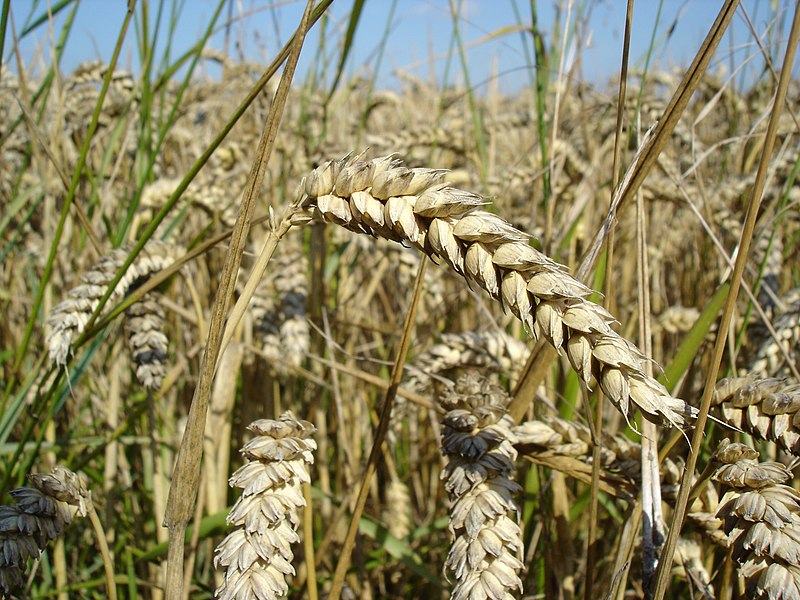
Wheat photo via wikipedia

Over at the Guardian, they're reporting on the finding of genetically-modified wheat in the US food system this past week:
The discovery of rogue genetically modified wheat in a farmer's field in Oregon shook global confidence in the safety of America's food supply on Friday.
Billions in food exports were potentially at stake following the disclosure by the US Department of Agriculture of the existence of the GM wheat plants.
The GM variant, developed by the agricultural giant Monsanto, has never been approved for human consumption.
The discovery in Oregon, about a decade after field trials ended in that state, raised concerns among the main buyers of America's wheat abroad, as well as an increasingly active GM movement at home.
The European Union advised member states on Friday to test some wheat shipments from the US. The EU imports more than 1.1m tonnes of wheat a year.
Asia was also shutting its doors to American wheat imports. South Korea, which last year imported half of its wheat from the US, cancelled imports, following Japan's lead. Thailand puts its ports on alert. China and the Philippines said they were closely watching the USDA's investigations into the GM escape.
"It's going to be a pretty serious blow to all wheat farmers. I would imagine probably the price of wheat is already going down some," said Fred Kirschenmann, a senior fellow at the Leopold Centre for Sustainable Agriculture at Iowa State University, who himself farms 2,600 acres of organic wheat.
"It is definitely going to have an impact because it is right at the time when there is increasing concern about GM and food so this is not going to be good news for the wheat farmers."
Yes, it's Monsanto. Yes, it's already in the food supply. And yes, we've seen this before with Starlink corn--GM corn designed to be used as animal feed that made it's way into the food chain without being approved for human consumption. I'm tempted to see a conspiracy in this--get it in the food chain, claim that means it is safe, get approval--but there's never a need for conspiracy when human stupidity is so powerful an actor. And there's no reason to think it isn't in the Canadian food supply--but you can bet CFIA won't be out looking for it.
But the thing is, this affects trade and trade agreements. The EU doesn't allow GM wheat. Nor do a number of other countries. The threat of stopping wheat imports because of contamination by GM varieties will be a powerful motivator for both the US government and US farmers to ensure that GM wheat varieties are not allowed.
But GM wheat never gained a foothold because of widespread public resistance, and Monsanto did not pursue efforts for its commercial development.
However, the company conducted widespread testing of GM wheat in 16 states between 1998 and 2005. The last such test fields in Oregon were planted a decade ago in 2001, the USDA said.
Those decisions could now return to haunt the US, said Danielle Nierenberg, founder of The Food Tank. "We have spent a lot of time in the last few years putting China and other countries down for food safety issues, but we are messing with people's faith in the food system here," she said. "The US has a long history of claiming we have the safest and most abundant food system in the world and this undermines that." (from the Guardian article)

If we learned anything from the Percy Schmeiser case, it's that GM seed is quite willing to cross-pollinate with non-gmo varieties. And that, should such cross-pollination occur, Monsanto gets to claim that your seed as theirs. Which makes keeping seed-stock clean a real battle.
It is very depressing to say, but pressure from wheat importing countries will have far more affect on the question of GM foods than all the citizen action groups we can muster. Because democracy is no longer about citizens, it's reserved for dollars. Dollars count where people don't.

Monday, March 4, 2013

WHO Does 20 Questions on GMOs

The World health Organization has produced a 20 question overview of the current thinking on GMOs designed for the lay reader. For 20 questions, it's pretty far ranging and comes off as pretty balanced about the issues surrounding GMOs. Here's the first two questions, the rest are at the link above or downloadable as an English pdf.

20 questions on genetically modified foods

20 QUESTIONS ON GENETICALLY MODIFIED (GM) FOODS

Q1. What are genetically modified (GM) organisms and GM foods?
These questions and answers have been prepared by WHO in response to questions and concerns by a number of WHO Member State Governments with regard to the nature and safety of genetically modified food.
Genetically modified organisms (GMOs) can be defined as organisms in which the genetic material (DNA) has been altered in a way that does not occur naturally. The technology is often called “modern biotechnology” or “gene technology”, sometimes also “recombinant DNA technology” or “genetic engineering”. It allows selected individual genes to be transferred from one organism into another, also between non-related species.
Such methods are used to create GM plants – which are then used to grow GM food crops.
Q2. Why are GM foods produced?
GM foods are developed – and marketed – because there is some perceived advantage either to the producer or consumer of these foods. This is meant to translate into a product with a lower price, greater benefit (in terms of durability or nutritional value) or both. Initially GM seed developers wanted their products to be accepted by producers so have concentrated on innovations that farmers (and the food industry more generally) would appreciate.
The initial objective for developing plants based on GM organisms was to improve crop protection. The GM crops currently on the market are mainly aimed at an increased level of crop protection through the introduction of resistance against plant diseases caused by insects or viruses or through increased tolerance towards herbicides.
Insect resistance is achieved by incorporating into the food plant the gene for toxin production from the bacterium Bacillus thuringiensis (BT). This toxin is currently used as a conventional insecticide in agriculture and is safe for human consumption. GM crops that permanently produce this toxin have been shown to require lower quantities of insecticides in specific situations, e.g. where pest pressure is high.
Virus resistance is achieved through the introduction of a gene from certain viruses which cause disease in plants. Virus resistance makes plants less susceptible to diseases caused by such viruses, resulting in higher crop yields.
Herbicide tolerance is achieved through the introduction of a gene from a bacterium conveying resistance to some herbicides. In situations where weed pressure is high, the use of such crops has resulted in a reduction in the quantity of the herbicides used.

Friday, February 22, 2013

Friday Link-straveganza

via The Guardian
The Guardian is reporting on an over-fishing scheme in the UK:
An inquiry into the UK's largest fishing scandal has uncovered "serious and organised" criminality by Scottish trawlermen and fish processors in an elaborate scam to illegally sell nearly £63m of undeclared fish.
Three large fish factories and 27 skippers have pleaded guilty to sophisticated and lucrative schemes to breach EU fishing quotas, in what one senior police officer described as "industrial level" deception.
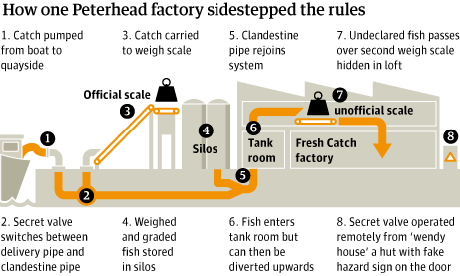
They went to extraordinary lengths to conceal their illegally caught fish, installing underground pipelines, secret weighing machines and extra conveyor belts and computers to allow them to land 170,000 tonnes above their EU quota of mackerel and herring between 2002 and 2005.
The extent of the "black landings" scandal emerged as 17 skippers and one of the three factories were given fines totalling nearly £1m at the high court in Glasgow on Friday, after admitting repeated breaches of the Sea Fishing (Enforcement of Community Control Measures) (Scotland) Order 2000. Another six skippers pleaded guilty at the same hearing to landing undeclared fish worth nearly £7m at Lerwick, in the Shetlands, and Peterhead, Aberdeenshire.
{...}Judge Lord Turnbull, told the 17 skippers sentenced on Friday they were guilty of a "cynical and sophisticated" operation, which brought embarrassment and shame on them and their families. "The motivation was purely financial," he said. "Those who were already making a good living saw this as a way more income could be generated and were prepared to participate in deliberate lies and falsehoods."
It's no wonder the bloody cod are gone. Even when we know we're over-fishing, even when we're already making a good buck, we still connive and scheme to empty the bloody ocean when we know better!  And notice, this lot got fined a million pounds on £63 million in fish. And they will be allowed to go back to doing what they were doing in the first place.

Community Food Centres Canada get animated!


CFCC gets animated! from Community Food Centres Canada on Vimeo.

more after the jump....

Friday, February 8, 2013

Friday Link-straveganza


Caroline Raffensperger has written a lovely essay at Common Dreams about the scale of personal actions as compared to the scale of the environmental breakdown we're facing:
Most people suffer from a sense of moral failure over environmental matters. The mismatch between being told to change our light bulbs when the planet seems in free fall—melting ice caps, polluted water supplies, drought—creates a needling angst and anxiety.  We know that we are in deep trouble, but feel that there is little we—or anyone—can do individually. Anne Karpf writing about climate change in the Guardian last year said “I now recycle everything possible, drive a hybrid car, and turn down the heating. Yet somewhere in my marrow I know that this is just a vain attempt to exculpate myself – it wasn’t me, guv.”
To fully acknowledge our complicity in the problem, but to be unable to act at the scale of the problem creates cognitive dissonance. And this “environmental melancholia,” results in hopelessness. It is not apathy we are feeling, but sadness that can be eased only with taking actions, mostly collective, scaled to the problems we face.

The Chronicle of Higher Education is forced to ask the question "In Standing Up for Big Ag, Are Universities Undercutting Their Own Researchers?"

In a case before the U.S. Supreme Court this month, advocates for academic researchers are urging the justices to reverse a patent-infringement decision that has given the Monsanto Company broad authority to restrict scientists’ study of genetically modified seeds. The decision, the advocates say, not only hurts farmers and fuels higher food prices; it also contributes to “the suffocation of independent scientific inquiry into transgenic crops.”
Not surprisingly, the case has also drawn the attention of higher education’s research establishment—but it’s pulling for the other side.
[...] George A. Kimbrell, senior lawyer for the Center for Food Safety and Save Our Seeds, calls the universities’ stance disappointing. “It’s a very strange position for institutions that should be promoting the freedom of scientific inquiry,” he says. “Unfortunately, they’ve become beholden to the money and put that before their basic mission.”

The BBC is reporting on a minor case of mis-labelling:
The meat of some beef lasagne products recalled by Findus earlier this week was 100% horsemeat, the Food Standards Agency (FSA) has said.
On Monday Findus withdrew from retailers its beef lasagne in 320g, 360g and 500g sizes as a precaution.
Environment Secretary Owen Paterson said the findings were "completely unacceptable", but Findus said it did not believe it was a food safety issue.
The FSA said companies would now be required to test their beef products.
"In order to get to the bottom of this, we're going to be requiring every company to test every product line," Catherine Brown, the FSA's chief executive, told the BBC.
"If we find any other cases, we will pursue our investigations vigorously until we find out what's happened and put a stop to it."
Ms Brown said it was "highly likely" that criminal activity was to blame for horsemeat being found in some meals.
 But really, this is more of an "ick" problem....

Funny or Die has a lovely parody of the "God Made A Farmer" ads.

The Guardian is talking about how to build resilient food systems:
All farmers, no matter their size, depend on the weather to the grow crops that feed the world, while providing a livelihood for their families and communities. This makes them among the most vulnerable to the changing climate. By 2050, if farmers are not assisted to meet these changes, agriculture yields will decrease with impacts projected to be the most severe in Africa and South Asia, with productivity decreasing by 15% and 18% respectively. Therefore, strategies to adapt to the significant shifts in weather patterns are greatly needed.


USAID, DuPont work with Government of Ethiopia to improve food security:
The U.S. Agency for International Development (USAID) signed a Memorandum of Understanding (MOU) today with Ethiopia and DuPont to boost maize harvests through increased use of hybrid maize seed, improved seed distribution, and post-harvest storage.
Maize is a significant contributor to Ethiopia’s economic and social development, providing jobs, income and food. This collaboration will help more than 30,000 smallholder maize farmers increase their productivity by up to 50 percent and help reduce post-harvest loss of maize by as much as 20 percent.
This collaboration advances agricultural development and food security goals set by the Government of Ethiopia and supported by USAID through the U.S. Government’s global hunger and food security initiative, Feed the Future, which is part of the U.S. contribution to the New Alliance for Food Security and Nutrition.
Michelle Simon, author of Appetite for Profit, writes about the fallout from the recent vote on GMO food labelling in California:
Recent reports of secret meetings among industry reps and the Food and Drug Adminstration over GMO labeling piqued my interest, mostly because this critical aspect was missing: any effort to label GE foods at the federal level could bring the current grassroots movement to a grinding halt by preventing any stronger local laws from ever being enacted. But I am getting ahead of myself.
Last month, Ronnie Cummins, director of the Organic Consumers Association and one of the leaders of the GMO labeling effort, recently published an article about how “representatives of Wal-Mart, General Mills, Pepsi-Frito Lay, Mars, Coca-Cola and others” met with the FDA on January 11 “to lobby for a mandatory federal GMO labeling law.”
The story was then picked up by Tom Laskawy at Grist, who reported that at the meeting, a Walmart representative said the retail giant would no longer oppose GMO labeling and that “[o]ther food company executives agreed, saying that the fight had become too expensive, especially given the prospect of more state-level initiatives.”

Monday, January 28, 2013

Hazardous Virus Gene?

ISIS, the Institute for Science In Society, is reporting that:
A European Food Safety Authority (EFSA) scientist has just discovered that major GM crops and products the regulatory agency has been approving for commercial release over the past 20 years contain a potentially dangerous virus gene. The gene – Gene VI - overlaps with the cauliflower mosaic virus (CaMV) 35S promoter. The CaMV 35S promoter is the commonest, most widely used regulatory sequence for driving gene expression in GM crops. This momentous discovery was published in a little known journal during the holiday season at the end of 2012 [1], and would have passed unnoticed had it not caught the attention of Jonathan Latham and Alison Wilson of Independent Science News. They described the finding and carried out a proper retrospective risk assessment on the Gene VI fragment in a report posted on their website [2]. This attracted so much public attention that EFSA and its counterpart Food Standards Australia New Zealand (FSANZ) are said [3] to have jointly “shredded” the scientific paper on which Latham and Wilson’s report is based.
EFSA and FSANZ say the allegations that the viral Gene VI hidden in the CaMV 35S promoter might not be safe for human consumption and could disturb the normal functioning of crops are completely false. A spokesperson from FSANZ states: “Human exposure to DNA from the cauliflower mosaic virus and all its protein products through consumption of conventional foods is common and there is no evidence of any adverse health effects.”
Ironically, the first author of the scientific paper [1] Nancy Podevin is from EFSA, while the second author Patrick Du Jardin is at University of Liège in Belgium; and EFSA GMO Panel is acknowledged for “advice given”. The main thrust of the paper is in fact a screening of Gene Vi amino acid sequence against existing databases for known allergens and finding none; thereby offering false reassurance while the real hazards are swept under the carpet.
1. Podevin N and du Jardin P.  Possible consequences of the overlap between the CaMV 35S promoter regions in plant transformation vectors used and the viral gene VI in transgenic plants. GM Crops and Food 2012, 3, 1-5.
2. Latham J and Wilson A. Regulators discover a hidden viral gene in commercial GMO crops, Independent Science News 21 January 2013, http://independentsciencenews.org/commentaries/regulators-discover-a-hidden-viral-gene-in-commercial-gmo-crops/
3. “Alarming GM study shredded by authorities”, Kondinin Group, 24 January 2013, http://www.kondiningroup.com.au/StoryView.asp?sectionsource=s1450060&StoryID=795111855
4. Ho MW, Ryan A, Cummins J. Cauliflower mosaic viral promoter – a recipe for disaster? Microb Ecol Health Dis 1999, 11, 194–7.
5. Ho MW, Ryan A, Cummins J. Hazards of transgenic plants with the cauliflower mosaic viral promoter. Microb Ecol Health Dis 2000, 12, 6–11.
6. Ho MW, Ryan A, Cummins J. CaMV35S promoter fragmentation hotspot confi rmed and it is active in animals.  Microb Ecol Health Dis 2000, 12, 189.
7. Ballas N, Broido S, Soreq H, Loyter A. Efficient functioning of plant promoters and poly(A) sites in Xenopus oocytes. Nucl Acids Res 1989, 17, 7891–903.
8. Burke C, Yu XB, Marchitelli L, Davis EA, Ackerman S. Transcription factor IIA of wheat and human function similarly with plant and animal viral promoters. Nucleic Acids Res 1990, 18, 3611–20.
9. Ho MW and Cummins J. New evidence links CaMV 35S promoter to HIV transcription. Microb Ecol Health Dis 2009, 21, 172-4.
10. Latham J and Wilson A. Potentially dangerous virus gene hidden in commercial GM crops. Science in Society 57 (to appear).

Saturday, November 17, 2012

Some Good News

Potato varieties courtesy OccupyMonsanto60.org


After the failure to get food labelling laws changed in California, agribusiness giants like Monsanto and Bayer have been facing some significant push-back in other parts of the world.
, reporting at Natural Society, writes about Poland:
Following the anti-Monsanto activism launched by nations like France and Hungary, Poland has announced that it will launch a complete ban on growing  Monsanto’s  genetically modified strain MON810. The announcement, made by Agriculture Minister Marek Sawicki, sets yet another international standard against Monsanto’s genetically modified creations. In addition to being linked to a plethora health ailments, Sawicki says that the pollen originating from this GM strain may actually be devastating the already dwindling bee population.
Similar opposition to Monsanto occurred on March 9th, when 7 European countries blocked a proposal by the Danish EU presidency which would permit the cultivation of genetically modified plants on the entire continent. It was France, who in February, lead the charge against GMOs by asking the European Commission to suspend authorization to Monsanto’s genetically modified corn. What’s more, the country settled a landmark case in favor of the people over Monsanto, finding the biotech giant guilty of chemical poisoning.
OccupyMonsanto360.org is reporting a similar action by the Peruvian government:
In a massive blow to multinational agribiz corporations such as  Monsanto, Bayer, and Dow, Peru has officially passed a law banning genetically modified ingredients anywhere within the country for a full decade before coming up for another review.  Peru’s Plenary Session of the Congress made the decision 3 years after the decree was written despite previous governmental pushes for GM legalization due largely to the pressure from farmers that together form the Parque de la Papa in Cusco, a farming community of 6,000 people that represent six communities. They worry the introduction of genetically modified organisms (GMOs) will compromise the native species of Peru, such as the giant white corn, purple corn and, of course, the famous species of Peruvian potatoes. Anibal Huerta, President of Peru’s Agrarian Commission, said the ban was needed to prevent the ”danger that can arise from the use of biotechnology.”
http://www.occupymonsanto360.org (http://s.tt/18OeH)

Tuesday, July 17, 2012

The Failure of Genetic Engineering


There's a steady drumbeat that we are not producing enough food, that there must be more food for the growing global population, and that traditional or organic agriculture cannot achieve the necessary volumes. Therefore, continues the argument, we need to shift all our production over to genetically engineered varieties which produce more food per acre than traditional farming techniques. And its a compelling argument. Global population at six billion and due to rise to at least nine billion. Famine conditions popping up all over the place. The future looks grim. Perhaps we should embrace a technological fix.
Just two small problems. Tiny, really. First, The genetically engineered plants we grow aren't really food. The corn and soy we grow are not intended as food, not like, say, a carrot is food. Let's call them “precursor foods”; they are feed-stocks we tear apart into their constituent molecules and then construct “edible food-like products” from them.
And the second problem is just as minor. There's no evidence. At all, really. Down in the United States, the Union of Concerned Scientists (UCS) sponsored a report on production differences between traditionally bred crops and genetically engineered ones, a report written by Doug Gurion-Sherman, a senior scientist in the UCS Food and Environment Program. His conclusions?


Thus a close examination of numerous studies of corn and soybean crop yields since the early 1990s gives us a good gauge of how well GE crops are living up to their promise for increasing yields. Bottom line; They are largely failing to do so. GE soybeans have not increased yields, and GE corn has increased yield only marginally on a crop-wide basis. Overall, corn and soybean yields have risen substantially over the last 15 years, but largely not as a result of the GE traits. Most of the gains are due to traditional breeding or improvement of other agricultural practices.1


This is not a minor matter. GE crops are touted as saviour seeds for farmers, for hungry populations, for the world. They are, in fact, the final development of the the Green Revolution, the ultimate expression of the technologization of agriculture. And, like the Green Revolution, not only have they largely failed, but the original goals have been forgotten in a rush to manufacture profit and privatize life. The findings of the report are clear and powerful. First, that


“[g]enetic engineering has not increased intrinsic yield. No currently available transgenic varieties enhance the intrinsic yield of any crops. The intrinsic yields of corn and soybeans did rise during the twentieth century, bu not as a result of GE traits. Rather, they were due to successes in traditional breeding.”2


Intrinsic, or potential, yield is the highest yield that can be achieved under perfect conditions. This is different from operational yield, the yield obtained under field conditions. About which, the report says:


Genetic engineering has delivered only minimal gains in operational yield.... Based on available data, it is likely that Bt corn provides an operational yield advantage of 7-12 percent compared to typical conventional practices, including insecticide use, when European corn borer infestations are high. Bt corn offers little or no advantage when infestations of European corn borer are low to moderate, even when compared to conventional corn not treated with insecticides.3 [emphasis mine]

The increases we've seen in yields in corn and soy are, primarily, attributable to non-GE plant breeding techniques. The development of salt-tolerant wheat, for example, was done by crop scientists in Australia specifically without the use of GE techniques, in order to ensure free access to the cultivar by the world's farmers.

Tuesday, July 10, 2012

Monsanto--Taking The Shot

From Alternet:
A so-called “Monsanto rider,” quietly slipped into the multi-billion dollar FY 2013 Agricultural Appropriations bill, would require – not just allow, but require - the Secretary of Agriculture to grant a temporary permit for the planting or cultivation of a genetically engineered crop, even if a federal court has ordered the planting be halted until an Environmental Impact Statement is completed. All the farmer or the biotech producer has to do is ask, and the questionable crops could be released into the environment where they could potentially contaminate conventional or organic crops and, ultimately, the nation’s food supply.
Unless the Senate or a citizen’s army of farmers and consumers can stop them, the House of Representatives is likely to ram this dangerous rider through any day now.
In a statement issued last month, the Center For Food Safety had this to say about the biotech industry’s latest attempt to circumvent legal and regulatory safeguards:
Ceding broad and unprecedented powers to industry, the rider poses a direct threat to the authority of U.S. courts, jettisons the U.S. Department of Agriculture’s (USDA) established oversight powers on key agriculture issues and puts the nation’s farmers and food supply at risk.
In other words, if this single line in the 90-page Agricultural Appropriations bill slips through, it’s Independence Day for the biotech industry.

Sunday, May 27, 2012

The Battle Moves North

from Earth First News

From Locals Supporting Locals:
Monsanto coming to Richmond to try to overturn Council decision
This Tuesday Richmond Council voted unanimously at a general meeting, with the Mayor and all Councillors present, to pass a resolution to make Richmond the eighth GE free crop zone in B.C. The wording of the resolution is on the Richmond Council website, at http://www.richmond.ca/cityhall/council/agendas/gp/2012/052212_minutes.htm
Ten people spoke in favour of the resolution. This now has to go through the formal process of being passed at a Council meeting, which will happen on the 28th May at 7 p.m. at Richmond City Hall.
We've been informed that Crop Life, the Public Relations wing of Monsanto and other biotech companies, will be coming to the Council meeting on the 28th May. They have already begun their lobbying efforts to try and get Richmond Council to change its mind.
If you are in or near Richmond, please turn out for the meeting. Some Councillors may waver under corporate pressure, and a big turn out of the public will make all the difference and hold them firm to their decisions. Several Councillors spoke passionately about their concerns with genetic engineering, and a big public showing will give them more courage.
If Richmond becomes a GE zone this will have a really big impact on other parts of the Province. As a large municipality with about 200 farms and where GE corn is being grown, people will see that if this can be done in Richmond, it can be done anywhere in the Province. GE Free BC is already getting emails from other municipalities where environmental activists want to get a GE Free resolution passed. This is why Monsanto is sending in the PR guys.
At the same time, apparently the BC government is tryining to slide through an Ag Gag law.

Legislation being proposed by the BC's Liberal government will make it illegal and punishable for a person, including citizens or journalists, to disclose information relating to reportable animal disease in the Canadian province. Bill 37, The Animal Health Act, over-rides BC's Freedom of Information Act, making it unlawful for the public or the press to speak publicly about an agriculture-related disease outbreak or identify the location of an outbreak such as the deadly bird flu or a viral outbreak of IHNV at a salmon aquaculture feedlot.
Who would this affect? Anyone. My significant other, author Paula Johanson, recently wrote a book titled Fish: from catch to the table which addressed the safety of farmed fish--this law would have affected her work.

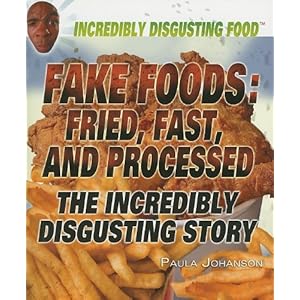
Fake Foods by Paula Johanson
Or the work she did in Fake Foods.Not because anything she said was wrong, but that she said anything at all.


Photo from Living Food FIlms website
 We've seen this sort of thing before, in the Howard Lyman case in Texas:
In April of 1996, Mr. Lyman (former cattle rancher and now President, Voice for a Viable Future)) was invited to appear on Oprah to discuss Mad Cow disease, food production, and the rendering process. He was part of a discussion of experts, including an expert from the beef industry, about food safety in the U.S. This included a discussion of potential health risks from e-colii and mad cow disease (which only weeks before was making headlines in Britain and throughout the world). When Mr. Lyman explained that cows are being fed to cows, Ms. Winfrey seemed to be repulsed by this thought, and exclaimed that it had just stopped her cold from eating another hamburger
Lyman was sued under an Ag Gag law, the Texas Food Disparagement Act, and it took four years and a heap of money to end the lawsuit brought by a Texas beef ranchers organization. Since then, there has been a pause, but these laws are back.

Wednesday, April 4, 2012

This Little Piggie

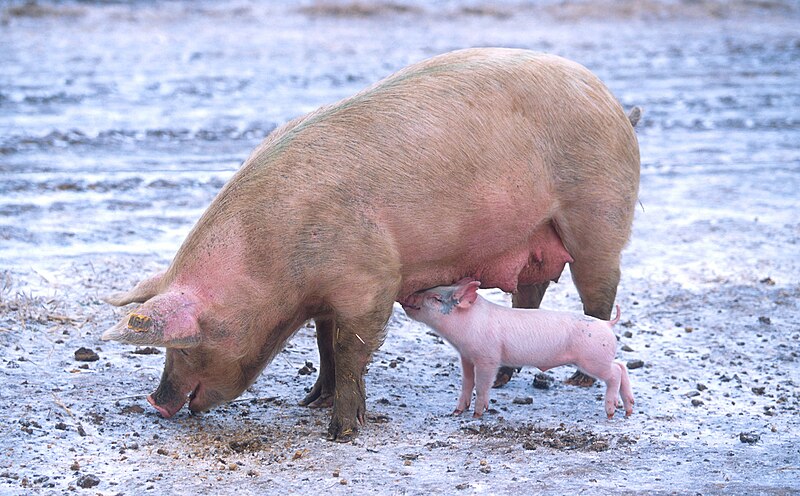
Was dubbed the Enviropig by researchers at Ontario's University of Guelph.

From the University of Guelph website
 It was developed (when it's a genetically modified organism, can you really use the word "bred"?) in 1999 to deal with the problem of too much phosphorus in swine manure spread on fields. Phosphorus is linked to massive, river-choking, algal blooms, and run-off from manure-treated fields have been point sources for phosphorus.
Of course, this is only a problem when you have too much swine manure to spread--typically a problem with industrial scale hog rearing operations. These operations can house upwards of 500,000 hogs on one site. When the Enviropig (dubbed "Frankenswine" by detractors) was developed, one of the creators enthused that industrial hog operations would be able to support twice the hogs on the same footprint of land. Oh, and with no increase in phosphorus run-off.
This is typical of factory farming; Each problem caused by industrial farming practice has to have a technological solution that allows the same type of farming to continue. That the problem might be the raising of too damn many hogs on to small a space is never addressed.
That there are feed additives that can reduce swine manure phosphorus levels are also unacceptable as they would raise the cost per carcass (according to the Globe and Mail article) by ~$1.70Can. The money put into developing Enviropig, on the other hand, would be diffused over millions of hogs per year. But the public never came on board with eating GMO animals. Quoted in the Toronto Star,
Cecil Forsberg, an emeritus professor of molecular and cellular biology at the university who was in charge of the project, said he agreed with the decision.
When the first such pig was created in 1999, he said, “I had the feeling in seven or eight or nine years that transgenic animals probably would be acceptable. But I was wrong. It’s time to stop the program until the rest of the world catches up,” he said. “And it is going to catch up.”
 I'm not convinced that we will "catch up." I suspect that the violent swings of global climate change over the next 20 years will give us a lot more to worry about than how much pig we have to eat. The question is more "will we be able to acquire enough calories to maintain life?" Industrial farming may be at it's historical high-water mark.

Wednesday, November 16, 2011

Intense (ive) Agriculture

Two innovative projects popped up on my radar (thanks, Jeff!) involving urban farming this week. One is a storefront farm in Hackney, London, called FARM:shop, and the other is Riverpark Farm in New York City.
Both are responses to the fallout from 2008 and the ongoing international economic crisis sparked by American corporate criminality. In Hackney, the number of disused storefronts has sparked a municipal initiative to fill them at least temporarily with art projects and the like. Something and Son took a look at the cubic footage they had available, and created a café/workspace/venue/ and an intensive food production space.

Honestly, Something and Son has the air of an art installation, talking about how their “displays” change with the seasons. They claim to be the world's first “urban farming hub” (whatever that is supposed to mean), but the ideas they've used involving food production are not all that innovative. FARM:shop's food production is directly descended from the work of the New Alchemy Institute (NAI), which, from 1971 through 1991 conducted a major research and education initiative on a farm in Massachusetts. They explored green-housing/aquaculture synergies, formulated the 90-day-compost plans used by most gardeners today, and rigorously documented their work. They even built one of their “Ark “ projects in Prince Edward Island, testing their theories in a less hospitable clime.
The New Alchemists weren't the first either, building on both academic and farm-based work that had gone before them. But, thankfully, they were a part of the 60s diaspora that documented their work,leaving behind not only a record of their work, but a group of people still pushing forward environmental design.

Thursday, October 13, 2011

The Balance

Think of two lines of force in perfect balanced opposition:

Whatever the intensity of the force each side is exerting, in order to separate the two you have to apply a force to each side that is slightly greater than the one pushing them together. And then, in order to keep them apart, you have to maintain that level of effort forever. But if you have the same lines of force pressing against each other and you apply your effort perpendicular to the opposed forces, it takes a great deal less effort to dislodge the two, and they pop apart quite readily.

If we think of the world's food producers (a whole lot of people everywhere except in the developed world) and the world's food consumers (which is, of course, everyone) and we track how the first group gets their produce to the second group, we find that by far the majority of food in the world ends up going through maybe a dozen transnational corporations with names like Cargill, and Monsanto, and Archer Daniel Midlands. Economists look upon this state of affairs and say that these corporations have both a monopsony and a monopoly; that is, they are both the only buyers for the products and the only sellers for the products. This makes the corporations very happy. In order to maximize their profits (which is their goal), they can put pressure on the producers to accept lower prices (because, after all, where else are you going to sell your coffee?) and on the consumers to pay higher prices (after all, where else are you going to get your coffee?). While this is not a good state of affairs for consumers or producers, it is a great state of affairs for the guys in the middle. In a healthy, functioning economic ecosystem, competition between different companies keeps pressure on to ensure a fair price to the producers of materials and to keep prices down when selling to the consumer. When a monopsony or a monopoly develops, things get out of whack. If we look at a diagram of this state of affairs (viz. Raj Patel) we see an hourglass:

But it kind of looks like the first illustration of the two balanced forces, and that bothers me. As Frederick Kirchenmann of the Leopold Center in Ames, Iowa says:
"... we should be asking ourselves what kind of agricultural system could produce the food and fiber we need in a world where oil is $250 and where we have twice the severe weather but only half the water that we have now. What kind of agriculture could we come up with? It's an entirely reasonable question to ask and yet, no one wants to touch it because when you get down to it, no one has a clue." 
The current industrial food system does two things very very well—it moves large amounts of food from one place to another (primarily from low cost of production areas to wealthy areas, but still...), and it makes the corporations in the middle very very wealthy (particularly now that they are working so hard to become the only place you can purchase seed). The current system also produces large amounts of food-like substances very cheaply (though mostly at the expense of those producing the feedstock), and distributes them very efficiently (at least in economic terms). But $250/bbl oil or more rain or less rain are perpendicular forces operating on the balance of forces we currently have. Forty years into the awareness of global climate change and we still have allowed an unstable, non-resilient food supply system to be developed. There are, of course, alternatives. But, like the transition to a sustainable energy system, the food system needs a backbone and the industrial food system is pretty much all we have. We are going to need to be able to move food and agricultural knowledge around the world during any transition to a sustainable food system. And it won't always be for profit, as we try to offer relief in areas suffering severe weather and crop failure. If we manage to transition into a sustainable food system—and that is a really big IF—we will need the systems Monsanto and Cargill and the like have developed. The thing is, we may not need the corporations. And that presents us with a massive problem; they will not want to disappear, and they will not wish to disappear quietly. Considering that these corporations are so large that their economies surpass most of the national economies they service, the potential for trouble is immense. If we consider the case of Monsanto and glyphosate-ready seeds like canola, we can see the redlinings of what we can expect in the future. As reported in Businessweek online, what was expected has indeed come to pass; glyphosate (better known by the trademark name Roundup)-resistant “superweeds” have begun appearing. And being able to say “See! I told you so!” isn't doing anyone any good. The problem is that the large chemical companies aren't seeing this as evidence of a blind alley and turning around. Rather, they are seeing it as an opportunity to revive older herbicides, develop crops resistant to those herbicides, and follow Monsanto into large short-term profits for the next ten or fifteen years. Monsanto denied for years that glyphosate resistance could occur in weeds, then denied for years that it had occurred, and now has announced that they will be adding resistance to a second herbicide into glyphosate resistant crops by 2015. To quote Monsanto Chief Executive Officer Hugh Grant, “The calvary is coming.” All this for a problem that never needed to exist in the first place. So what will companies like Monsanto do when they discover that they are being made redundant? The prevailing business theory is that corporations need to embrace change and pursue new markets in an ever-evolving environment. But just as Apple under Steve Jobs have shown, companies don't embrace change; they instead fall back on the same solutions. Solutions like closed systems, reduction of alternatives, growth by buying innovation, feudalism, and slavery. Most farmers are already not much better than serfs on their own land. Now corporations are buying up enormous tracts of farmland with the intent of hiring people to work it, changing farming from a profession of small and medium-sized businesses into classic wage-slavery. And not incidentally ending fourteen thousand years of cooperative innovation.

Tuesday, September 13, 2011

The Food We Eat

An interesting editorial from The Guardian--it's also worth following the link to the Scientific American article about halfway down.

Food sustainability: Modified opinions


Historians of the future may mark the early 21st century as the point where the science of agriculture finally broke into public understanding. Ten years of ill-tempered debate over genetically modified organisms (GMOs) has had many malign effects, not least adding to public scepticism about science and scientists. But it has had one benign one. It has pumped dye into the veins of the global food business, graphically illustrating the monopolistic ambitions of agribusiness and ultimately, perhaps, its ability to control the very food we eat.

On Wednesday night a debate on GMOs at the illustrious Royal Society of Chemistry HQ in London suggested a breakthrough. Afterwards the feeling was that it was a win on points for the GM sceptics. This is not what was meant to happen: the scientific community, and the government, insist Britain's future food sustainability depends on employing some form of GM to increase yields, as the Royal Society recently argued. But they can take heart: the debate was less a defeat for GM than for the way it has developed. The corollary is that if the government really believes that the only way to increase yields is through GM technology, it will have to fund this itself.

The winning argument on Wednesday was not really about science at all, but about the ethics of a method of increasing yields that delivers such power into the hands of the multinationals. Yesterday the Soil Association published a report claiming that next year's GM soya bean seed will cost US farmers almost half as much again as this year's. Genetically modified seed is, as a technology, intended primarily to benefit the corporations that develop it. Claims that it is the way to save the world came later. This does not necessarily make it a bad technology; it only means – as Sussex University's Erik Millstone argued in the debate – its commercial trajectory is too narrow to provide much in the way of answers to global hunger. It is a technology developed for large-scale agriculture in advanced capitalist economies that has scant regard for other producers or other economic models. It has been accompanied by unsubstantiated claims which, according to independent scientists backed by the powerful voice of Scientific American, cannot be tested, since all research on GM seed has to be licensed as part of the impenetrable defences erected by agribusiness around its expensive patents.

This model excludes all kinds of developments that might make a more significant contribution to food sustainability than merely increasing yield (often by enabling heavier use of herbicides or pesticides). Food sustainability in an era of climate change requires not only, nor even primarily, higher yields, but greater resilience – the ability to survive in harsher conditions and on poorer soils. There is work to be done on developments that would lower the need for high-cost (and often high-carbon) inputs, by for example developing crops grown as annuals into perennials, or breeding varieties that do not require soil cultivation, or that improve the soil by fixing nitrogen.

Here, GM may be a small part of the answer. But it has a mixed record in Asia, where it has tended to enrich the rich and impoverish the poor, and it is unlikely to be any part of the answer to food security in Africa for the foreseeable future. As the UN's Food and Agriculture Organisation pointed out last year, there is enough food for everyone. It just isn't available in the right places. Subsistence farmers are cut off from all but the most local markets, and if they take the risk of buying commercial GM seed their increased yield might just lower local prices. They need simpler improvements. And globally the need is for publicly funded science to investigate sustainable agriculture in the widest possible meaning of the word: better farming practices, a viable pricing system and, for the global north, a radical change in patterns of consumption.