Showing posts with label Monsanto. Show all posts

Tuesday, July 2, 2013

When Corporations Discover Fascism

Let's start out with the response, and then go to the "call", eh? Monsanto posted a response to an article in the nation:
Monsanto did not hire Blackwater nor did we approve of the firm infiltrating any groups as was suggested in the Nation article. In 2008, 2009 and early 2010, a firm called Total Intelligence Solutions (TIS) provided Monsanto ’s security group with reports about activities or groups that could pose a risk to the company, its personnel or its global operations. The safety of our people is our utmost priority and we value the communities in which we operate. All information provided by TIS was developed by monitoring local media reports and other publicly available information. The subject matter ranged from information regarding terrorist incidents in Asia or kidnappings in Central America to scanning internet blogs and websites. Prior to retaining TIS, Monsanto specifically enquired about and was informed that TIS was a completely separate entity from Blackwater. Beyond the content of the Nation article, we have not engaged people to infiltrate firms/activist groups and we do not condone that type of behavior.
 There's some not unreasonable coverage via YouTube:


But what's the origin of this? Because, if true--or even slightly true--this points out that Monsanto has abrogated the role of government. And when that happens at the expense of democracy, well, that's a textbook definition of fascism.
It all starts back in an article written by Jeremy Scahill in The Nation. In it, he writes:
One of the most incendiary details in the documents is that Blackwater, through Total Intelligence, sought to become the "intel arm" of Monsanto, offering to provide operatives to infiltrate activist groups organizing against the multinational biotech firm.
Governmental recipients of intelligence services and counterterrorism training from Prince's companies include the Kingdom of Jordan, the Canadian military and the Netherlands police, as well as several US military bases, including Fort Bragg, home of the elite Joint Special Operations Command (JSOC), and Fort Huachuca, where military interrogators are trained, according to the documents. (emphasis mine)
I had to add the second paragraph to point out just how complex and intertwined these corporations are with our governments. Scahill continues, later in the article:
Through Total Intelligence and the Terrorism Research Center, Blackwater also did business with a range of multinational corporations. According to internal Total Intelligence communications, biotech giant Monsanto—the world's largest supplier of genetically modified seeds—hired the firm in 2008–09. The relationship between the two companies appears to have been solidified in January 2008 when Total Intelligence chair Cofer Black traveled to Zurich to meet with Kevin Wilson, Monsanto's security manager for global issues.
After the meeting in Zurich, Black sent an e-mail to other Blackwater executives, including to Prince and Prado at their Blackwater e-mail addresses. Black wrote that Wilson "understands that we can span collection from internet, to reach out, to boots on the ground on legit basis protecting the Monsanto [brand] name.... Ahead of the curve info and insight/heads up is what he is looking for." Black added that Total Intelligence "would develop into acting as intel arm of Monsanto." Black also noted that Monsanto was concerned about animal rights activists and that they discussed how Blackwater "could have our person(s) actually join [activist] group(s) legally." Black wrote that initial payments to Total Intelligence would be paid out of Monsanto's "generous protection budget" but would eventually become a line item in the company's annual budget. He estimated the potential payments to Total Intelligence at between $100,000 and $500,000. According to documents, Monsanto paid Total Intelligence $127,000 in 2008 and $105,000 in 2009.
Uninterested in Monsanto's products? You're on their list. Pro GMO labelling? You're on their list. And because transnational corporations like Monsanto have done just that--transcended national ties--they are not responsible to anyone anywhere anytime. Practices may be banned in one country, but won't be in another--allowing activities like this (the corporate equivalent of Prism exposed by Ed Snowden) to continue. 

Monday, June 3, 2013

Shaken to the Stalk

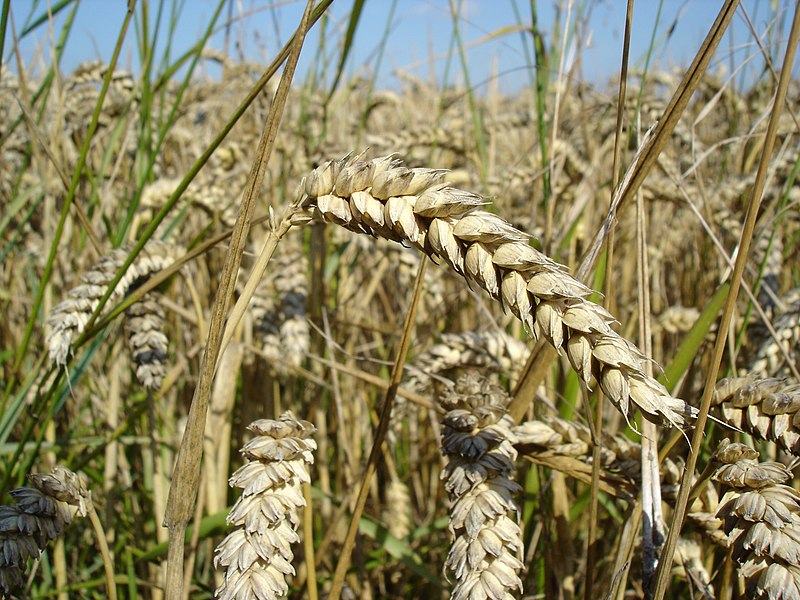
Wheat photo via wikipedia

Over at the Guardian, they're reporting on the finding of genetically-modified wheat in the US food system this past week:
The discovery of rogue genetically modified wheat in a farmer's field in Oregon shook global confidence in the safety of America's food supply on Friday.
Billions in food exports were potentially at stake following the disclosure by the US Department of Agriculture of the existence of the GM wheat plants.
The GM variant, developed by the agricultural giant Monsanto, has never been approved for human consumption.
The discovery in Oregon, about a decade after field trials ended in that state, raised concerns among the main buyers of America's wheat abroad, as well as an increasingly active GM movement at home.
The European Union advised member states on Friday to test some wheat shipments from the US. The EU imports more than 1.1m tonnes of wheat a year.
Asia was also shutting its doors to American wheat imports. South Korea, which last year imported half of its wheat from the US, cancelled imports, following Japan's lead. Thailand puts its ports on alert. China and the Philippines said they were closely watching the USDA's investigations into the GM escape.
"It's going to be a pretty serious blow to all wheat farmers. I would imagine probably the price of wheat is already going down some," said Fred Kirschenmann, a senior fellow at the Leopold Centre for Sustainable Agriculture at Iowa State University, who himself farms 2,600 acres of organic wheat.
"It is definitely going to have an impact because it is right at the time when there is increasing concern about GM and food so this is not going to be good news for the wheat farmers."
Yes, it's Monsanto. Yes, it's already in the food supply. And yes, we've seen this before with Starlink corn--GM corn designed to be used as animal feed that made it's way into the food chain without being approved for human consumption. I'm tempted to see a conspiracy in this--get it in the food chain, claim that means it is safe, get approval--but there's never a need for conspiracy when human stupidity is so powerful an actor. And there's no reason to think it isn't in the Canadian food supply--but you can bet CFIA won't be out looking for it.
But the thing is, this affects trade and trade agreements. The EU doesn't allow GM wheat. Nor do a number of other countries. The threat of stopping wheat imports because of contamination by GM varieties will be a powerful motivator for both the US government and US farmers to ensure that GM wheat varieties are not allowed.
But GM wheat never gained a foothold because of widespread public resistance, and Monsanto did not pursue efforts for its commercial development.
However, the company conducted widespread testing of GM wheat in 16 states between 1998 and 2005. The last such test fields in Oregon were planted a decade ago in 2001, the USDA said.
Those decisions could now return to haunt the US, said Danielle Nierenberg, founder of The Food Tank. "We have spent a lot of time in the last few years putting China and other countries down for food safety issues, but we are messing with people's faith in the food system here," she said. "The US has a long history of claiming we have the safest and most abundant food system in the world and this undermines that." (from the Guardian article)

If we learned anything from the Percy Schmeiser case, it's that GM seed is quite willing to cross-pollinate with non-gmo varieties. And that, should such cross-pollination occur, Monsanto gets to claim that your seed as theirs. Which makes keeping seed-stock clean a real battle.
It is very depressing to say, but pressure from wheat importing countries will have far more affect on the question of GM foods than all the citizen action groups we can muster. Because democracy is no longer about citizens, it's reserved for dollars. Dollars count where people don't.

Friday, February 8, 2013

Friday Link-straveganza


Caroline Raffensperger has written a lovely essay at Common Dreams about the scale of personal actions as compared to the scale of the environmental breakdown we're facing:
Most people suffer from a sense of moral failure over environmental matters. The mismatch between being told to change our light bulbs when the planet seems in free fall—melting ice caps, polluted water supplies, drought—creates a needling angst and anxiety.  We know that we are in deep trouble, but feel that there is little we—or anyone—can do individually. Anne Karpf writing about climate change in the Guardian last year said “I now recycle everything possible, drive a hybrid car, and turn down the heating. Yet somewhere in my marrow I know that this is just a vain attempt to exculpate myself – it wasn’t me, guv.”
To fully acknowledge our complicity in the problem, but to be unable to act at the scale of the problem creates cognitive dissonance. And this “environmental melancholia,” results in hopelessness. It is not apathy we are feeling, but sadness that can be eased only with taking actions, mostly collective, scaled to the problems we face.

The Chronicle of Higher Education is forced to ask the question "In Standing Up for Big Ag, Are Universities Undercutting Their Own Researchers?"

In a case before the U.S. Supreme Court this month, advocates for academic researchers are urging the justices to reverse a patent-infringement decision that has given the Monsanto Company broad authority to restrict scientists’ study of genetically modified seeds. The decision, the advocates say, not only hurts farmers and fuels higher food prices; it also contributes to “the suffocation of independent scientific inquiry into transgenic crops.”
Not surprisingly, the case has also drawn the attention of higher education’s research establishment—but it’s pulling for the other side.
[...] George A. Kimbrell, senior lawyer for the Center for Food Safety and Save Our Seeds, calls the universities’ stance disappointing. “It’s a very strange position for institutions that should be promoting the freedom of scientific inquiry,” he says. “Unfortunately, they’ve become beholden to the money and put that before their basic mission.”

The BBC is reporting on a minor case of mis-labelling:
The meat of some beef lasagne products recalled by Findus earlier this week was 100% horsemeat, the Food Standards Agency (FSA) has said.
On Monday Findus withdrew from retailers its beef lasagne in 320g, 360g and 500g sizes as a precaution.
Environment Secretary Owen Paterson said the findings were "completely unacceptable", but Findus said it did not believe it was a food safety issue.
The FSA said companies would now be required to test their beef products.
"In order to get to the bottom of this, we're going to be requiring every company to test every product line," Catherine Brown, the FSA's chief executive, told the BBC.
"If we find any other cases, we will pursue our investigations vigorously until we find out what's happened and put a stop to it."
Ms Brown said it was "highly likely" that criminal activity was to blame for horsemeat being found in some meals.
 But really, this is more of an "ick" problem....

Funny or Die has a lovely parody of the "God Made A Farmer" ads.

The Guardian is talking about how to build resilient food systems:
All farmers, no matter their size, depend on the weather to the grow crops that feed the world, while providing a livelihood for their families and communities. This makes them among the most vulnerable to the changing climate. By 2050, if farmers are not assisted to meet these changes, agriculture yields will decrease with impacts projected to be the most severe in Africa and South Asia, with productivity decreasing by 15% and 18% respectively. Therefore, strategies to adapt to the significant shifts in weather patterns are greatly needed.


USAID, DuPont work with Government of Ethiopia to improve food security:
The U.S. Agency for International Development (USAID) signed a Memorandum of Understanding (MOU) today with Ethiopia and DuPont to boost maize harvests through increased use of hybrid maize seed, improved seed distribution, and post-harvest storage.
Maize is a significant contributor to Ethiopia’s economic and social development, providing jobs, income and food. This collaboration will help more than 30,000 smallholder maize farmers increase their productivity by up to 50 percent and help reduce post-harvest loss of maize by as much as 20 percent.
This collaboration advances agricultural development and food security goals set by the Government of Ethiopia and supported by USAID through the U.S. Government’s global hunger and food security initiative, Feed the Future, which is part of the U.S. contribution to the New Alliance for Food Security and Nutrition.
Michelle Simon, author of Appetite for Profit, writes about the fallout from the recent vote on GMO food labelling in California:
Recent reports of secret meetings among industry reps and the Food and Drug Adminstration over GMO labeling piqued my interest, mostly because this critical aspect was missing: any effort to label GE foods at the federal level could bring the current grassroots movement to a grinding halt by preventing any stronger local laws from ever being enacted. But I am getting ahead of myself.
Last month, Ronnie Cummins, director of the Organic Consumers Association and one of the leaders of the GMO labeling effort, recently published an article about how “representatives of Wal-Mart, General Mills, Pepsi-Frito Lay, Mars, Coca-Cola and others” met with the FDA on January 11 “to lobby for a mandatory federal GMO labeling law.”
The story was then picked up by Tom Laskawy at Grist, who reported that at the meeting, a Walmart representative said the retail giant would no longer oppose GMO labeling and that “[o]ther food company executives agreed, saying that the fight had become too expensive, especially given the prospect of more state-level initiatives.”

Friday, February 1, 2013

Monsanto CEO Hugh Grant Interview

The Wall Street Journal sat Hugh Grant (not that Hugh Grant, the other one, the CEO of Monsanto) down for a little chat. Some of the intersting comments that were made:
WSJ: What's the harm in disclosing genetically modified ingredients to consumers?
Mr. Grant: Under the headline of transparency and open access, [Prop 37] befuddled the issue in our view more than explained it. A much better job needs to be done, I think, by the industry in general, in communicating how, where and who produces that food, and the safety and integrity of it.
I'd be up for the dialogue around labeling. Maybe we'll look back and say [Prop 37] was the start of a more reasonable debate. But it was a confusing proposition.
 "I'd be up for the dialogue around labeling." Wow. Really? After all those millions you spent defeating Prop 37? I swear, these guys honestly don't believe that anyone is paying attention. They really think we can't check on what they've said and done.
WSJ: At the heart of this debate is safety. How do we know that GMOs are safe?
Mr. Grant: They're the most-tested food product that the world has ever seen. Europe set up its own Food Standards Agency, which has now spent €300 million ($403.7 million), and has concluded that these technologies are safe. [Recently] France determined there's no safety issue on a corn line we submitted there. So there's always a great deal of political noise and turmoil. If you strip that back and you get to the science, the science is very strong around these technologies.

WSJ: Two of your top executives have a background in the vegetable business. Is that a coincidence? How do you see the business growing?
Mr. Grant: Fresh fruit and high quality vegetables are becoming more important than they ever were. So we see an opportunity there, but the opportunity in veggies is going to be driven by where we are spending our money. We are spending our money on nutrition and taste. A lot of veggies look great, but they don't taste like much. We think the consumer will pay a premium for improved nutrition and improved taste.
Personally, I already do--it's called organic produce. Or I grow it myself.

WSJ: There have been growing reports of weeds developing resistance to your glyphosate herbicide and bugs developing resistance to your genetically modified corn. Did Monsanto push too hard convincing farmers to use these products?
Mr. Grant: It's 20-20 hindsight. If you look, the [herbicide] product is 35, nearly 40 years old. Resistance is still limited to a handful of species. If you look at resistance to other products in the industry, it's not unusual to see resistance to 200, 250 species. That's not an excuse. When you talk to farmers, these are technologies they do not want to lose.
You know, I'm just at a loss for words. This is the worst kind of hack journalism--there's no fact-checking (oh, sorry. An earlier version f the article quoted the CEO as saying Monsanto spent a quarter billlion a year on reseach when in fact it's a billion and a quarter). There's no insight. There's just the repeating of corporate spin. 
The thing is, Hugh Grant probably believes what he's saying. It's what makes him a good face for the corporation: the ability to believe their own narrative.

Saturday, November 17, 2012

Some Good News

Potato varieties courtesy OccupyMonsanto60.org


After the failure to get food labelling laws changed in California, agribusiness giants like Monsanto and Bayer have been facing some significant push-back in other parts of the world.
, reporting at Natural Society, writes about Poland:
Following the anti-Monsanto activism launched by nations like France and Hungary, Poland has announced that it will launch a complete ban on growing  Monsanto’s  genetically modified strain MON810. The announcement, made by Agriculture Minister Marek Sawicki, sets yet another international standard against Monsanto’s genetically modified creations. In addition to being linked to a plethora health ailments, Sawicki says that the pollen originating from this GM strain may actually be devastating the already dwindling bee population.
Similar opposition to Monsanto occurred on March 9th, when 7 European countries blocked a proposal by the Danish EU presidency which would permit the cultivation of genetically modified plants on the entire continent. It was France, who in February, lead the charge against GMOs by asking the European Commission to suspend authorization to Monsanto’s genetically modified corn. What’s more, the country settled a landmark case in favor of the people over Monsanto, finding the biotech giant guilty of chemical poisoning.
OccupyMonsanto360.org is reporting a similar action by the Peruvian government:
In a massive blow to multinational agribiz corporations such as  Monsanto, Bayer, and Dow, Peru has officially passed a law banning genetically modified ingredients anywhere within the country for a full decade before coming up for another review.  Peru’s Plenary Session of the Congress made the decision 3 years after the decree was written despite previous governmental pushes for GM legalization due largely to the pressure from farmers that together form the Parque de la Papa in Cusco, a farming community of 6,000 people that represent six communities. They worry the introduction of genetically modified organisms (GMOs) will compromise the native species of Peru, such as the giant white corn, purple corn and, of course, the famous species of Peruvian potatoes. Anibal Huerta, President of Peru’s Agrarian Commission, said the ban was needed to prevent the ”danger that can arise from the use of biotechnology.”
http://www.occupymonsanto360.org (http://s.tt/18OeH)

Tuesday, July 10, 2012

Monsanto--Taking The Shot

From Alternet:
A so-called “Monsanto rider,” quietly slipped into the multi-billion dollar FY 2013 Agricultural Appropriations bill, would require – not just allow, but require - the Secretary of Agriculture to grant a temporary permit for the planting or cultivation of a genetically engineered crop, even if a federal court has ordered the planting be halted until an Environmental Impact Statement is completed. All the farmer or the biotech producer has to do is ask, and the questionable crops could be released into the environment where they could potentially contaminate conventional or organic crops and, ultimately, the nation’s food supply.
Unless the Senate or a citizen’s army of farmers and consumers can stop them, the House of Representatives is likely to ram this dangerous rider through any day now.
In a statement issued last month, the Center For Food Safety had this to say about the biotech industry’s latest attempt to circumvent legal and regulatory safeguards:
Ceding broad and unprecedented powers to industry, the rider poses a direct threat to the authority of U.S. courts, jettisons the U.S. Department of Agriculture’s (USDA) established oversight powers on key agriculture issues and puts the nation’s farmers and food supply at risk.
In other words, if this single line in the 90-page Agricultural Appropriations bill slips through, it’s Independence Day for the biotech industry.

Sunday, May 27, 2012

The Battle Moves North

from Earth First News

From Locals Supporting Locals:
Monsanto coming to Richmond to try to overturn Council decision
This Tuesday Richmond Council voted unanimously at a general meeting, with the Mayor and all Councillors present, to pass a resolution to make Richmond the eighth GE free crop zone in B.C. The wording of the resolution is on the Richmond Council website, at http://www.richmond.ca/cityhall/council/agendas/gp/2012/052212_minutes.htm
Ten people spoke in favour of the resolution. This now has to go through the formal process of being passed at a Council meeting, which will happen on the 28th May at 7 p.m. at Richmond City Hall.
We've been informed that Crop Life, the Public Relations wing of Monsanto and other biotech companies, will be coming to the Council meeting on the 28th May. They have already begun their lobbying efforts to try and get Richmond Council to change its mind.
If you are in or near Richmond, please turn out for the meeting. Some Councillors may waver under corporate pressure, and a big turn out of the public will make all the difference and hold them firm to their decisions. Several Councillors spoke passionately about their concerns with genetic engineering, and a big public showing will give them more courage.
If Richmond becomes a GE zone this will have a really big impact on other parts of the Province. As a large municipality with about 200 farms and where GE corn is being grown, people will see that if this can be done in Richmond, it can be done anywhere in the Province. GE Free BC is already getting emails from other municipalities where environmental activists want to get a GE Free resolution passed. This is why Monsanto is sending in the PR guys.
At the same time, apparently the BC government is tryining to slide through an Ag Gag law.

Legislation being proposed by the BC's Liberal government will make it illegal and punishable for a person, including citizens or journalists, to disclose information relating to reportable animal disease in the Canadian province. Bill 37, The Animal Health Act, over-rides BC's Freedom of Information Act, making it unlawful for the public or the press to speak publicly about an agriculture-related disease outbreak or identify the location of an outbreak such as the deadly bird flu or a viral outbreak of IHNV at a salmon aquaculture feedlot.
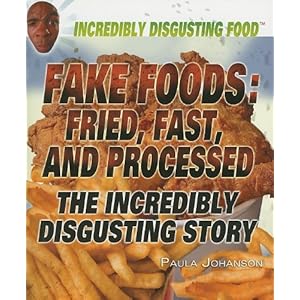
Who would this affect? Anyone. My significant other, author Paula Johanson, recently wrote a book titled Fish: from catch to the table which addressed the safety of farmed fish--this law would have affected her work.

Fake Foods by Paula Johanson
Or the work she did in Fake Foods.Not because anything she said was wrong, but that she said anything at all.


Photo from Living Food FIlms website
 We've seen this sort of thing before, in the Howard Lyman case in Texas:
In April of 1996, Mr. Lyman (former cattle rancher and now President, Voice for a Viable Future)) was invited to appear on Oprah to discuss Mad Cow disease, food production, and the rendering process. He was part of a discussion of experts, including an expert from the beef industry, about food safety in the U.S. This included a discussion of potential health risks from e-colii and mad cow disease (which only weeks before was making headlines in Britain and throughout the world). When Mr. Lyman explained that cows are being fed to cows, Ms. Winfrey seemed to be repulsed by this thought, and exclaimed that it had just stopped her cold from eating another hamburger
Lyman was sued under an Ag Gag law, the Texas Food Disparagement Act, and it took four years and a heap of money to end the lawsuit brought by a Texas beef ranchers organization. Since then, there has been a pause, but these laws are back.