Showing posts with label neonicotinoid pesticides. Show all posts

Friday, July 5, 2013

More Friday Food Linkstraveganza

Postmedia is reporting on the latest iteration of a survey done on food purchasing habits of Canadians by BMO:
The third annual BMO Food Survey of consumers’ grocery patterns, released Friday, finds Canadian provinces are true to their respective identities when it comes to the food and drink they source locally. Quebecers like their bread and cheese, Albertans are all about the region’s beef, British Columbians favour newly plucked fruits and veggies, Maritimers dine on fish so fresh you can taste the saltwater, and Ontarians wash it all down with a glass of Niagara wine.
In fact, virtually all Canadians (98 per cent) say they sometimes, frequently or always buy at least one locally sourced product when they grocery shop, with the top motivations being superior freshness and taste; a desire to support the local economy; support of local farmers; and the creation of jobs in the community.
“We’ve been doing comparable studies for years and each time, regardless of the economic circumstances of the day, the responses are pretty stable. Canadians have a consistent desire for food that’s locally produced,” said David Rinneard, director of agriculture and agribusiness for BMO.

So, good news for local producers--we have a base to build from.

CJME in Saskatchewan is reporting:
Despite damage from flooding, hail and disease last week, there is plenty of optimism on the farm. Crops are rated in fair to excellent condition with nearly two thirds at the normal stages of development.
Sixty-eight per cent of pulse crops are on schedule — followed by winter and cereals at 63 per cent, spring cereals at 61 per cent and oilseeds at 60 per cent.Livestock producers are also gearing up for the hay harvest. Producers have six per cent of the perennial hay crop cut and less than one per cent bailed. Northeast producers have three per cent cut.
If the weather this week continues, McLean said haying operations will be going full steam ahead.
“With the warmer dry weather we’ve experienced, and it looks like the next short while, it provides a good opportunity for individuals to advance their haying.”
This is not necessarily good news for producers. farmers want to have bumper crops while everyone else has theirs destroyed in order to maximise returns.  With prices down 1% worldwide according to the UNFAO, it's looking like breathing space for the planet's food supply this yeaar.

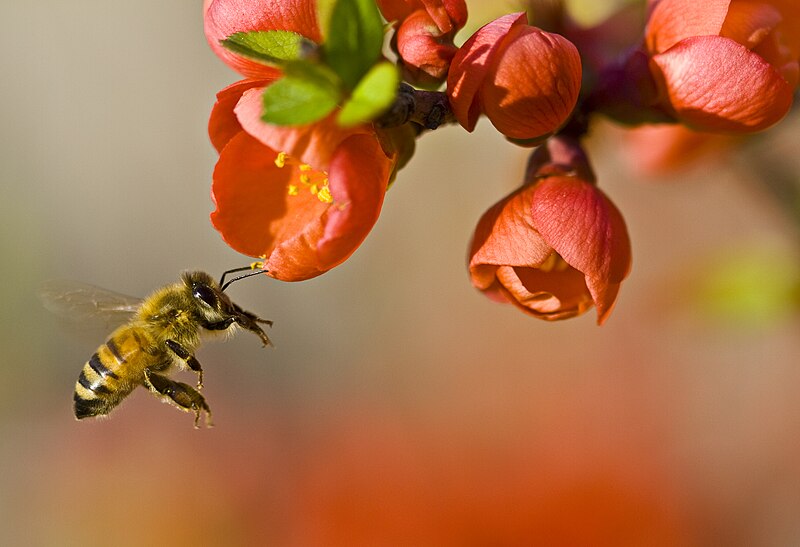
There's a heartbreaking bit of video footage from the Star, about bee losses in Ontario.
Like many apiarists in Ontario, the Schuits, who make organic honey in Elmwood, Ont., say their bees have been dying en masse every spring in recent years. They estimate they lost a staggering 37 million bees in 2012 alone, representing more than half their entire brood. The sudden decline forced them to sell their old 40-hectare property in December, and persuaded their eldest son to jump ship on the family industry.
“We just can’t continue on like this,” says Erika, mother of the seven Schuit children. “It’s very stressful as a family, and you need to put food on the table.”
Recent declines in bee populations have been documented around the world, prompting a phenomenon called colony collapse disorder and raising fears over the consequences of losing a species vital to the pollination of many plants. In Canada, the bee population has dropped by an estimated 35 per cent in the past three years, according to the Canadian Honey Council.
Several suspected causes have been studied, including the loss of flower habitat, disease, bee mites and parasites.
The Schuits, however, are convinced widely used “seed treatment” pesticides called neonicotinoids are to blame for the seizure-like deaths of their European honeybees.

Friday, June 7, 2013

Friday Food Link-straveganza

Image sourced from Wikipedia

Well, we know bees are having a difficult time of it. And now its looking like neonicotinoid pesticides have a lot to do with it. Canada and Britain are both resisting the call to ban the neonicotinoids. The UK  Parliament’s  report on neonicotinoid pesticides and their effect on bees can be accessed here. The BBC commentary is here.

Source: Wikipedia

Over at Localfoodplus.ca, there's some comment on the new Ontario Medical Association report that looks at the link between antibiotic-resistant microbes and intensive livestock production. From localfoodplus:
According to the OMA’s report, “antibiotics are not as effective as they once were because bacteria are adapting to them … these resistant bacteria are germs that cause infections like pneumonia, urinary tract infections, and skin infections.”
“Patients are at risk of becoming sicker, taking longer to recover, and in some cases dying from previously treatable diseases,” said OMA president Doug Weir in the report’s press release.
This alarming medical regression poses a rising threat over both patients’ health and the healthcare system. Pointing to already visible Health Care expenses, the OMA cites the increasing costs of MRSA (which Mother Jones defines as “an often-deadly, antibiotic-resistant staph infection”)  at the Sunnybrook Health Sciences Centre in Toronto.
In 2001, the presence of MRSA across Canada was estimated to cost $50 million; in 2010, the National Collaborating Centre for Infectious Diseases (NCCID) estimated that the costs would reach between $104-$187 million annually due to escalating  antibiotic resistance – more than double in approximately 10 years.
While the report lays some culpability upon individuals to use antibiotics more “responsibly” and doctors to “keep better track of [their] patients’ antibiotic histories,” the OMA points a looming finger in the direction on Ontario’s agri-business complex.
Currently, it’s standard practice in Ontario’s agricultural industry to administer antibiotics to healthy animals for the purpose of ‘disease prevention’ and ‘growth acceleration’ – a practice that the Ontario Ministry of Agriculture and Food (OMAF) defines as “intensive, non-therapeutic” antibiotic use.

Algeria famine 1869. Source: Wikipedia

The BBC has been reporting that the only thing we learn from the history of famnine is that we learn nothing from the history of famine--as detailed by the new report from UK think-tank Chatham House:
Famine early warning systems have a good track record of predicting food shortages but are poor at triggering early action, a report has concluded.
The study said the opportunity for early action was being missed by governments and humanitarian agencies.
It said the "disconnect" was starkly apparent in Somalia where no action was taken despite 11 months of warnings.
Up to two million people are estimated to have died in drought-related emergencies since 1970.
The report by UK think-tank Chatham House, Managing Famine Risk: Linking Early Warning to Early Action, looked at the issue of drought-related emergencies on a global scale but focused on the Horn of Africa and the Sahel regions.
"The regions are quite unique in a way because you have these droughts, where there are normally successive failed rains; then you have a process whereby you have subsequent harvest failures then people adopt coping strategies," explained report author Rob Bailey.
Hand of Fatima, Mali. source: Wikipedia

 At Foodfirst, Camille Vignerot and Tiffany Tsang  wrote a piece about the current food crisis in Mali.
Food crises have plagued Mali in recent years due to drought and recurring political conflicts.
The January 2012 massacre of Malian soldiers by armed Tuareg fighters in the far north precipitated the Malian coup in March of 2012 by the National Committee for Recovering Democracy and Restoring the State (NCRDRS). That and the subsequent struggle in the north of Mali involving two groups of Tuareg (Ansar Dine and the National Movement for the Liberation of Azawad), both followed a severe drought in the 2011-2012 season.
In 2011, Mali received only one month of rain, compared to the usual three. As a result, only 11% of Mali’s farmers were able to save seed for the following year’s planting season. This cut the country’s 2012 seed supply by half, severely affecting the rice-growing area in the Mopti region. The drought forced pastoralists to move their animals north six months earlier than usual that year because of a lack of floodplain pasture along the Niger River. This led to overgrazing in northern pastures as usual staggered migrations were disrupted. Those pastoralists who did stay in the southern region were trapped between the sparse floodplains and the violent north. The increased grazing pressure on the land led to conflicts with farmers, especially in the Mopti region.
Leaving famine behind for the land of MOAR!, Michael Pollen is interviewed for the Center for Consumer Freedom.

Saltspring Island via Wikipedia
 Mussels are sustainably raised near here on Saltspring Island by Saltspring Island Mussels. (warning! site contains recipes!)
Also local are the ICC:
The Island Chefs Collaborative (icc) are a liked-minded community of chefs and food and beverage professionals with a common interest in regional food security, the preservation of farmland and the development of local food systems.
And of course if you haven't seen it yet, Bill Gates cracks me up with his Food is Ripe for Innovation essay over at Mashable.com:
I’ve gotten to learn about several new food companies that are creating plant-based alternatives to meat through some monetary investments I’ve made with Khosla Ventures and Kleiner Perkins. Their products are at least as healthy as meat and are produced more sustainably.
But what makes them really interesting is their taste. Food scientists are now creating meat alternatives that truly taste like — and have the same “mouth feel” — as their nature-made counterparts (see two recipes below, for example).
Flavor and texture have been the biggest hurdles for most people in adopting meat alternatives. But companies like Beyond Meat, Hampton Creek Foods and Lyrical are doing some amazing things. Their actual recipes are secret, but the science is straightforward. By using pressure and precisely heating and cooling oils and plant proteins (like powdered soybeans and vegetable fiber), you can achieve the perfect flavor and texture of meat or eggs.
I tasted Beyond Meat’s chicken alternative, for example, and honestly couldn’t tell it from real chicken. Beyond Eggs, an egg alternative from Hampton Creek Foods, does away with the high cholesterol content of real eggs. Lyrical has drastically reduced fat in its non-dairy cheeses. Even things like salt are getting a makeover: Nu-Tek has found a way to make potassium chloride taste like salt (and nothing but salt) with only a fraction of the sodium.
All this innovation could be great news for people concerned about health problems related to overconsumption of fat, salt and cholesterol. It’s important too in light of the environmental impacts of large-scale meat and dairy production, with livestock estimated to produce nearly 51% of the world’s greenhouse gases.
The man should be doing stand-up....

Friday, March 15, 2013

Friday Food Security Link-straveganza

via Wikimedia Commons

Another week vanished, another Friday, and another mass of stories and comments that all fit into an overall narrative about the food system--a narrative I'm having a hard time detailing, but one that is clearly scary.

Samuel Palmer - At Hailsham, Sussex- a Storm Approaching

As to that, the Guardian website is hosting a narrated slide-show about the current state of British farming. In a word: bleak. Farmers are actually, literally, on the breadlines. Harvests have been reduced, of poor quality, or simply non-existent. Lamb prices have crashed, pasturage is so poor that sheep are not getting pregnant, and disease is causing stillbirths and spontaneous abortions. British self-sufficiency in agriculture has declined from 70% to 50%. Here on Vancouver Island, it's declined to 10%. So far the ferries haven't stopped for more than about twelve hours, so panic has been avoided. But as the power of storms increase with the rise in global temperatures, this too will change.

via Wikimedia Commons
Damian Carrington, at the Guardian, writes about how the EU was stymied this week in trying to put a short-term ban on neonicotinoids--which have been implicated in colony collapse disorder. Germany and the UK were the primary opponents:
The chemical companies that dominate the billion-dollar neonicotinoid market, Bayer and Syngenta, were relieved. Syngenta chief operating officer, John Atkin, said: "We are pleased member states did not support the EC's shamefully political proposal. Restricting the use of this vital crop protection technology will do nothing to help improve bee health."
A spokeswoman for the Department for Environment, Food and Rural Affairs defended the UK's abstention: "Bee health is extremely important but decisions must be based on sound scientific evidence and rushing this through could have serious unintended consequences both for bees and for food production. We are not opposing the EU's proposals. But as we do not have the evidence yet it is impossible for us to vote either way."
But Prof Dave Goulson, at the University of Stirling and who led one of the key studies showing that neonicotinoids harm bumblebees, told the Guardian: "The independent experts at EFSA spent six months studying all the evidence before concluding there was an unacceptable risk to bees. EFSA and almost everybody else – apart from the manufacturers – agree this class of pesticides were not adequately evaluated in the first place. Yet politicians choose to ignore all of this."
Yet all is not quite lost. Aljazeera is reporting:
At the end of another year of painful austerity and mouting debts, Greece's battered economy is seeing over 1,000 workers lose their jobs every day.
On the surface, many cities still looks prosperous, but the nation's deep crisis is clearly reflected in the windows of hundreds of empty shops.
More than one million Greeks are unemployed, which is one-quarter of the workforce, and the country is facing a youth unemployment rate of 58 percent.
But while many are struggling to survive in this harsh financial climate, others are returning to the land from the towns and cities that onced promised so much.
Up until a month ago, Kostas Bozas was a city banker. Now he is unemployed and has moved to his father's house in a village outside Thessaloniki, going back to his roots in search of a future.
"I come a from a steady job, and now at the age of 50 it's the right opportunity to become a farmer ... my father will teach me the things he knows from his father."
Thousands have taken the road back to farming in recent years - while the rest of the economy is in free fall, the farming sector is actually adding jobs.

Wednesday, January 16, 2013

Good News For Bees

Image via Wikipedia

The Guardian is reporting today (16 Jan 2013) that:
The world's most widely used insecticide has for the first time been officially labelled an "unacceptable" danger to bees feeding on flowering crops. Environmental campaigners say the conclusion, by Europe's leading food safety authority, sounds the "death knell" for the insect nerve agent.
The chemical's manufacturer, Bayer, claimed the report, released on Wednesday, did not alter existing risk assessments and warned against "over-interpretation of the precautionary principle".
The report comes just months after the UK government dismissed a fast-growing body of evidence of harm to bees as insufficient to justify banning the chemicals.
Bees and other pollinators are critical to one-third of all food, but two major studies in March 2012, and others since, have implicated neonicotinoid pesticides in the decline in the insects, alongside habitat loss and disease. In April, the European commission demanded a re-examination of the risks posed by the chemicals, including Bayer's widely used imidacloprid and two others.
Scientists at the European Food Safety Authority (EFSA), together with experts from across Europe, concluded on Wednesday that for imidacloprid "only uses on crops not attractive to honeybees were considered acceptable" because of exposure through nectar and pollen. Such crops include oil seed rape, corn and sunflowers. EFSA was asked to consider the acute and chronic effects on bee larvae, bee behaviour and the colony as a whole, and the risks posed by sub-lethal doses. But it found a widespread lack of information in many areas and had stated previously that current "simplistic" regulations contained "major weaknesses".
 There are other reasons for the rapid decline of the honey bee population (like habitat destruction), but we have at least one smoking gun. There is and will be considerable push-back against limiting the use of this class of pesticide, just as there was with DDT, but bees are simply too important for action to not be taken. I hope.