Thursday, July 3, 2014

Catfish And Karma

Striped eel catfish, Plotosus lineatus.
Photo by J. Petersen taken in Manado, North Sulawesi, Indonesia
Apparently, in addition to no longer manufacturing much, the US doesn't produce enough catfish to satisfy demand, and so imports a great deal of Asian-raised catfish. Particularly from Vietnam.
As with so many other items imported from the low-wage areas of the world, Vietnamese catfish are cheaper than American-produced ones. And the squeeze is putting some US commercial producers out of business. So, to slow or stop the flow of imported catfish, producers are demanding that catfish be tested before being allowed for sale in the US.
Originally a specialized catfish inspection office was to have been set up in 2009, but despite appropriations of $15 to $17 million, no catfish has yet been tested for banned or harmful substances. It seems that even the varieties of catfish to be tested haven't yet been decided upon.
Now, according to U.S. Senators Thad Cochran (R-Miss.) and Roger Wicker (R-Miss) "In recent years, imports from Southeast Asia have been found to contain dangerous chemicals and substances banned for use in the United States." However, their press release simply makes the claim without any information to back it up. But the newly passed Farm Bill insists that testing begin within the year regardless.
Normally Vietnam and other Asian catfish producers wouldn't have much of a chance against what looks to be protectionist non-tariff legislation. But the US administration (like the Canadian federal government) is hot to pass the TPP, the Trans-Pacific Partnership, a highly-secret trade agreement which we, the public, only know about because of the Edward Snowden mega-leak. So the non-American producers are using the pending agreement to push back against the threat of protectionist inspection.
If the Vietnamese catfish are actually carrying a toxic load, it is not unlikely that some of that load is from the appalling volume of high explosive and chemicals dropped on the country by...the United States. Kind of karmic, really.

Articles referenced in creating this post: 
The Catfish Wars Could Derail U.S.-Asia Trade
Millions of Dollars Later, America’s Catfish Are No Safer to Eat
Cochran & Wicker press Commerce Dept. To Maintain Fair Trade Decision For U.S. Catfish

Wednesday, July 2, 2014

The Questions Begin With Onions

This image is in the public domain because it contains materials that originally came from the Agricultural Research Service, the research agency of the United States Department of Agriculture.

It is rather amazing just how many questions can arise out of a simple onion. Following Noam Chomsky's advice that the only honest reporting is done in the business pages, I was browsing the Bloomberg website when I can across an article about how onion traders were viewing current Indian anti-inflation policy. The article opens with a man named Arun Kumar, a produce market middleman, saying he " has seen many Indian governments try and fail to eliminate middlemen at produce markets who are blamed for hoarding and stoking inflation." One of the big drivers for the concern over inflation and food markets is the lack of monsoon season rains this year--India is experiencing a 45 percent drop in rainfall amounts. A full scale drought, according to HSBC Holdings Plc., could reduce Indian economic growth by as much as a half-percent this year.Food prices in India make up about 50 percent of the consumer price index, which rose 8.28 percent in May of this year alone. (By way of comparison, food prices make up about 15 percent of the US CPI).
Notice of this drought in India comes at the same time that some sixty communities in Saskatchewan and Manitoba are dealing with floods from major storms dropping between 75 and 150 mm of rain in 24 hours. Both the drought and the rains (similar to last year's Alberta rains that flooded Calgary and High River), are driven by global warming changing the amount of water held by the air and changes to weather patterns; India sees 45 percent less rain during monsoon season and southern Saskatchewan and Manitoba get a whole summer's worth of rain in 24 hours.
Both these events will negatively impact the production of food in their respective countries. Bloomberg's reports that, in India:
After an emergency meeting two days ago, Jaitley said the government would ask states to crack down on hoarders, aid imports of pulses and cooking oil, and fix a minimum export price for potatoes and onions to discourage overseas sales. Food Minister Ram Vilas Paswan said India will offload about a quarter of its rice stockpiles.

Monday, June 16, 2014

The Future Looks a Lot Like the Pasture

Over at WSJ, they're reporting on a new initiative to bring food from farmers to markets in New York city. From farms as far away as Vermont, with multiple stops along the way, the sail barge Ceres hauls product from small producers to the New Amsterdam Market in NYC.
The Vermont Sail Project’s ship Ceres,
a 39-foot-long sail barge, traveling down the Hudson River.
(Photo by Jim Peppler)

And the Ceres isn't all that small: she hauls seven to 12 tons (6 to 10 tonnes) with a thirty-nine foot (12 metre) waterline. Her initial voyage last October took three weeks to traversed 300 miles (485 km), with multiple stops to set up temporary markets along the way.

The Vermont Sail Project’s ship Ceres, video from National Geographic


Ceres isn't in regular service just yet. Current trips are still shakedown cruises for the crew, the ship, and, most importantly, the route. But what I like is that the Ceres is a sail-powered barge, with nothing more than a 20 hp motor for docking.And she's not the only one. The NatGeo has an excellent article on the Ceres and other sail powered freight boats--where they point out that container ships are often running at 12 knots, whereas the old wind-powered clippers ran at 14 to 17 knots. Not quite the same tonnage, though.

Wednesday, June 11, 2014

Horse-meat and SNAP: some thoughts

Last year's horse-meat scandal in the European Union and this year's arguments over the Supplemental Nutrition Assistance Program (SNAP) benefits in the US seem to have raised some similarities in the commentary around them.
If you don't remember, during spring 2013, British supermarkets discovered that some of the low-priced foods they were selling had been manufactured with horse meat instead of beef. Subsequent investigation showed that the ground cow purchased by the food manufacturers (a bizarre phrase, to say the least) had been ground horse. The horse had been sourced from yet another country or two (primarily Poland and Roumania), where the packers had substituted the cheaper horse for the more expensive cow.
 Horse-meat isn't a bad thing to eat, nor did anyone try to frame it that way. In fact, horse is probably better for you than cow. Nor does it taste bad—it's eaten regularly in many cultures and countries. The problem was two-fold: First, that the presence of horse-meat was non-transparent. Consumers did not know what they were eating, and thus the use of horse-meat constituted a fraud on the buying public. Second, there was no certainty as to the quality of the horse-meat used. Horses are often treated for inflammation with a drug called phenylbutazone, which can remain in the meat and can cause severe adverse effects in humans such as suppression of white blood cell production and aplastic anemia when consumed.
This year in the US, there was a concerted push to get a new Farm Bill passed. The bill is a massive list of subsidies to industrial food producers, and also includes the SNAP programme (formerly known as the food stamp programme, a financial supplement for low income Americans). SNAP has long been a contentious programme, and this year was no exception. SNAP benefit redemption was expanded to include CSAs, non-profits, community health organizations, farmer's markets, and the like. This was an expansion of farm subsidies from industrial food production to local food production, and at the same time, provide incentives to SNAP participants to purchase more fresh fruits, vegetables, food-producing plants, and other farmers’ market items. Pioneered in Maryland, NYC, and California, the expanded SNAP programme actually provided cash incentives when these items were purchased.
But the new expansion of benefits wasn't made easy: Congress would provide $100M US in grants to participating organizations, but failed to specify the rules under which the grants would be made. And then, under intense GOP pressure, $800M US was cut from the SNAP programme. Considering the programme has 47 million participants with $80B US/yr. funding, the amount of money available through the grant/expansion changes manages to be less than $0.50 per participant.
It's interesting that the people most affected by both of these occurrences are the poorer members of each society. There is a strong class-related element to public discussion of the people affected. In the UK, the food industry is blamed, but so too are the poor who were the target market for the food. Comments like “Honestly, what do these people expect? If you’re paying £1 for twenty burgers, you can’t expect prime beef!” put a degree of blame on the purchasers of the food, regardless of the fraud and opacity of the food system. After all, the consumers were entitled to expect beef, as that's what the label promised. Even though it may have low quality cuts minced, and been stretched out with mechanically separated beef (“pink slime”) and cellulose (a common adulterant in hamburger patties).
In the US, the expansion of food suppliers eligible to redeem SNAP benefits was a great leap forward in acknowledging that “they”, the poor, the underpaid, the disadvantaged, could in fact be trusted with making reasonable decisions about what they buy and eat. But the requirement for grants and the cutting of $80M of benefits made certain that the other “they”, those who don't buy into the industrial food system like small-holders, would find it difficult if not impossible to access the local food subsidy.
But in both cases, “they” look an awful lot like “us”. Instead of “what do these people expect? If you’re paying £1 for twenty burgers, you can’t expect prime beef!” , perhaps the question we should be asking is “why are people forced to buy such crap food?” In the case of the US, perhaps the question should be “why are we subsidizing industrial food at all?”
Both these questions bring up the need for a different analysis concentrating on the power and influence of industrial food and the failings of the current economic system (a system that likes to conflate “neo-liberal capitalism”—an economic system—with “democracy”—a political system).

Wednesday, May 28, 2014

Holographic System

Browsing the "environment" section of the Guardian online, I came across a couple of stories that interested me. One was from the incomparable Evan Fraser and Elisabeth Fraser, about whom the Guardian says:
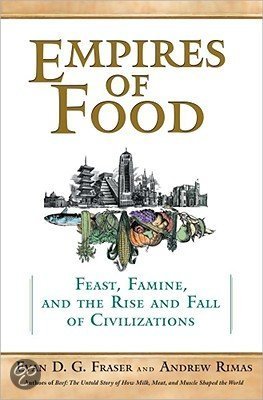
Evan Fraser holds the Canada research chair in Global Food Security in the department of geography at the University of Guelph. He is the author of Empires of Food: Feast Famine and the Rise and Fall of Civilizations. Elizabeth Fraser is completing her MA in Global Governance at the Balsillie School of International Affairs at the University of Waterloo

They list ten things that we should know about the food system. The first three points run:

1. There's enough food for everybody

The most important thing to know about the global food system is also one of the least appreciated: there is enough food for everyone on the planet to live a healthy and nutritious life. In fact, the UN tells us that there is about 2,800 kcal per person per day available. But, the global food system is deeply inequitable. There are about 842 million people hungry on the planet, while at the same time there are about 1.5 billion who are overweight or obese.

2. Price volatility

The price of food is wildly volatile. In 2008, the United Nations Food Price Index almost doubled in less than a year before crashing in 2009. Prices then shot up again in 2010 and 2011. Despite this volatility, our supply of food stayed stable throughout this period. This suggests that the price of food is not determined by our ability to produce food at a global level.

3. One third of food is wasted

Approximately one third of the world's food is wasted before it is consumed (pdf). In the developed world most of the waste happens at the consumer end, when food spoils in grocery stores or in refrigerators. Most of the waste in the developing world happens on the farm as a consequence of inefficient storage and processing facilities.
These three points alone begin to explore the incredible complexity of the modern industrial food system. The second point, that prices are unhinged from production, tell me one of the reasons the system is in such a mess--it is tied to the international speculation casino. I've written before about how after 2007, big money was looking for a safe harbour, and enormous volumes descended on agriculture futures contracts, driving up the consumer price index internationally.

Wednesday, January 29, 2014

Winter Breeds Thoughts of Spring

University of Victoria Campus Community Garden 25 Jan/14
It's raining here today--which is a good thing actually. We've been having a pretty mild winter this year, even while the rest of North America is experiencing winter.
I find it interesting that everyone is so shocked by the weather here in Canada. Honestly, it's just the weather we used to experience in the 60s and 70s. When I was growing up in Edmonton, there was a period of over thirty days where the temperature didn't rise above zero degrees Fahrenheit. My dad's  first year of owning a farm, the snow thrown up by the snowplows keeping the roads open was so high that you had to be careful not to touch the hydro lines when you climbed over them to look at the farm in winter. Now, we never saw that again afterwards, nor did we get the extended cold again. But When I went back to the farm, the first winter we made it to  -60 C.
This winter isn't the same as those, of course. This time it's the breakdown of the polar vortex brought on by the lack of sea ice on the Arctic Ocean that's bringing the cold air south. But here on Vancouver Island, we've been under the influence of a succession of high pressure systems that have meant a dryer than normal winter. So much so that there's some concern about reservoir levels. Every summer it surprises everyone when we have six to twelve consecutive weeks without rain--even though it's a pattern repeated every summer. Winter is when we get the metre or more of rain. But the weather gave us a break in mid-January. The rain stopped, the sun came out, and all of a sudden it was May.
It reminded me that this isn't Alberta, and that you can garden here all year long. Paula and I headed down to the garden and started preparing our space for another season. We've emptied one bed and sieved the soil, trying to get the invasive grasses out of it. Turns out I missed a half-dozen shallots in the covered bed last fall, and they've already sent out this years shoots.
The kale and cabbage have made it through the cold and dark times, with only minimal damage. And most of that is on the cabbage from slugs. Paula has plans for a teach-in in the new gazebo; how to propagate strawberries (ours are under the plastic).
Paula has since started some squash in transplant pots, and I've started peas: both Oregon Giant snow peas and Sugar Ann snap peas. We've grown both varieties before on the farm, and had great results. The Oregon Giants gave us snow peas bigger than my hand that were still flat and edible (you just needed a really big wok). The Sugar Ann's were our go-to variety that we introduced to market. We would grow snow, snap, and shelling peas, and the snap peas were our best seller--once people understood the whole "eat the shell" concept.
We would also grow three varieties of bush beans; green, yellow, and purple. I liked the purple, because when you blanched them for freezing, as soon as they turned green, they were ready to bag.At first the loss of colour when cooked was a disappointment, but they deep green they took on always looked good in a stir-fry, and they tasted great.
Potatoes were the same; yellow, red, and purple. The purples (Skerry Blue) kept their colour when cooked, and the kids ate a lot of lavender mashed potatoes. But the purples were a good all-round potato. Bake, boil, mash, in soup, and, we found out later, as fries, they performed well. We also loved the banana potatoes my brother grew. They appeared to be impossible to over-boil; keeping their texture even when the water had boiled away (by accident, of course!). Today I would plant Skerry Blues, banana, and Cranberry (a red-fleshed variety). All good potatoes, and all getting a good customer response.
But I don't currently plant for market, just to supplement our trips to the market. I'm not entirely thrilled by that, but there you go. But still, a sunny day will remind me that spring will come, that plants will grow, and that the planet will keep on turning--whether I'm there to man the machinery or not. Winter may be coming on Game of Thrones, but around here, Spring is Coming.

Friday, January 24, 2014

Friday Food Security Link-straveganza

Oh, those GMOs. Nathaniel Johnson at Grist has been doing an in-depth series of reports on whether GMOs matter. It's a series that has raised more than a few hackles in the green world, particularly because he has come to the conclusion that spending our political capital opposing GMOs is a waste of time, energy, and money.
Johnson's series is worth reading, as is Tom Philpott's response, and Ramez Naam's generally pro-GMO article. But, kas Nathaniel Johnson writes in his most recent article:
[...]I want to add a note of caution: There’s an entire industry pushing the argument that GMOs are the solution. I agree with the International Assessment of Agricultural Knowledge, Science and Technology for Development that GMOs could be part of the solution, but we shouldn’t let the hype distract us from all the other ideas out there.
There are lots of problems associated with GMOs. I just want to focus directly on fixing those problems, rather than turning GMOs into a vague representative boogieman. I see problems with seed patents, problems with overuse of pesticides, problems with the lack of funding for research on agricultural alternatives. I care deeply about these things. But I’m worried that the discussion has become so ossified over GMOs that it’s not helping those causes. We’ve focused so tightly on GMOs that people tend to lose sight of those bigger things.

Raw Story is reporting that Golden Rice, that long-touted but otherwise invisible genetically modified crop that's supposed to save millions from blindness may actually be a go:
The first genetically-modified rice to be commercially available could be approved for production in the Philippines in two to three years, researchers said Tuesday, despite strong opposition from environmental groups.
Officers of both the International Rice Research Institute (IRRI) and the Philippine government’s agriculture department said the newly-developed “golden rice” had completed field trials, despite vandalism at one test field.
“Golden rice is coming. That is in the pipeline and a lot of the principal development and research has been completed,” said Achim Dobermann, deputy director-general of IRRI.
“At the moment, there is no GM (genetically-modified) rice officially released in any country,” he stressed.
No word on the actual vitamin A content of the rice, or whether kids would still be better off eating a half a carrot a month as a nutrient source. But Golden Rice, which has been in development for at least 25 years was supposed to be the criticism-killer of GMOs, developed with world health rather than tawdry financial gain in mind. Of course, when the Australians decided to breed salt-tolerant wheat, they did it with conventional breeding, meaning that farmers will be allowed to save their own seed.
Raw Story is also reporting on GM trials in the UK of a new genetically modified version of camelina that is high in fish oils:
A genetically-modified plant that produces seeds packed with fish oils is set to be grown in open fields in the UK within months, scientists announced on Friday. The oils could provide feed for farmed fish, the researchers hope, but they could ultimately be used as a health supplement in human foods such as margarine.
Fish oils – specifically omega-3 long-chain polyunsaturated fatty acids – have been shown to cut the risk of cardiovascular disease and are a popular food supplement. But about 80% of the fish oil harvested from the oceans every year is actually fed to other fish being raised in aquaculture. With many fish stocks already over-exploited, the government-funded researchers from Rothamsted Research in Hertfordshire have spent 15 years developing the new GM plant and hope to have permission for field trials by March, with planting to start shortly after if approval is given.
This is typical; we have a significant requirement for food, but a large amount of the food we harvest from the ocean is either by-catch and trashed, or fed to other, more commercially viable, fish. We harvest a hundred calories to eat ten. No bloody wonder the oceans are empty. The only farmed fish that are remotely sustainable are tilapia.
Tilapia via Wikipedia /Bjørn Christian Tørrissen
According to the New York Times:
Americans ate 475 million pounds of tilapia last year, four times the amount a decade ago, making this once obscure African native the most popular farmed fish in the United States. Although wild fish predominate in most species, a vast majority of the tilapia consumed in the United States is “harvested” from pens or cages in Latin America and Asia.
Known in the food business as “aquatic chicken” because it breeds easily and tastes bland, tilapia is the perfect factory fish; it happily eats pellets made largely of corn and soy and gains weight rapidly, easily converting a diet that resembles cheap chicken feed into low-cost seafood.
But, of course, the rush to monetize tilapia has led to problems as well. Fed on corn and soy, farmed tilapia contains relatively small amounts of beneficial omega-3 fatty acids, which are why it is recommended we eat fish in the first place. From the same article: "For the moment, Seafood Watch lists tilapia raised in the United States as a “best choice,” tilapia from Latin America as a “good alternative” and tilapia from China as “to be avoided.”
The report from the International Assessment of Agricultural Knowledge, Science and Technology for Development points out:
Development and sustainability goals should be placed
in the context of (1) current social and economic inequities
and political uncertainties about war and conflicts; (2) uncer-
tainties about the ability to sustainably produce and access
sufficient food; (3) uncertainties about the future of world
food prices; (4) changes in the economics of fossil-based en-
ergy use; (5) the emergence of new competitors for natural
resources; (6) increasing chronic diseases that are partially a
consequence of poor nutrition and poor food quality as well
as food safety; and (7) changing environmental conditions
and the growing awareness of human responsibility for the
maintenance of global ecosystem services (provisioning,
regulating, cultural and supporting).
Today there is a world of asymmetric development, un-
sustainable natural resource use, and continued rural and
urban poverty. Generally the adverse consequences of global
changes have the most significant effects on the poorest and
most vulnerable, who historically have had limited entitlements and opportunities for growth.
Canada, the US, and  Australia did not agree.

Also from Grist, an update on the California drought--in this case a lovely comparison of satellite pictures of California now and at the same time last year:

via Grist / NASA
Oh, and CNN and the John Hopkins School of Medicine report:
More than half of all adults in the United States take some sort of multivitamin; many do so in hopes of preventing heart disease and cancer or even to aid with memory.
But an editorial published in this week's Annals of Internal Medicine says that using supplements and multivitamins to prevent chronic conditions is a waste of money.
"The (vitamin and supplement) industry is based on anecdote, people saying 'I take this, and it makes me feel better,' said Dr. Edgar Miller, professor of medicine and epidemiology at Johns Hopkins University School of Medicine and co-author of the editorial.
"It's perpetuated. But when you put it to the test, there's no evidence of benefit in the long term. It can't prevent mortality, stroke or heart attack."
It's all about the money, honey.

Wednesday, January 22, 2014

The Horror Show


Well, it’s as official as it needs to get:
“In NOAA’s annual global analyses, researchers put the average world temperature (combined land and ocean surface temperatures) last year at 14.52 C.
That was 0.62 C above the 20th-century average of 13.9 C, making 2013 the 37th consecutive year that the yearly global temperature exceeded the average.
The global land temperature was just shy of 1 C (0.99 C) above the 20th-century average, according to NOAA.
Both NOAA and NASA said that nine out of 10 of the warmest years ever recorded between 1880 and 2013 were within the last 13 years. Only one entry prior to the 2000s, the year 1998, cracked the top 10.
The hottest recorded year so far was in 2010, when a temperature anomaly of 0.66 C was recorded above the 20th-century average. It topped both NOAA and NASA’s lists.”

Another hot year, with the majority coming in the last decade. And back in October, the CBC reported that by 2047, we’re in real trouble:
“A new study on global warming pinpoints the probable dates for when cities and ecosystems around the world will regularly experience hotter environments the likes of which they have never seen before.
And for dozens of cities, mostly in the tropics, those dates are a generation or less away.
“This paper is both innovative and sobering,” said Oregon State University professor Jane Lubchenco, former head of the National Oceanic and Atmospheric Administration, who was not involved in the study.
To arrive at their projections, the researchers used weather observations, computer models and other data to calculate the point at which every year from then on will be warmer than the hottest year ever recorded over the last 150 years.
For example, the world as a whole had its hottest year on record in 2005. The new study, published Wednesday in the journal Nature, says that by the year 2047, every year that follows will probably be hotter than that record-setting scorcher.
Eventually, the coldest year in a particular city or region will be hotter than the hottest year in its past.”
So, about 33 years and we are fully into the new, changed, hotter world. It’s actually conceivable that I could still be alive at that time. I’ll only be 88 in 2047....
I’ve got two kids, and their world is going to be changing over the next decade more than mine has changed over my whole life. And just what are they going to eat? The leaked report from the IPCC says pretty clearly that starvation, poverty, flooding, heat waves, droughts, war and disease are going to get worse, and that much of the worse will occur in cities—particularly when food security gets even worse.
We like to think that Canada is going to come out all right in the hotter, meaner, climate-changed world. Not likely. According to NASA:

”By about 2100, the climate change projections that we have today would suggest that there would be pressure on that grassland so prevalent in [the Canadian Prairies] to move further northward — and at the expense of the forest moving further northward as well,” said NASA climate scientist Duane Walliser, who spoke with CBC News from the Jet Propulsion Laboratory in Pasadena, Calif.
Walliser said that all across the globe, whole ecological zones such as deserts and tundra will be on the move because of “unprecedented” warming at a pace faster than at any time in 10,000 years.
But Western Canada will be among the areas hardest hit.”
NASA’s also drawn up a cute little map that “shows ecological sensitivity for the next century, with purple representing regions only slightly vulnerable to change. The ecological stress increases through blue, green, yellow, and orange areas to red.”
via NASA

I’m not seeing a lot of ways out of this. We will not stop burning hydrocarbons. We refuse to downshift into a simpler, sustainable lifestyle. We just condemn our children to disease, starvation, and death.
In Canada, we face an unprecedented in-migration, with the majority of 330 million desperate Americans and similarly large numbers of Hispanic climate refugees set to pour across our borders (there’s already a million here), and we don’t have the water or food, or basic infrastructure in place to handle an influx like that. Our ostrich-like Prime Minister has his head firmly buried in the oil-sand, and will do nothing that will put the near-trillion-dollar investments in the massive bitumen-mining operation in Alberta at risk. In the US, they’re cracking the Bakken Formation as fast as possible, damaging or destroying water supplies along the way, in order to make the US “energy independent” once again. And the global atmospheric carbon load stands at 396.8 and counting.
By mid-century, grasslands will be hard-pressed to survive over the summer, denying livestock natural forage. Forage they wouldn’t be able to eat during most of the day, because it will be too hot for them as well. Increased CO2 won’t mean increased plant growth if temperatures are rising rapidly and the summers become an annual drought.
Some things I can see managing as a farmer if global climate change only got a little worse: livestock grazing morning and evenings, and being sheltered in cool barns during excessive mid-day heat. Walipinis, below-grade greenhouses, being used to protect plants from high-summer heat as well as lengthening the growing season. But...but if night-time temperatures are too hot, then animals and people won’t get the chance to cool off. That’s a quick road to heat-stroke and death. If the rains become unpredictable, even the best water-harvesting systems become worthless. And too many people trying to live on too little land with too-stretched resources (like water and food), that’s a recipe for a horror show that will make Stalin’s Russia look good by comparison.
No, there’s only one hope for us, and that’s stopping this death-spiral of oil dependency. And that doesn’t look too likely. Buckle up.

Monday, January 20, 2014

Dr. Ian MacPherson and the Co-op Movement

via wave design coop / Wikipedia
This past Saturday, I attended the celebration of life for Dr. Ian MacPherson (above), and it was, by turns, hilarious, moving, and for me, a bit depressing. The room at the University of Victoria Faculty Club was standing room only, with people attending from across Canada and the United States.
I'd met Ian MacPherson through the CCCBE (the Centre for Co-operative and Community-Based Economies), a centre he had founded in 2000. Dr. MacPherson was what we now call an engaged academic; that is, his time was not spent only in the classroom or doing research, but also out in the world. He helped found and/or lead several co-ops across Canada; ranging from child care and health co-ops, to sitting on the boards of Pacific Coast Savings and the BC Central Credit Union. He was also the founding President of the Canadian Co-operative Association in 1989.
 At the celebration for Dr. MacPherson, one of the speakers rose and opened with the phrase "Dr. MacPherson changed my life." He then talked about how, as a young academic, he'd been introduced to the co-operative movement; "And I said, wait a minute. You mean there's a practical alternative that eliminates the worst excesses of neo-liberal capitalism? Why is this the first I'm hearing about this?" Well, exactly.

Friday, January 17, 2014

Friday Means...Link-straveganza!

There's bad news coming, and it's called the TPP or Trans-Pacific Partnership. It's another of these Free Trade corporate rights deals being made behind our backs. In Canada, there's a total of three people allowed to see the full text of the deal and they are not allowed to tell Canadians what's in the damned thing until after it has been signed. The TPP would include Japan, Mexico, Canada, Australia, Malaysia, Chile, Singapore, Peru, Vietnam, New Zealand, Brunei, and possibly China. Over at Grist, Heather Smith takes on the recent leak of the draft text and points out just how bad for the planet this deal is going to be.

via University of Colorado
 In somewhat related news, there's been a drought of MSM (main stream media) coverage of global climate change. Grist is once again on the story:
The University of Colorado’s Center for Science & Technology Research monitors mentions of “global warming” and “climate change” in five major U.S. newspapers: The New York Times, The Wall Street Journal, The Washington Post, the Los Angeles Times, and USA Today. Check out the [...] sad graph [above] showing its latest findings

Cacao tree via Luisovalles at Wikipedia
Science Daily is reporting on the use of genetic testing to identify various cultivars of cacao beans;
 The ability to authenticate premium and rare varieties would encourage growers to maintain cacao biodiversity rather than depend on the most abundant and easiest to grow trees. Researchers have found ways to verify through genetic testing the authenticity of many other crops, including cereals, fruits, olives, tea and coffee, but those methods aren't suitable for cacao beans. Zhang's team wanted to address this challenge.
Applying the most recent developments in cacao genomics, they were able to identify a small set of DNA markers called SNPs (pronounced "snips") that make up unique fingerprints of different cacao species. The technique works on single cacao beans and can be scaled up to handle large samples quickly. "To our knowledge, this is the first authentication study in cacao using molecular markers," the researchers state.

Science Daily is also reporting two linked stories. First, that the effects of livestock on climate change are underestimated:
 While climate change negotiators struggle to agree on ways to reduce carbon dioxide (CO2) emissions, they have paid inadequate attention to other greenhouse gases associated with livestock, according to an analysis by an international research team.
A reduction in non-CO2 greenhouse gases will be required to abate climate change, the researchers said. Cutting releases of methane and nitrous oxide, two gases that pound-for-pound trap more heat than does CO2, should be considered alongside the challenge of reducing fossil fuel use.
The researchers’ analysis, “Ruminants, Climate Change, and Climate Policy,” is being published today as an opinion commentary in Nature Climate Change, a professional journal.
And second, that there may be a chance of lowering the emission of greenhouse gases from cattle:
A new research project looks into the possibilities of adapting every aspect of cattle husbandry and selection processes to lower their greenhouse gas emissions.
The key to the project, Garnsworthy says, is that cattle vary by a factor of two or three in the amount of methane their stomachs produce. It is therefore possible to imagine a dairy herd producing the same volume of milk for lower greenhouse gas emissions. In addition, different diets mean that cows can produce the same amount of milk with lower emissions. "It is possible to imagine cutting emissions from cattle by a fifth, using a combination approach in which you would breed from lower-emitting cattle as well as changing their diets," Garnsworthy said.

Katy Salter, writing for The Guardian, points out the rise in expensive slices of toast as the Next Big Thing:
Toast is trendy. Yes, you read that right: toast. Obviously we're not talking marge on Mighty White, but rather the artisanal slices served with hand-churned butter and homemade jams that have been popping up on "toast menus" around San Francisco and now New York. And if that all sounds too yuppy and insufferable for words, brace yourself: there's more. Some of those slices are selling for $4 a pop. That's about £2.43 a slice at the current exchange rate.