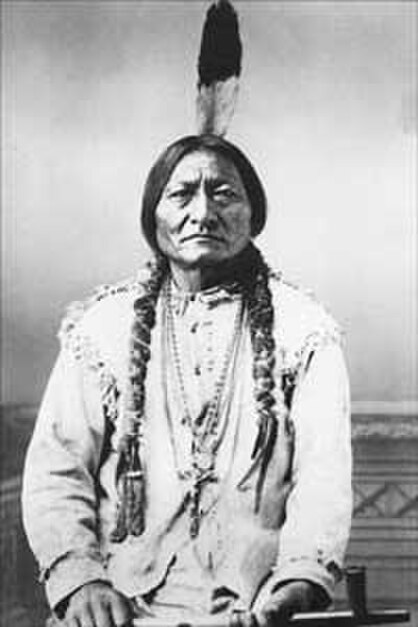
 |
| via Wikipedia |
I've spent a chunk of the morning in Indian Country--well, I've spent my whole life in Indian Country, particularly now that I live on unceeded First Nations territory. But this morning was spent at the website Indian Country, the First Nations news and culture site. And I've been having a great time.
I've been interested in First Nations issues and culture since reading a biography of Tatanka Yotanka back in elementary school, and his story, and the story of the Lakota, gave rise to my concern for social justice issues. there's an excellent primer on the Canadian situation at 8th Fire.
First Nations also face the problems with our food systems on a reglar basis. There are high rates of diabetes in First Nations communities, for example. A couple of years ago, the CBC ran a documentary about an experiment in low-carb dieting that took place in Alert Bay, here on the West Coast. (There is a short report on the experiment here).
Indian Country, the website, has a number of interesting food-related articles. A couple of days ago, they reported on recent research into the addictive qualities of carbohydrates:
New research, published June 26 in the American Journal of Clinical Nutrition, proves there's truth behind the belief that food can be addictive.This isn't news to anyone who has read Salt, Sugar, Fat by Michael Moss.
Brain imaging reveals that after eating highly processed carbohydrates like white bread, pasta, rice, baked goods and other starches, the same pleasure centers of the brain light up as when a person takes drugs such as cocaine and heroin, The New York Times reports. In both cases, dopamine levels, which trigger happiness and feelings of reward, spike and then deplete, thus fueling addiction.

Indian Country also has an excellent recipe section, concentrating on brief histories about First Nations use and preperation of different foods ( like duck and sweetbreads) and a recipe that reflects that history.
IC also reports on a local urban agriculture project affecting one First Nation:
An $8,100 grant from the Maine Community Foundation will help grow more fresh organic food for the Penobscot community on Indian Island.I really need to thank the edotors and writers at Inndian Country for an enjoyable couple of hours of browsing.
The Peoples’ Garden began as a collaborative among multiple Penobscot Indian Nation governmental departments that were interested in finding ways to ensure food security for future generations. It is a volunteer, intergenerational community garden group located on Indian Island. The funds will be used to increase production and availability of fresh organic food for the Penobscot community while revitalizing community green space.
During summer 2011, a 30’x70’ high tunnel hoop house was erected at a site where a crumbling basketball court once existed. The court was removed, the site cleaned up, and the hoop house given to the community for a community garden.

