Showing posts with label food history. Show all posts
Showing posts with label food history. Show all posts
Tuesday, February 3, 2015
Plus ça Change
...plus c'est la même chose. CBC news is reporting that, while we may think that infant and toddler foods are made to the highest nutritional standards, in fact, they are still being made to shape tastes as the kids grow up. As the article puts it: "The sodium concentration in infant and toddler savory snacks in the latest study was comparable to plain salted potato chips."
Are we surprised? We shouldn't be. This first came up back in the 1960s, with exactly the same problems, for exactly the same reasons, and with exactly the same defense.


Friday, January 30, 2015
History Lessons
 |
| stock image |
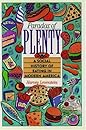
The underground press, in conjunction with political bookstores and health food stores, spread the word among the newly politicized public, while Nader's appearances in front of Congress put the word out in the above-ground media. What is appalling is how many of the issues raised then are the issues that are still being raised, as this short excerpt from Harvey Levenstein's Paradox of Plenty shows:
[The three major television networks] repeated charges such as that meat packers relied on the “4D' animals—dead, dying, diseased, and disabled—for processed meats. Realizing that public confidence in all of their products was being shaken, the large meat packers, some of whom owned intrastate packing companies, abandoned their opposition to the bill [to enable the USDA to enforce standards at state-level meat packing plants], enabling it to pass easily.
The quick victory amazed the reformers. Rarely had a bill shot though Congress in less than six months, particularly in the face of stiff opposition in the key committees responsible for it. It showed, some Naderites said, that American politics was not, as current intellectual fashion had it, based on irrational appeals; the public had been given the facts, and its representatives had been forced to respond. Yet in fact the critics soon began to use food issues for quite the opposite reason—their emotional punch. After all, the news that hot dogs contained rat hairs and that breast milk harbored DDT hardly provoked cool reasoning. The activists hoped that a public emotionally aroused by issues such as these would support their wider campaigns to protect the nation's health and welfare from the effects of business greed. Nader was rather rueful about the packers' quick cave-in. They had thereby managed, he said, to put the lid back on the Pandora's box of other issues—chemical adulteration of meat, microbiological contamination, misuse of hormones and antibiotics, pesticide residues, ingredient standards—that would have been useful in rallying the public to his larger crusade to curb corporate abuses.
But the food industries were hardly more successful than Pandora. After confidently announcing to a skeptical audience of newspaper editors in 1968 that food would become the top news story of the coming year, Nader recruited enthusiastic young law and college students to ferret through the food industries' dirty linen—combing the obscure reports of government agencies, analyzing lists of ingredients, asking chemists and biologists about their additives, assembling statistics to document the continuing concentration of economic power in fewer hands. By mid-1969 he was ready with enough evidence to begin the massive assault along the broad food-processing and agribusiness front he relished.
Appearing before the Senate's new Select Committee on Nutrition and Human Needs, he charged that the food industry was dominated by immensely powerful oligopolies who cared only about selling their products, not about their nutritive value. Their “manipulative strategies” bilked the consumer; “the silent violence of their harmful food products” caused “erosion of the bodily processes, shortening of life or sudden death.” Geneticists feared that “the river of chemicals
Monday, September 16, 2013
...plus c'est la même chose

I'm reading Jan Poppendeik's book, Breadlines Knee-Deep in Wheat and, early on in the book, she looks at the early days of the US' Great Depression. In 1930-31, the breadlines had formed in almost every city, town, and village in America. 1931 saw the first great drought—though not yet the extended “Dustbowl” drought—of the depression. As Amartya Sen has written, when a famine occurs, there are three alternatives for people: First, get a new, or additional, job. As this was the Great Depression, this wasn't possible. Second, rely on extended family. By 1931, this option was pretty much exhausted. And third, rely on charity.
This was the position of most of the jobless in the US. When the drought hit, it was also the position of a great many farmers. Charity was being administered by local governments (primarily at the municipal level) and the Red Cross. There were a patchwork collection of programmes and initiatives across the country; some, like the relief gardens which were planted (and the surplus canned by civic, fraternal, and religious organizations), encouraged by members of the federal government. But most programmes were only local and, under Hoover, the US federal government wanted nothing to do with relief programmes.
Except, of course, when they did. By 1931, there was two billion dollars (that's two billion depression-era dollars) budgeted for business and financial sector relief. And a couple of years earlier, farm price supports had been instituted, with the US government buying up wheat and slowly releasing it into the international market, to slow price fluctuations, and try to ensure that the American farmers got a livable price for the grain they were growing. Which makes sense; if your crop all comes in at once, prices tend to tumble around harvest. Farmers able to store large volumes of grain can take advantage of the price differential between fall and spring, but most people needed money by the end of the growing season. Mostly because that's when the operating loans are due.
The problem in the US was that the government had accumulated a very large storehouse of wheat; by 1931, a hundred and sixty million bushels. Which cost money to store—about $0.18/bu/year. The US also had a significant population reliant on charity—in particular, reliant on charity for food. To various politicians and reformers, it seemed like a no-brainer to release a portion of the wheat stores held by the federal government for relief.
The Hoover administration was never too open about it's opposition to releasing the wheat. But they certainly encouraged opposition. The big roadblocks were two: concern about the release of "free" wheat on the US market, and the belief, at least among the more conservative members of Congress and the Senate, that reports of hunger in the US were overblown.
Tuesday, February 12, 2013
Fat Tuesday
In the spirit of Fat Tuesday, may I present Thomas Dawson’s 1585 recipe on how to make a good pancake.
(in fairness, this is my updating from a mediocre scan of the original book) Compliments of the British Library.
To Make Pancakes
Take of new thick cream a pint, four or five yolks of eggs, a handful of flour and two or three spoonfuls of ale and sweeten with a good handful of sugar,a spoonful of cinnamon and a little ginger: Then take a frying pan and put a little piece of butter, as long as your thumb, and when it is molten brown cast it out of your pan and with a ladle put to the further side of your pan from your stuff, and hold your pan aloft so that your stuff may run about all over all the pan as thin as may be: Then set it to the fire, and let the fire be very soft, and when one side is baked, then turn the other, and bake them as dry as you can without burning.
A few notes:
(in fairness, this is my updating from a mediocre scan of the original book) Compliments of the British Library.
To Make Pancakes
Take of new thick cream a pint, four or five yolks of eggs, a handful of flour and two or three spoonfuls of ale and sweeten with a good handful of sugar,a spoonful of cinnamon and a little ginger: Then take a frying pan and put a little piece of butter, as long as your thumb, and when it is molten brown cast it out of your pan and with a ladle put to the further side of your pan from your stuff, and hold your pan aloft so that your stuff may run about all over all the pan as thin as may be: Then set it to the fire, and let the fire be very soft, and when one side is baked, then turn the other, and bake them as dry as you can without burning.
A few notes:
- The sugar would be loaf sugar in this case, and you'd have to break the amount of sugar from the loaf before using it.
- Notice the use of cinnamon and ginger. The spice trade was very advanced at this time, and cinnamon and ginger would have been available to the middle class as a regular ingredient.
- The ingredient list makes it clear that these are more what we would consider crepes than the heavier pancake.
- I take no responsibility for the taste of the result. Our ale and the writer's ale will be completely different, making these beer batter crepes an entirely different taste experience.
Friday, January 18, 2013
Centennial Food Guide #5
 |
| © The Canadian Centennial Library 1966 |
In 1881, Lady Duffus Hardy, travelling on a St. Lawrence river steamer, was introduced to a Canadian delicacy:
I lean back on my luxurious lounge in a rather sleepy state, and am fast drifting away into a land of dreams, when I am roused by the loud prolonged sound of the dinner-gong, and we all crowd down, helter-skelter, to the dining saloon, where our captain, a big burly man, sits at the head of the table, with sundry roasts and fancy dishes smoking before him. We speedily spoil our appetites, and leave but a mere wreck of bare bones and skeletons. One dish contains Indian corn cobs about a quarter of a yard long, looking white and tempting with their granulated covering. Believing they are some stuffed delicacies, I ask for a small piece. A smile goes round, and I receive a whole one on my plate. What am I to do with it? I glance at my neighbours. Every one is a cob with his two hands, and, beginning at one end, nibbles along as though he were playing a flute till he gets to the other, repeating the process till the cob is stripped of its pearly corn. I don't think it is worth the touble of eating, though it is considered a great dainty on this side of the Atlantic.
Thursday, January 17, 2013
Centennial Food Guide #4
|
| © The Canadian Centennial Library 1966 |
E.A. Howe, writing near the end of his life in the 1880s, described a sugar social from his boyhood near Glengarry on the St. Lawrence River, Ontario:
The house would be crowded, but "the more the merrier." Milk pans, dish pans, pans of all description, as long as they were big enough, were packed with snow. A large boiler filled with syrup or broken sugar was placed on the stove and carefully tended. When the contents of the boiler had reached the required consistency, which could be decided after repeated tasting, quantities were ladled out upon the snow, where it congealed into the finest confection man has ever encountered here below. The paying guests were armed with a table fork and given the personal responsibility of seeing that they secured the worth of their money. There was nothing particularly refined about the whole affair, but there was a happy lack of constraint; since no authority had ever dared to lay down rules of etiquette for such a function there were no rules to be broken. The only restriction was individual capacity, and this was a matter only of private concern; each was master of his own fate and did not worry about it. The Sugar Social was always popular and profitable...
Wednesday, January 16, 2013
Centennial Food Guide #3
|
| © The Canadian Centennial Library 1966 |
Novelist Hugh Garner compiled this "Devil's Dictionary" of food-related euphemisms in the 1950s:
A grill is a room with tables in a hotel basement, where yesterday's dining-room remains become today's businessman's hash. A cafeteria is a chow line where the saving on waitresses is not passed on the the customer. A café is a restaurant with toothpicks on the table. A lunchroom is a counter with stools, carved out of the ladies' wear shop next door. A French buffet is an American invention, at which you try to pile three bucks' worth of food on a plate that holds less than a dollar's worth. A smorgasbörd is a Scandinavian caper to get rid of leftovers when they have no icebox. A lunch wagon is a superannuated streetcar, in which the fry cook hypnotizes you with his skillet gymnastics so that you fail to notice that the chips have been pre-fried and the round steak pounded with a piledriver.
European cuisine means that everybody in the kitchen is an immigrant, and they put garlic in the hamburgers and beets in the soup. A delicatessen lunch is a sandwich bar with dill pickles. A drugstore eatery is dedicated to eating on the fly, but gives the customer a fighting chance for survival by seating him five feet from the bicarbonate of soda. A health bar is a joint where neurotics pretend that carrot juice will replace the martini, and, ambiguously, where they serve nuts with their salads. An espresso bar is where a machine as complicated as Univac grinds, burps, and bubbles away, and brings forth a lousy cup of coffee. A tea room is a resting place for varicosed virgins where the creamed potatoes are stamped into forget-me-nots.
Tuesday, January 15, 2013
Centennial Food Guide #2
|
| © The Canadian Centennial Library 1966 |
This is from a young Ukrainian immigrant named Gus Romaniuk whose family lived in a moss-chinked log home with a thatched roof and earth floor in the Manitoba Interlake region in 1912. Ill, he developed a craving:
I couldn't stand the thought of wild chicken. The fact that there were no domestic chickens in the entire neighbourhood complicated matters. As a substitute, father shot a sparrow. Mother cooked the little bird and also made some sparrow soup, which she placed by my bedside.
Unselfishly, I insisted that the bird be divided into four equal portions; one for each of us children. It made something like a small tidbit of meat apiece... My main meal for the mext few days was boiled sparrow and sparrow soup. Then father started shooting blackbirds. These were larger and meatier. The soup, too, was more nourishing. And on this strange diet, I gained some strength, although I was still invalided in bed.
Monday, January 14, 2013
Centennial Food Guide #1
|
| © The Canadian Centennial Library 1966 |
I've been re-reading the The Centennial Food Guide: A Century of Good Eating, Comprising an Anthology of Writings About Food and Drink Over the Past Hundred Years by Pierre and Janet Berton, which was part of the Canadian Centennial Library project back in 1967. My folks bought the series and I read most of them to one degree or another. My favourites were the book on a century of Canadian humour (from Sam Slick to Stephen Leacock and beyond) and the Food Guide.
The Food Guide had pages of antique illustrations and countless short and long excerpts of people writing about food in Canada over the previous hundred years. I thought I'd share some excerpts with you over the course of the coming week. First up, a short piece from famous Canadian economist John Kenneth Galbraith with his memory of the early years of the cocktail:
Once a commercial traveller from Toronto had called for a cocktail and gave instructions on how to make it. The patrons were outraged but Johnnie McIntyre quieted them down and went out for ice. This he got from a little iceberg by a tree in the yard. It owed its origins to the dogs who frequented the tree and to the Canadian winter which quickly converted all moisture to ice. Johnnie thought this would return the man to whiskey and so did those to whom he quietly confided the stratagem. the man from Toronto praised the flavour and called for another.
Subscribe to:
Posts (Atom)