Showing posts with label local production. Show all posts
Showing posts with label local production. Show all posts
Friday, September 18, 2015
The Emergent Agriculture--a review
There is not a lot that is new in Gary Kleppel's book The Emergent Agriculture: Farming, Sustainability, and the Return of the Local Economy. A cogent, well-reasoned take-down of industrial ag--but then, there's a herd of those, ranging from succinct to verbose (for the record, Kleppel is more towards the succinct end of the spectrum). A call for a more appropriate agriculture? Read that. An overview of New Ag farms? Nice, but seen that.
Where Kleppel's book shines is in the discussion of the new/old structures of how food moves from producer to consumer. And it should; Kleppel is himself both an academic and a farmer.
Antonio Gramsci described a group of people who, though members of the working class or the bourgeoisie, are an organically developed "thinking class" that "articulate, through the language of culture, the feelings and experiences which the masses could not express for themselves." He called them "public intellectuals." There should be a name for those who, although they hold membership in the traditional academic intelligentsia, chose to immerse themselves in traditional forms of work. We need more of these two groups, and Gary Kleppel, professor of biology at SUNY Albany, is definitely in the latter group.
When trying to see the shape of a new way of living, a new societal paradigm, it helps to have the kind of training given to those who pursue an academic career. Such training helps one to see both the large view and the details. When your talking about agriculture, it really helps to have gotten your hands dirty.
When Kleppel talks about the new/old methods of marketing food, it helps that he's worked a farmer's market and participated in a CSA (community supported agriculture). When we grew food, it was quite clear that the place most farmers fell down was in the marketing of their products.
When farmers get $0.02 out of the sale price of a loaf of bread, the correct response is not to grow more wheat. The better response is to find ways to capture more of the profit from your production.
I kept saying that our customers didn't come for the vegetables as much as they came for the connection. They wanted the story. An example: We had a number of zucchini that were not straight, but curved around small scars in their skins. People hesitated to buy them until I pointed out that these scars came from our pesticide; chickens. The occasional peck at a bug would scar the zucchini skin, leaving it to heal slightly bent. The damage was quickly seen as a mark, not of failure, but of superiority. These were not perfect because of the type of farming we did.
These are the connections celebrated in Gary Kleppel's book; unmediated links between producer and consumer. But not every farmer is ready to be a farmer, an ecologist, and a marketer. This is an area that he misses--the role of the co-operative movement. Co-ops can fill the gap of missing abilities. Small cheesemakers. Farmer's supplying a group-owned store. While the future may play out the way The Emergent Agriculture suggest, it will also be more complex, more intricate, than it suggests. Good book, though.


Monday, July 20, 2015
Sooke Farm Tour part 1
Yesterday, 19 July 2015, was the
annual Sooke Farm and Food Tour, organized by Sooke Region Food CHI (Community Health Initiative). There were eight stops on the tour,
and it seemed like a good way to get to know some of our new
neighbours and start to integrate into the community.
We, Paula and I, started our tour with a visit to Saltwest Naturals, our local salt production headquarters. Jessica and Jeff Abel have a small, artisanal operation producing a range of salt products from local sea water. When we arrived, a little after 11 am, the temperature in the “greenhouse” was already 55°C, and the day hadn't really got going yet.
Jeff walked us through the process of making salt: collecting, concentrating, evaporating, washing, and then any final preparation. Collection is done a few hundred litres at a time, filling a 1600 litre tank. The first step is to concentrate the seawater. Jeff mentioned that our local waters are only about 2.5% salt, much lower than is common. This is an artifact of the tremendous amount of fresh water than pours into the ocean. The local waters are also higher in magnesium (which, if left in the salt in the amount it comes naturally, makes salt taste bitter), and also a broad spectrum of other minerals (a broader spectrum, but lower concentration than Himalayan pink salt blocks that are so popular).
Saltwest uses a small reverse osmosis system to concentrate the brine from 2.5% to about 5% (nifty tool: the refractometer. A few drops spread on a screen, and you can check the salt content of the water).
The demineralized pure water that comes from the system is bottled and sold as Canada's first desalinated bottled water.
The brine then gets split between two processes; the first is the raw boil, where large aluminum stock pots are filled and brought to a boil. Aluminum is used because it resists salt damage even better than stainless steel (I had no idea....). Once the brine is concentrated to about 80%, the heat is lowered to ~155°F and held, until flat crystals of salt begin to form and clump on the top of the water. This is salt flowers, fleur de sel, the prized, ultra-fine salt.
The
other process is to fill trays with the brine, and spread them out in
the... well, greenhouse is the word we used, but perhaps brine-house
would be more accurate. Very quickly, the brine concentrates and the
salt crystallizes out. Once the water is gone, the pans are left
overnight, and the salt re-absorbs some moisture from the night air
(salt is hydrophilic),
making it softer and easier to take out of the evaporation pans.
At this point the salt is not yet ready for prime time. The next step is to wash the salt. Yes, in water, which seems to defeat the whole purpose of evaporating the water out in the first place. But a brine solution of 25% salt is the most salt water can carry, so washing salt in this brine means the salt doesn't dissolve. Who knew? Washing also removes much of the excess magnesium from the salt, making it taste much better.
For some of the salt, this is the end of the line; dried in an oven to quickly take the last of the moisture out, packaged, and shipped to one of over 350 distribution points (or “stores” as the lay public calls them). Other salt is re-brined and cooked
with onions and garlic or other plants, and the flavours are infused
into the salt. Yet more salt in run through a smoker, adding scent
and flavour. Salt is bottled, bagged, or tinned up and shipped out,
keeping Jessica and Jeff (and a mother-in-law two days a week) very
busy.
Now, if you had asked me four years ago if I wanted to get into the salt-making business, I'd have stared at you like you were nuts. I didn't see it coming—there was Sifto and Morton and that was about it. I'd have been interested in learning how to make salt, but not as a business. Four years later, there's several local salt-works; Saltwest, Vancouver Island Salt Co., and Sea To Sky—which makes “Vancouver's Hottest Salt,” a claim I absolutely believe after having tried some (it's infused with ghost chilies, cayenne, habaneros, and pepper sauce). Jessica was saying that the market had gone from zero to highly competitive in a very short time.
So far, most of the salt makers have remained smaller, artisanal operations, very hands-on. But I fear for the future. Too much competition brings the fear that you might be missing out on something you could have—and that brings concentration rather than co-operation. It becomes easier to buy businesses and fold them together to maximize profit, rather than to co-operate and maximize the number of producers and grow the market. Or the lure of profits brings in outside money to do the damage.
Most of our salt these days is mined salt—salt dug from massive underground deposits or washed from deep deposits. Salt-making is one of those processes that goes way back in human history. Salt-pans are common through much of Europe and the Middle East. Salt is one of the ways Gandhi showed the insanity of colonialism—the British passed laws against Indians making salt from ocean water, in order to maintain a profit-maximizing economic control over the country. Salt is what opened up the Canadian east-coast cod fishery—without salt, European fishermen could not have transported fish from the Grand Banks back to the continent.

MarkKurlansky's Salt: A World History is an exhaustive look at the effect salt production has had on world history, and is certainly worth a read.

The chapter on salt in
Twinkie, Deconstructed: My Journey to Discover How the Ingredients Found in Processed Foods Are Grown, Mined (Yes, Mined), and Manipulated into What America Eats is
also an interesting look into modern North American salt production.
All uncredited photographs are by me and released under CC BY-SA 3.0 except the covers of Salt And Twinkie Deconstructed, which are copyright by their respective publishers.
We, Paula and I, started our tour with a visit to Saltwest Naturals, our local salt production headquarters. Jessica and Jeff Abel have a small, artisanal operation producing a range of salt products from local sea water. When we arrived, a little after 11 am, the temperature in the “greenhouse” was already 55°C, and the day hadn't really got going yet.
Jeff walked us through the process of making salt: collecting, concentrating, evaporating, washing, and then any final preparation. Collection is done a few hundred litres at a time, filling a 1600 litre tank. The first step is to concentrate the seawater. Jeff mentioned that our local waters are only about 2.5% salt, much lower than is common. This is an artifact of the tremendous amount of fresh water than pours into the ocean. The local waters are also higher in magnesium (which, if left in the salt in the amount it comes naturally, makes salt taste bitter), and also a broad spectrum of other minerals (a broader spectrum, but lower concentration than Himalayan pink salt blocks that are so popular).
Saltwest uses a small reverse osmosis system to concentrate the brine from 2.5% to about 5% (nifty tool: the refractometer. A few drops spread on a screen, and you can check the salt content of the water).
 |
| Handheld Refractometer Fernando G. (FGM) CC BY-SA 3.0 |
The demineralized pure water that comes from the system is bottled and sold as Canada's first desalinated bottled water.
The brine then gets split between two processes; the first is the raw boil, where large aluminum stock pots are filled and brought to a boil. Aluminum is used because it resists salt damage even better than stainless steel (I had no idea....). Once the brine is concentrated to about 80%, the heat is lowered to ~155°F and held, until flat crystals of salt begin to form and clump on the top of the water. This is salt flowers, fleur de sel, the prized, ultra-fine salt.
 |
| Jeff explaining the fleur de sel process |
 |
| The greenhouse where the brine is evaporated |
 |
| Salt forming on the brine |
At this point the salt is not yet ready for prime time. The next step is to wash the salt. Yes, in water, which seems to defeat the whole purpose of evaporating the water out in the first place. But a brine solution of 25% salt is the most salt water can carry, so washing salt in this brine means the salt doesn't dissolve. Who knew? Washing also removes much of the excess magnesium from the salt, making it taste much better.
 |
| Raw salt before washing |
For some of the salt, this is the end of the line; dried in an oven to quickly take the last of the moisture out, packaged, and shipped to one of over 350 distribution points (or “stores” as the lay public calls them
Now, if you had asked me four years ago if I wanted to get into the salt-making business, I'd have stared at you like you were nuts. I didn't see it coming—there was Sifto and Morton and that was about it. I'd have been interested in learning how to make salt, but not as a business. Four years later, there's several local salt-works; Saltwest, Vancouver Island Salt Co., and Sea To Sky—which makes “Vancouver's Hottest Salt,” a claim I absolutely believe after having tried some (it's infused with ghost chilies, cayenne, habaneros, and pepper sauce). Jessica was saying that the market had gone from zero to highly competitive in a very short time.
So far, most of the salt makers have remained smaller, artisanal operations, very hands-on. But I fear for the future. Too much competition brings the fear that you might be missing out on something you could have—and that brings concentration rather than co-operation. It becomes easier to buy businesses and fold them together to maximize profit, rather than to co-operate and maximize the number of producers and grow the market. Or the lure of profits brings in outside money to do the damage.
Most of our salt these days is mined salt—salt dug from massive underground deposits or washed from deep deposits. Salt-making is one of those processes that goes way back in human history. Salt-pans are common through much of Europe and the Middle East. Salt is one of the ways Gandhi showed the insanity of colonialism—the British passed laws against Indians making salt from ocean water, in order to maintain a profit-maximizing economic control over the country. Salt is what opened up the Canadian east-coast cod fishery—without salt, European fishermen could not have transported fish from the Grand Banks back to the continent.
MarkKurlansky's Salt: A World History is an exhaustive look at the effect salt production has had on world history, and is certainly worth a read.

Friday, July 19, 2013
Taste Of Edmonton

I'm in Edmonton this week, visiting family this week. And today was the opening of Taste of Edmonton, an annual event where local restaurants try and convince you that you should never eat anywhere else. So, on two sides of Churchill Square in downtown Edmonton, a double row of food stalls line the streets offering samples of two of their foods--a taste of either one should convince you that this is the restaurant in which you should spend your life.

Each food stall has a poster with their two features and a picture of the head chef. At Normand's Bistro (above) they were offering beef short ribs and mash or smoked bison carpaccio. As I seldom eat beef anymore and can seldom resist a piece of bison, I convinced my brother-in-law that we should try the smoked bison.

Very small plate. Bit of salad with a spiced oil/vinegar dressing. And three pieces of smoked bison. The dressing was nice, but the bison was great. Excellent flavour and good texture; I just wanted a big chunk to rip and tear at with my teeth and wash it down with a strong red wine.

Kyoto was an easy choice--Canada maki. A salmon roe added colour and Bob snagged my wasabi after my sushi (below) disappeared in a single bite.


I loved the massive cauldron of Chicken Bhoona bubbling away. I'm a sucker for drama--especially when it involves food--but I didn't try the bhoona, just loved looking at the cauldron bubbling away. With my volunteering at the soup kitchen, this is a scale of cooking I can appreciate.


Bob tried the beef and wasabi slider, which was tasty, but the wasabi mayo was a little under-spiced.


The sliders were really just filet o'fish reinterpreted by a chef. Excellent fish, battered, with a tartar mayo on a slider bun. Two of these with a beer? Yeah, I'm down with that....


Monday, January 28, 2013
Regulatory Kickstarter
 |
| Image via Wikipedia |
The Christian Science Monitor has a report that California has joined thirty other states in encouraging micro-businesses.
Late last month, the California State Assembly passed new legislation that would assure legal status for small-scale cottage industries that sell baked goods and other "non-potentially hazardous" food items produced in home kitchens.
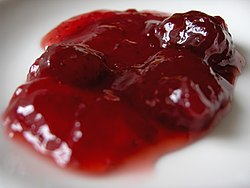
We're talking homemade cookies and brownies, jams, jellies, fruit pies, mixed nuts, flavored vinegars, dried teas, roasted coffee, and other yummy stuff that's already legal in more than 30 other states including Oregon, Washington, Texas, and Michigan, which have similar legislation in place.
Freshly signed by the governor last Friday, the California Homemade Food Act (AB1616) clears the way for home cooks in the world's eighth-largest economy to make and sell a wide range of products without the need to invest in commercial kitchen space or comply with the zoning and regulatory measures that govern larger producers and producers of meat and dairy products, specifically omitted from this law.
Gotta say, this makes me very happy. Locally we have an enormous number of fruits and berries growing on public property. Being able to buy jams and jellies and vinegars and such made within a couple of blocks of both where I live and where the fruit grew would be lovely. We bought honey last year that had been gathered within a mile of our house (the bees probably used the flowers in our yard). This is an excellent way to both make the food system more resilient and to give people a sense of community.
Subscribe to:
Posts (Atom)